
In the primordial beginning Māori accounts describe Rangi and Papa as a primal parental pair locked together in a tight embrace in the darkness. Their numerous children—gods and ancestors of winds, forests, sea, cultivated and uncultivated foods, war, and earthquakes—are forced to live cramped between them. After many attempts, Tāne (god of forests and birds) forces the parents apart, raising Rangi into the sky (Ranginui) and leaving Papatūānuku as the earth below; this separation produces light, space, and the conditions for life. Several children resist or oppose the act (notably Tāwhirimātea, who wages war), and one child, Rūaumoko, remains inside Papatūānuku and causes earthquakes and volcanic activity when he moves.
Sources do not supply a detailed anthropomorphic portrait; the primary images are relational and cosmological. Before separation both lie locked together in a close embrace so that the children dwell in the cramped darkness between them. After separation Rangi is conceived as the sky above and Papatūānuku as the earth below; later narrative details evoke visible signs of their continuing relation—Ranginui's tears falling as rain and Papatūānuku's sighs and rising mist from forests. Referential traditions also describe the placing of stars, sun, and moon upon the sky and other cosmological dressings by their children (Tāne and others) in the broader narrative context.
As primal parents their primary function is progenitive and cosmogenic rather than interventionist: their union produces a vast progeny (sources state "over 500 children" in summary accounts), and the state of their embrace explains the pre-creation confinement. Their separation is the central cosmogonic event that allows the children (gods) to take on and govern natural domains: Tāne (forests and birds) effects the separation; Tāwhirimātea (storms and winds) wages war in opposition; Tangaroa governs the sea; Rongo and Haumia-tiketike are associated with cultivated and wild foods; Tūmatauenga is associated with war and human technologies (nets, hoes, canoes); Rūaumoko, remaining with Papatūānuku, explains earthquakes and volcanic activity. After separation Rangi and Papa are largely passive as actors in these accounts but their ongoing grief and longing are etiologically invoked for weather and mist.
Weaknesses
- otherSources do not list conventional weaknesses; the narrative locates vulnerability in their grief and attachment — their separation causes ongoing sorrow and sets the stage for conflict among their children (e.g., Tāwhirimātea's angry retaliation)
Wards
- otherThe provided sources do not describe wards, protective rites, or talismans directed against Rangi and Papa; they are foundational cosmic parents rather than hostile spirits in these accounts
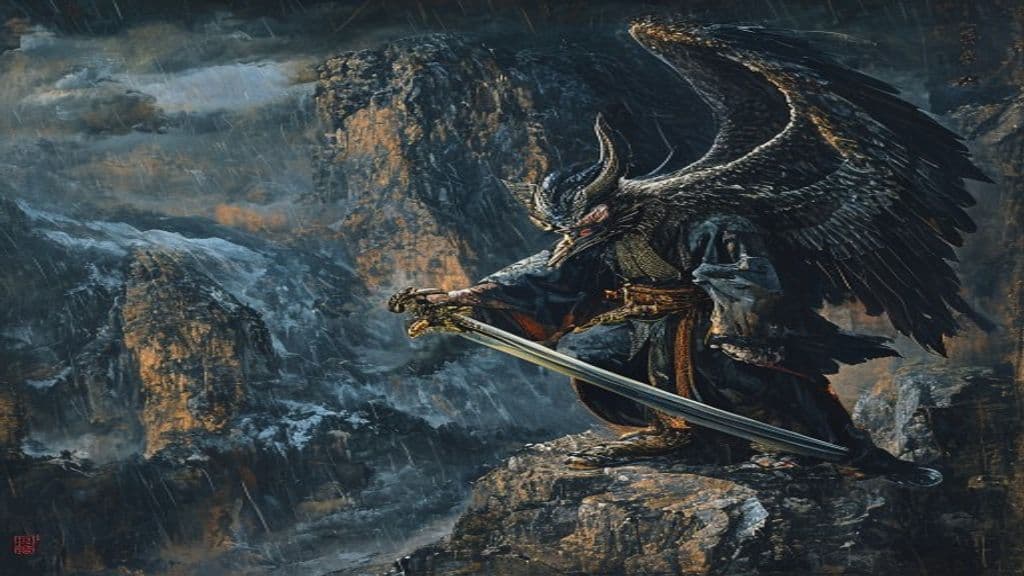
Tengu
Proud, warrior-like mountain spirits of Japan, associated with martial arts, pride, and the wild mountains. Neither fully good nor evil — they test and train warriors and monks, but punish the arrogant.
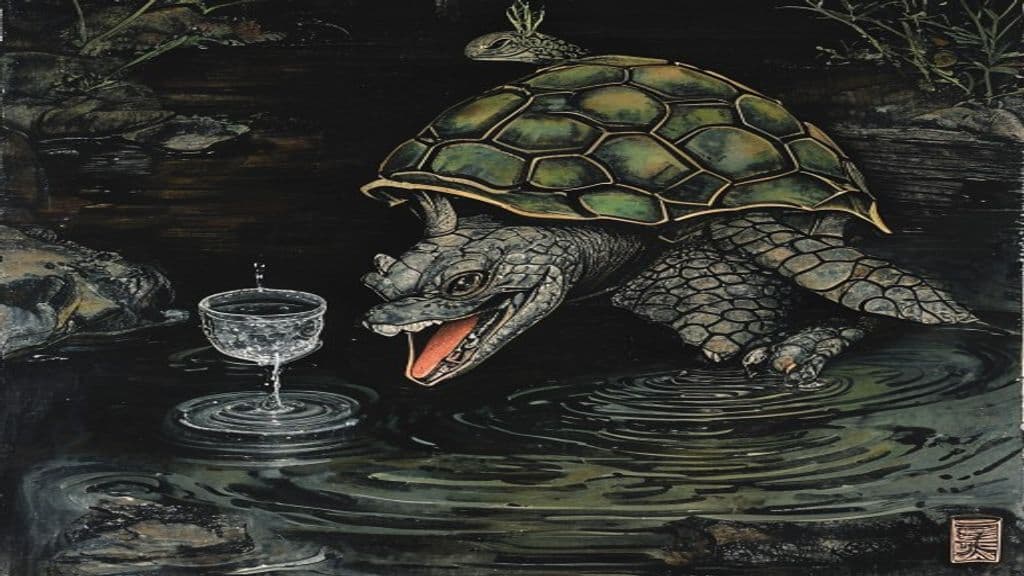
Kappa
A water-dwelling imp of Japanese folklore with a bowl of water on its head. Mischievous but bound by strict codes of politeness; dangerous near rivers.
Aitu (Māori)
Malevolent spirits in Māori tradition, often taking the form of plants or animals and associated with trouble-making and mischief. (Note: - Power tier should be Greater, not Lesser (Aitu being lesser gods in some cultures, but also associated with deity-level abilities) - Abilities: Add detail about their role as patrons of specific vil)
Aotearoa (Canoe)
An ancestral vessel in Māori tradition, associated with the migration and settlement of New Zealand. (Note: 1. Power tier should be Ancient, not Primordial. 2. Remove "Historical significance" from sensory cues as it is a general statement rather than a specific cue. 3. Add "Its presence is often associated)
Atea
Atea is a primordial creator-associated being in multiple Polynesian traditions (Marquesas, Tuamotu, and Māori) closely associated with light and the ordering of the cosmos. Variants depict Atea as a self-originating giver of light, a progenitor who fathers gods and humans, or as the cosmic universe that is sex-differentiated into Heaven and Earth in one reported account.
Atua (Māori Deity)
In Māori mythology, Atua are supernatural beings believed to have created the world and all living things. They are considered rulers of the spiritual realm with powers over nature, fertility, and human destiny. (Note: 1. Power tier: Based on the abilities described (controlling nature, fertility, and human destiny), Atua likely belong to the Primordial power tier, not Greater. 2. Weaknesses: Add a specific weakness)
Edward Tregear
Historical figure, not considered a supernatural entity in Māori tradition. (Note: * The Power tier should be "Primordial" as Edward Tregear is a historical figure, implying no supernatural abilities or powers. * The Appearance section should indicate that there is no physical descr)
Hikairo
Hikairo is attested in the provided sources as a personal and group name within Māori contexts (used for individuals and iwi/hapū identifiers such as Ngāti Hikairo), rather than as a documented supernatural being. References show historical and contemporary usages tied to leadership, ceremonial roles, and local guardianship projects.
Hineahuone
First woman created by Tāne from clay, becomes his partner and gives birth to Hinetītama. (Note: 1. The source material only describes Hineahuone as being "made" or "created", but does not explicitly state that she was crafted from clay from the earth, implying primordial power. 2. The descriptio)
Hākuturi
The hākuturi (Te Tini o Hakuturi) are a multitudinous host of Māori forest guardian-spirits, often described as birdlike and associated with Tāne. They enforce proper ritual conduct toward trees and can rebuke or repair human transgressions against the forest, as in the Rātā narrative.
Kahuitara
Kahuitara is a name attested in the provided sources with multiple referents in Māori/Polynesian contexts: principally a voyaging waka (canoe) associated with migrations to New Zealand and a place-name (Kahuitara Point) on Pitt Island noted for the first populated sunrise of the new year; a single tertiary source also lists Kahuitara as a tutelary goddess of certain seabirds. The sources do not provide a unified supernatural profile for Kahuitara.
Kahumatamomoe
A revered Māori rangatira and ancestral figure associated with the upper North Island of New Zealand. (Note: 1. Power tier should be Primordial, as there is no indication of supernatural powers beyond those of a human leader. 2. Appearance should state "No physical description available" instead of making an)
Kupe
Legendary Māori explorer and ancestral figure credited with being one of the first to discover New Zealand. (Note: 1. Power tier should be Ancient (as a legendary explorer and ancestral figure) rather than Primordial. 2. Summary is somewhat accurate, but could be more concise and focused on Kupe's role as an explo)
Kōtuku
Kōtuku is the Māori name for the white heron (the eastern great egret, Ardea alba modesta) in New Zealand. The provided sources identify the term as the local name for this bird species but do not document mythological narratives or supernatural attributes in the cited material.
Community Record
- [1]Rangi and Papa — Wikipedia. Wikipedia contributors, 'Rangi and Papa,' Wikipedia, The Free Encyclopedia.wiki
- [2]Rangi and Papa — Wikidata. Wikidata entry Q2130974, 'Rangi and Papa'.other
- [3]Creation Myths: The Polynesians of the Pacific: The Maori, Samoans, and Hawaiians (Archive recording). Archive.org: 'Creation Myths: The Polynesians of the Pacific: The Maori, Samoans, and Hawaiians' (educational archival recording).folk
- [4]Grandfather Mountain: Stories of Gods and Heroes from Many Cultures (Archive). Mute, 'Grandfather Mountain: Stories of Gods and Heroes from Many Cultures' (archival summary).folk