
The sources do not present a unified origin for Rhoecus; rather the Greek name Ῥοῖκός is attached to multiple independent figures in classical material. Herodotus and classical reference materials record Rhoecus the Samian sculptor active in the 6th century BCE, credited with bronze work, a temple at Samos, and a marble figure of Night at Ephesus (Source 1). Separately, literary mythographic traditions preserve a centaur named Rhoecus who, with Hylaeus, attempted to rape the huntress Atalanta and was killed by her (Source 1). A fragmentary local tale records a rich man of Cnidus called Rhoecus who saved a nymph and her tree (Source 6); the extract is incomplete and gives no fuller origin narrative for that figure.
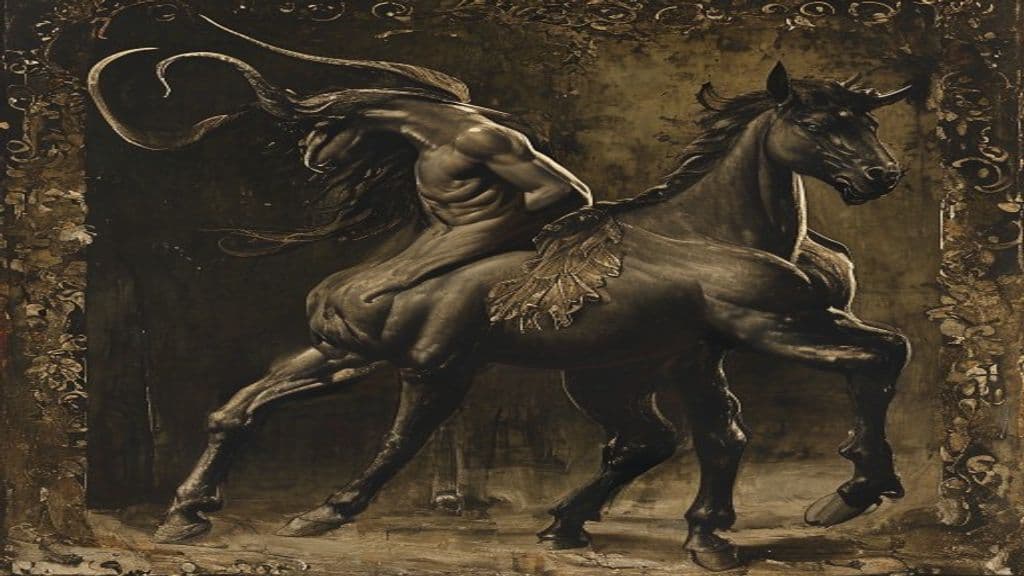
Descriptions vary by which Rhoecus is meant. The centaur Rhoecus appears as the conventional mythic centaur—human torso and head atop an equine body—with no unique physical attributes recorded in the cited extracts beyond his role in the Atalanta episode (Source 1). Rhoecus the sculptor is a historical human artisan attested in classical sources; his appearances in the record are as an artisan associated with bronze and marble works rather than by personal physical description (Source 1). The Cnidian Rhoecus is described only as "a rich man from Cnidus" in the fragmentary account and lacks physical detail in the surviving excerpt (Source 6).
Abilities and behaviors depend on the identity. The centaur Rhoecus displays the typical centaur pattern in Greek myth—violent, sexually aggressive behavior—and is recorded attempting to assault Atalanta before being slain by her, with no special supernatural powers noted beyond the usual prowess and dangerous temperament of centaurs in classical narratives (Source 1). Rhoecus the sculptor is credited with technical skill in bronze and marble, construction and dedication of temple sculpture (including a temple of Hera at Samos and a marble figure of Night at Ephesus) and votive dedication at Naucratis; these are artistic and cultic accomplishments recorded by Herodotus and classical reference material (Source 1). The Cnidian Rhoecus is attributed a protective action—saving a nymph and her tree—which implies a role as a mortal protector of a local nature-spirit, though the tale is fragmentary and details are missing (Source 6).
Weaknesses
- otherNo documented supernatural weaknesses
Wards
- otherNo attested apotropaic rites or warding practices specifically aimed at Rhoecus in the cited sources
Acacallis
Acacallis (Ancient Greek: Ἀκακαλλίς; also Acalle) is a mythological princess of Crete in Greek tradition, daughter of King Minos and Pasiphae. She functions primarily as a dynastic and etiological figure: in varying accounts she is mother, by gods such as Hermes (Mercury) or Apollo, of eponymous or founder-figures like Cydon (founder of Cydonia), Miletus, or Lydon/ Lydus.
Acanthis
Acanthis is a young woman in Greek myth, daughter of Autonous and Hippodamia, who is transformed into a thistle finch by the gods as an etiological explanation for the bird's name. The story is preserved chiefly in Antoninus Liberalis' Metamorphoses and summarized in modern reference works.
Acaste
Acaste (Ancient Greek: Ἀκάστη) is a named Oceanid — one of the daughters of the Titans Oceanus and Tethys — recorded among the companions of Persephone at the moment of her abduction; the name also appears separately as a nurse of the daughters of King Adrastus of Argos in later genealogical lists.
Achaeus
Achaeus (Ancient Greek: Ἀχαιός, Akhaiós) is an eponymous personal name borne by three mythological human figures in Greek tradition; best attested is Achaeus, son of Xuthus and Creusa, brother of Ion and grandson of Hellen, who is named as father of Archander and Architeles in Pausanias. The name is glossed as meaning "griever," from ἄχος (achos, "grief, pain, woe").
Aegle
Aegle (Ancient Greek: Αἴγλη, 'brightness' or 'dazzling light') is a name applied to several distinct female figures in Greek myth: a daughter of Asclepius associated with health, a Naiad mother of the Charites by Helios and Neaera, one of the Heliades transformed into a poplar after Phaeton's death, a named Hesperid, an alternate name for Coronis in some traditions, a daughter of Panopeus beloved by Theseus, and a nurse of Dionysus. The recurrence of the name links these figures by the themes of brightness, beauty, and filial or nymph-like status rather than by a single unified identity.
Aello
Aello (Ancient Greek: Ἀελλώ) is a named figure in Greek myth primarily attested as one of the Harpies—winged female personifications of storm-wind who harry, snatch, and torment. The name also appears in variant lists as applied to an Actaeonian hunting dog, showing onomastic fluidity in the tradition.
Agaptolemus
Agaptolemus (Ancient Greek: Ἀγαπτόλεμος) is a mythic Greek prince, one of the fifty sons of King Aegyptus, best known as the husband of the Danaid Pirene who, like most of the Danaids, slew her husband on their wedding night at the command of her father Danaus.
Agave
Agave (Ancient Greek: Agaue/Agaúē) is a personal name borne by at least two distinct figures in Greek myth: a Nereid (one of the fifty sea-nymph daughters of Nereus) and a Theban princess, daughter of Cadmus, who appears in myths connected with Dionysus. The name is glossed in Greek sources as 'illustrious', 'noble', or 'high-born'.
Agrius
Agrius (Ancient Greek: Ἄγριος, 'wild') is an onomastic figure in Greek myth whose name is applied to multiple distinct personae—including a Giant, a centaur, a bear‑born twin, a princely son, a suitor of Penelope, and one of Actaeon's dogs—rather than a single unified supernatural being. Each attestation places an Agrius in different narrative registers (Gigantomachy, Heracles' labors, heroic genealogies, the Odyssean cycle, and the Actaeon hunt).
Agron
Agron (Ancient Greek: Ἄγρων, 'wild' or 'rustic') is a human/mortal figure attested in the summary of Antoninus Liberalis' Metamorphoses (as presented on Wikipedia) who, because of impiety toward certain gods, is transformed by Hermes into a plover. The tale functions as an etiological metamorphosis and moral exemplum about observing cult obligations.
Aitolos
Aitolos is a name that appears in Greek-language traditions referring to two distinct figures: Aetolus, a mythic genealogical ancestor in classical Greek myth (son of Endymion, descendant of Deucalion), and Kosmas Aitolos (St. Cosmas of Aetolia), a historical/hagiographic Orthodox teacher whose collected writings emphasize pastoral and ascetical themes. The sources do not present Aitolos as a single folkloric supernatural being.
Alcestis
Alcestis (Ancient Greek: Ἄλκηστις, Álkēstis) is a mortal princess of Greek myth famed for voluntarily dying in place of her husband Admetus and being temporarily returned from the underworld through Heracles’ intervention. Her story highlights conjugal devotion, substitutive death, and the need for purification after contact with chthonic powers.
Community Record
- [1]Rhoecus (Wikipedia entry summarizing classical references incl. Herodotus). Wikipedia, 'Rhoecus' (entry summarizing Herodotus and classical reference material) — sources cited include Herodotus and classical lexica describing the 6th-century Samian sculptor and the centaur named Rhoecus.wiki
- [2]Rhoecus of Cnidus (Wikipedia entry, fragmentary Cnidian tale). Wikipedia entry for Rhoecus of Cnidus describing a local tale in which a rich man named Rhoecus saves a nymph and her tree; excerpt in source material is incomplete.wiki
- [3]Bulfinch's Mythology: The Age of Fable (Rural Deities, Centaur episode). Bulfinch, 'The Age of Fable' (chapter on rural deities) — recounts centaur episodes and names including Rhoecus in the Atalanta narrative as recorded in classical mythographic tradition.literary
- [4]Archive: Apollo and Daphne / related nymph materials (fragmentary references). Archive edition of Bulfinch and related mythographic material cited in the research notes; used for corroboration of centaur and nymph episodes connected to the name Rhoecus.other
- [5]Myths.UVic: RHOE1 (index entry). Mythological index entry summarizing occurrences of the name Rhoecus in classical sources (used in source notes to corroborate multiple identities).other