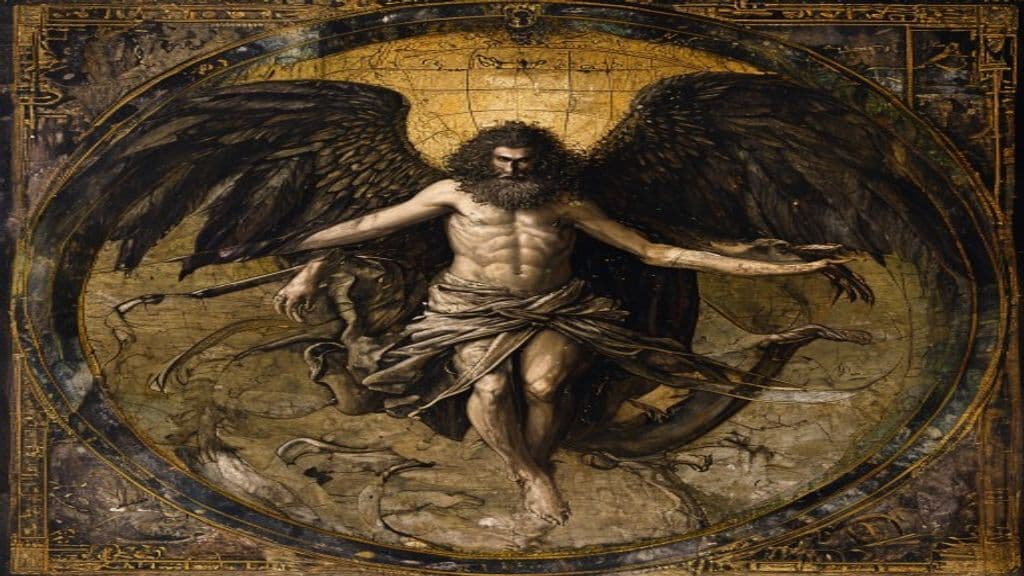
In Second Temple literature such as the Book of Enoch Samael appears among the Watchers who descend to earth and transgress by mating with human women. Midrashic texts later depict Samael as an adversarial angel in the heavenly court—an accuser identified with the role called 'Satan'—and attribute various episodes to him (for example, opposition to Adam's creation and involvement in the Eden narrative). In Kabbalistic and Zoharic materials Samael becomes associated with the left-side principle of severity and with the qlippoth, paired mythically with demonic consorts such as Lilith and other female demon figures.
Descriptions across the sources are not uniform. Midrashic material sometimes represents Samael with many wings (for example, a twelve-winged figure in Pirkei De-Rabbi Eliezer) and depicts him as riding the serpent in Eden narratives. Kabbalistic and Zoharic texts emphasize his role and associations (leader of destructive/demonic hosts and paired with Lilith) rather than consistent corporeal detail. Modern fictional portrayals exist but are not part of the classical textual tradition.
Across genres Samael functions as the accuser in the heavenly court (parallel to the Satanic accuser role), a tempter who facilitates human sin (notably implicated in Eden narratives where he tempts Adam and Eve by means of the serpent), and an angel of destruction or death (in some midrashic accounts he executes deadly tasks, e.g., a midrashic role in relation to Moses' death). In Second Temple accounts he is among the Watchers who copulate with human women. Kabbalistic texts place him as an emanation of severity and leader of qlippothic/demonic forces and attribute to him demonic consorts and progeny. He is also variously used in midrashic political-symbolic mapping as guardian/prince associated with Esau or Rome. These functions are presented within textual traditions that often treat his harsh work as part of divine ordering rather than purely autonomous evil.
Weaknesses
- otherNone explicitly given in provided sources
Wards
- otherTheological/liturgical recourse (invocation of Michael or divine advocacy in heavenly court contexts)
Satan
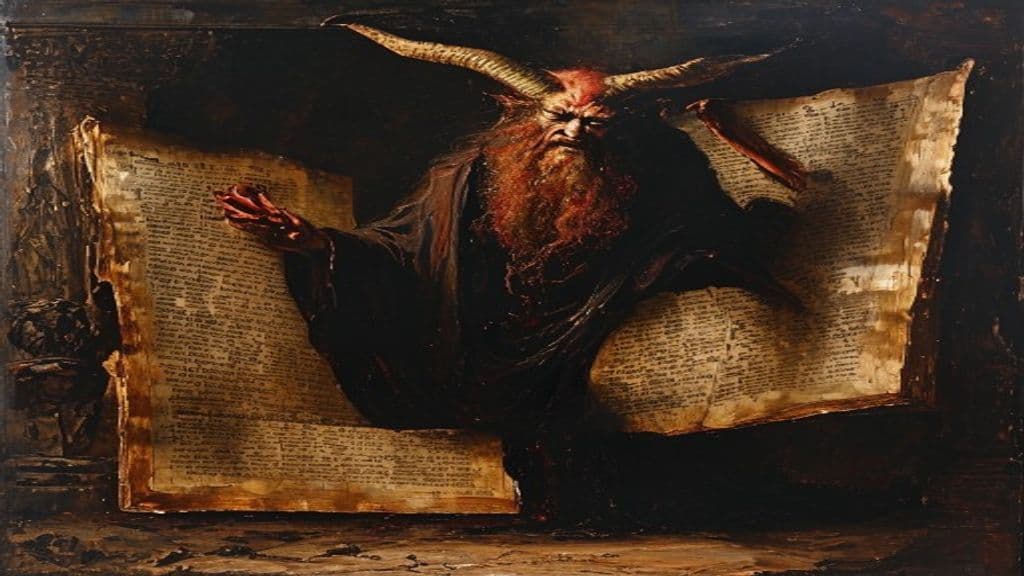
A central oppositional figure in Abrahamic traditions who functions variously as an accuser, tempter, tester, and rebel. In earliest Hebrew Bible contexts the term functions as a role within the divine council; in later Jewish, Christian, and Islamic developments the figure becomes a more fully personified adversary who incites humans to sin and leads hostile spirits.

Lilith
Lilith is a feminine night‑spirit in Jewish mythic, magical, and folkloric traditions associated with harmful nocturnal activity, especially threats to sleeping people and infants. The figure appears both as a class of night‑spirits (lilit/lilītu) in Near Eastern demonologies and as an individualized dangerous woman in later medieval Jewish narratives and amulets.
Michael
Michael is presented in the supplied sources as a masculine given name and disambiguation headword applied to people, historical rulers, cultural works, places, and other uses; the provided material treats it as an onomastic item rather than as a single supernatural being.
Community Record
- [1]Samael. Wikipedia: 'Samael' (summary of traditions across Book of Enoch, midrash, Kabbalah and later uses)wiki