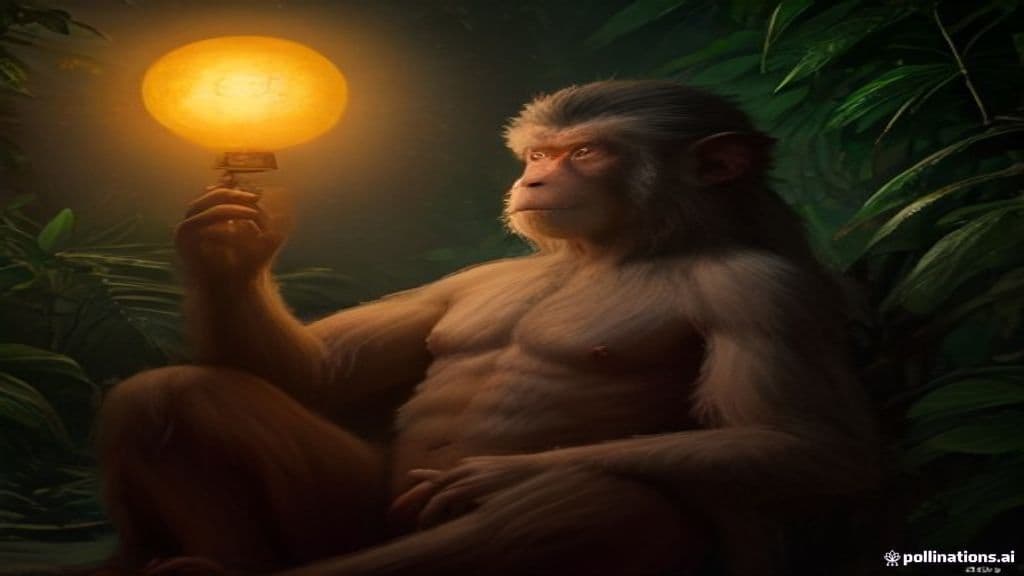
The Six‑Eared Macaque appears as a distinct supernatural being in Wu Cheng'en's Journey to the West (episode spanning chapters cited around 56–58, notably chapter 58). Within the novel's cosmology the Buddha identifies him as one of four "spiritual primates" that do not fall under the usual ten categories of beings; he emerges in the pilgrim journey as an impostor who seeks to replace Sun Wukong and claim the pilgrim rewards. Later retellings and adaptations sometimes reuse or rework the figure, but the primary origin and narrative function derive from the Ming‑dynasty novel.
In the primary text the macaque's outward form is that of a macaque/monkey indistinguishable from Sun Wukong; contemporaries in the story cannot tell real from fake. The salient physical marker invoked by the name is that he is a six‑eared macaque—the Buddha later "transforms it back into a six‑eared macaque" when exposing and subduing him. The sources do not provide a longer, consistent visual catalogue beyond this emphasis on six ears and exact similarity to Wukong.
In the narrative his central ability is flawless impersonation of Sun Wukong—so convincing that ordinary tests and other deities cannot distinguish him (he even responds correctly to the Headache Sutra). The Buddha describes him as near‑omniscient, "knowledgeable of past and future and comprehensive of all things," a quality linked in the text to his six ears and wide eavesdropping. As one of the "spiritual primates," he matches Sun Wukong in martial ability and resists defeat in direct combat until the Buddha adjudicates. His stated goal in the episode is to supplant Wukong and obtain the monk's rewards; when revealed by the Buddha he attempts to flee, is trapped under a giant golden alms bowl by the Buddha's hosts, and is subsequently killed by Sun Wukong.
Weaknesses
- conditionvulnerability to revelation and adjudication by supreme spiritual authority (the Buddha)
- othertrapping by the Buddha's agents using a giant golden alms bowl (narrative device)
Wards
- otherbring disputants before a higher spiritual authority
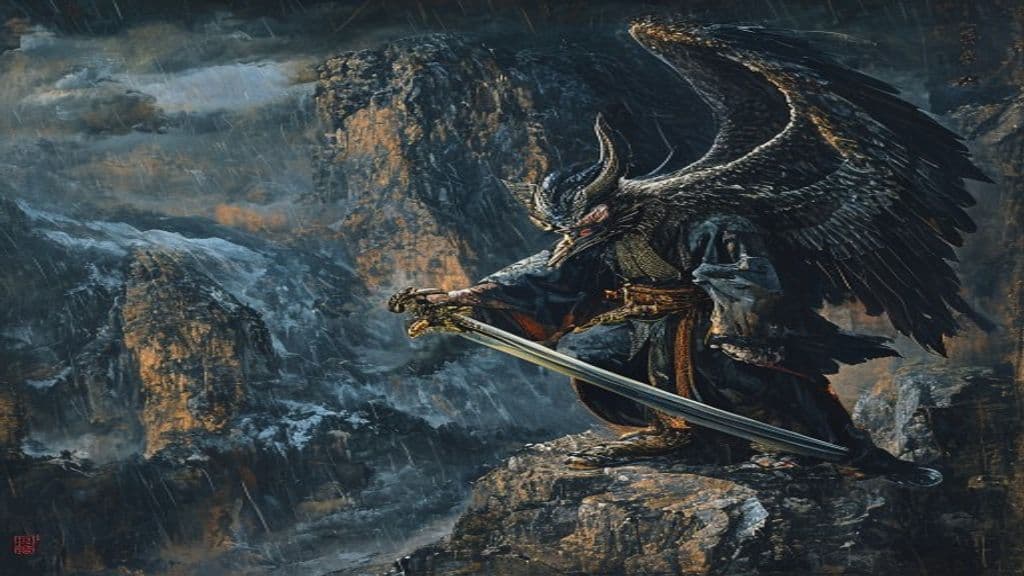
Tengu
Proud, warrior-like mountain spirits of Japan, associated with martial arts, pride, and the wild mountains. Neither fully good nor evil — they test and train warriors and monks, but punish the arrogant.
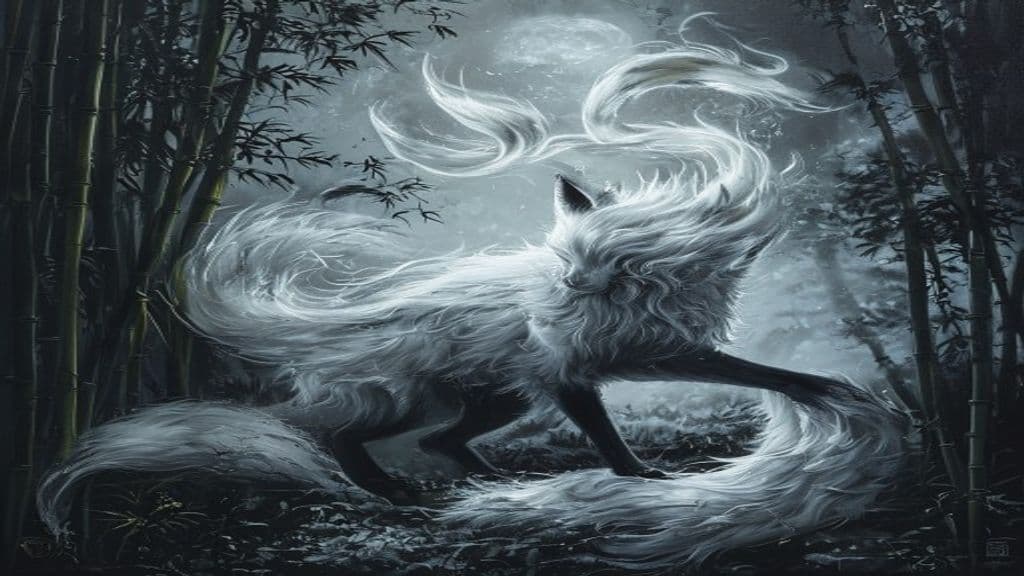
Kitsune
Fox spirits of Japanese mythology — intelligent, long-lived beings who gain additional tails (up to nine) as they age and grow in power. They serve as messengers of the god Inari and as powerful tricksters.

Sun Wukong
Sun Wukong (孫悟空, Sūn Wùkōng), popularly the "Monkey King," is a mythic non-human sapient figure from Chinese literary and religious tradition best known from the 16th‑century novel Journey to the West. Portrayed as an exceptional stone-born monkey who acquires supernatural powers through Taoist practice, he is alternately a rebellious trickster who challenges Heaven and, after punishment, a protector and disciple who accompanies the monk Tang Sanzang on a Buddhist pilgrimage.
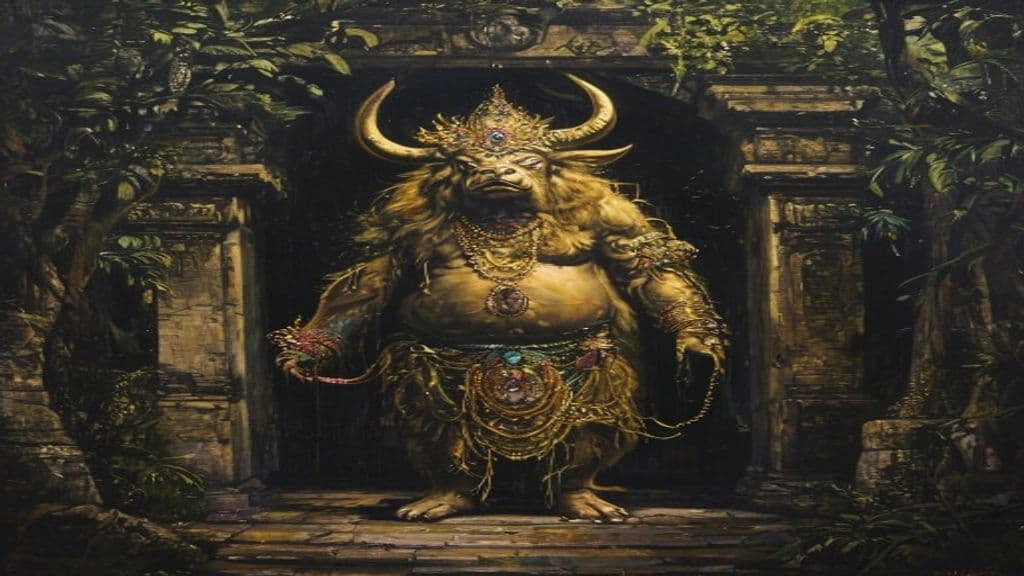
Yaksha
Nature spirits of Hindu, Buddhist, and Jain cosmology — guardians of forests, treasures, and wilderness. Ambivalent beings, capable of great benevolence to the respectful and terrible harm to the greedy.
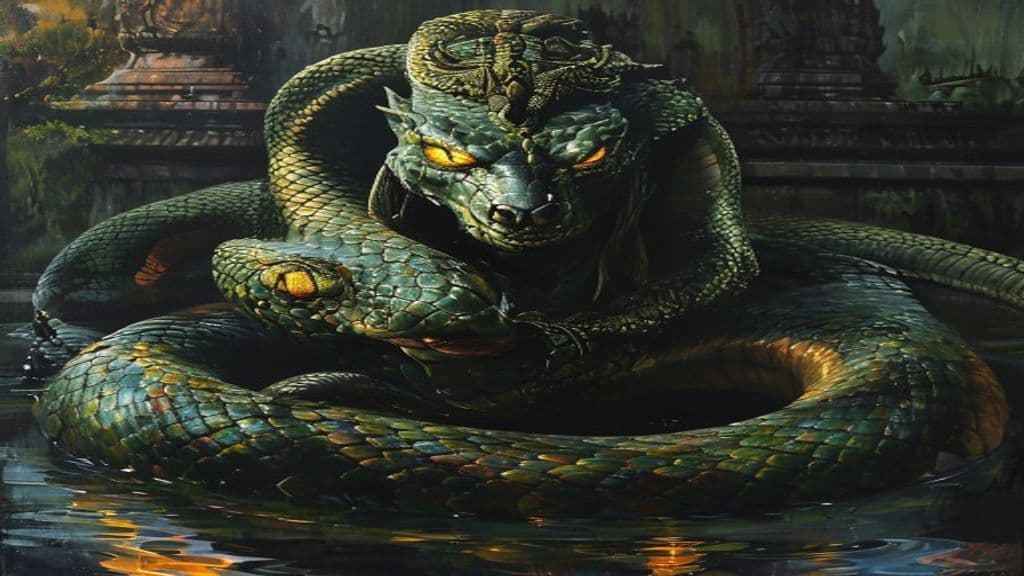
Naga
Divine serpent beings of Hindu, Buddhist, and Jain cosmology — powerful guardians of water, earth, and underground treasures. Revered as deities in South and Southeast Asia.
Community Record
- [1]Six‑Eared Macaque. Wikipedia: Six‑Eared Macaquewiki
- [2]Chapter 58 (Journey to the West). Omnisterra text of Journey to the West, chapter 58 excerptliterary
- [3]Lessons Learned from an Episode in Journey to the West. Minghui article recounting the episodeother
- [4]Six‑Eared Macaque | Public Domain Super Heroes | Fandom. pdsh fandom summary referencing Journey to the Westother
- [5]Origin of the Six‑Eared Macaque and the Character’s Influence on Black Myth: Wukong. Journey to the West Research discussion of origins and interpretationsother