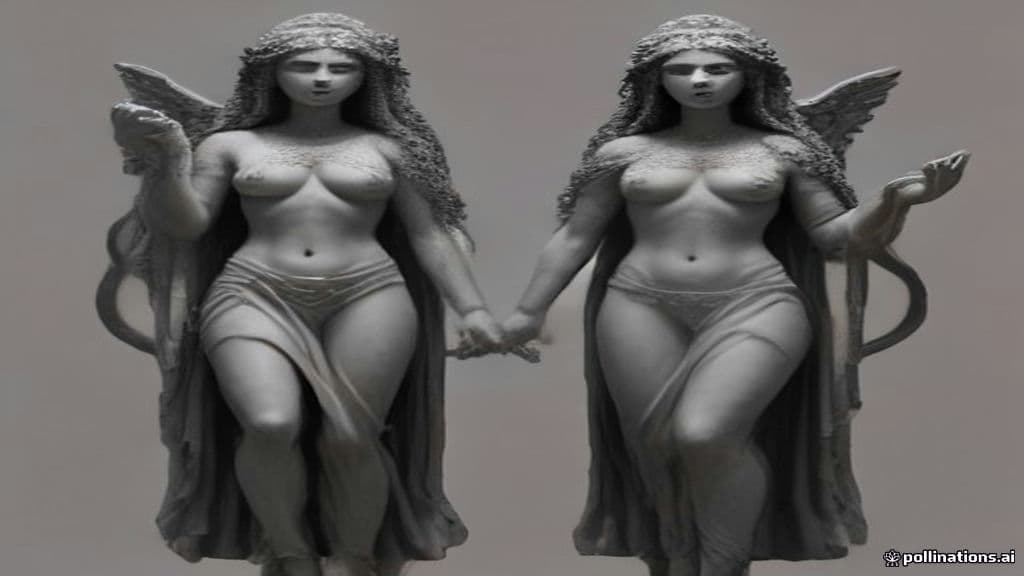
Classical summaries root Stheno and Euryale in the older, chthonic/sea monstrous generations. Hesiod and Apollodorus list Phorcys and Ceto as their parents, placing them among sea/chthonic offspring that embody natural and liminal dangers. Some later or variant summaries (e.g., Hyginus as cited in modern summaries) provide alternate genealogical connections to other monstrous lineages; the primary surviving classical tradition emphasizes their descent from Phorcys and Ceto.
In archaic Greek iconography and poetic description the sisters share standard Gorgon features: hair of serpents (Pindar describes "horrible snakey hair"), prominent terrifying heads often shown full‑faced (sometimes with little or no visible neck) on running profile bodies, wings on the back, and serpents associated at their girdles (a Hesiodic shield passage describes serpents hanging from their girdles, licking their tongues). Later visual traditions render their heads smaller relative to bodies, with visible necks and less wild expression.
Primary supernatural power attributed in the classical sources is the petrifying gaze: anyone who looked at the Gorgons could be turned to stone (Hesiod; Apollodorus summaries). Stheno and Euryale are described as immortal in these accounts (in contrast to the mortal Medusa). Literary passages emphasize aggressive pursuit — after Perseus beheaded Medusa the two sisters pursued him in retaliation — and vocal expression, with Euryale specifically noted for a loud, shrill lament or bellowing during the chase (Pindar; Nonnus).
Weaknesses
- conditionavoidance of direct gaze (countermeasure by heroes)
- conditioninvisibility of pursuer (narrative means by which Perseus evaded them via Hades' cap)
Wards
- otherindirect viewing (reflection in a bronze shield)
- otherHades' cap (helmet of invisibility used by Perseus to escape detection)

Medusa (the Gorgon)
Medusa, also called Gorgo or the Gorgon, is one of the three Gorgons in ancient Greek mythology. She is described as a mortal woman whose hair is composed of living snakes and whose gaze turns onlookers to stone; she is usually named as a daughter of the sea-associated figures Phorcys and Ceto and sister to Euryale and Stheno.
Phorcys
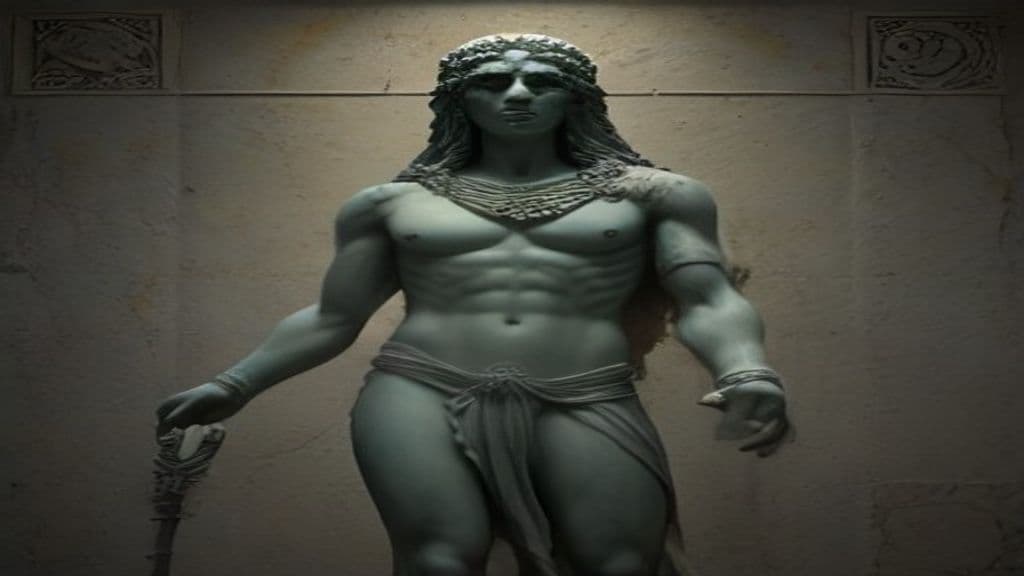
Phorcys (Ancient Greek: Φόρκυς) is a primordial sea deity in Greek myth, presented in Hesiodic genealogy as a son of Pontus and Gaia. Paired with Ceto, he is chiefly noted as the progenitor of a brood of archaic, often monstrous marine and chthonic beings and appears in iconography as a hybrid merman-monster in Hellenistic–Roman art.
Ceto
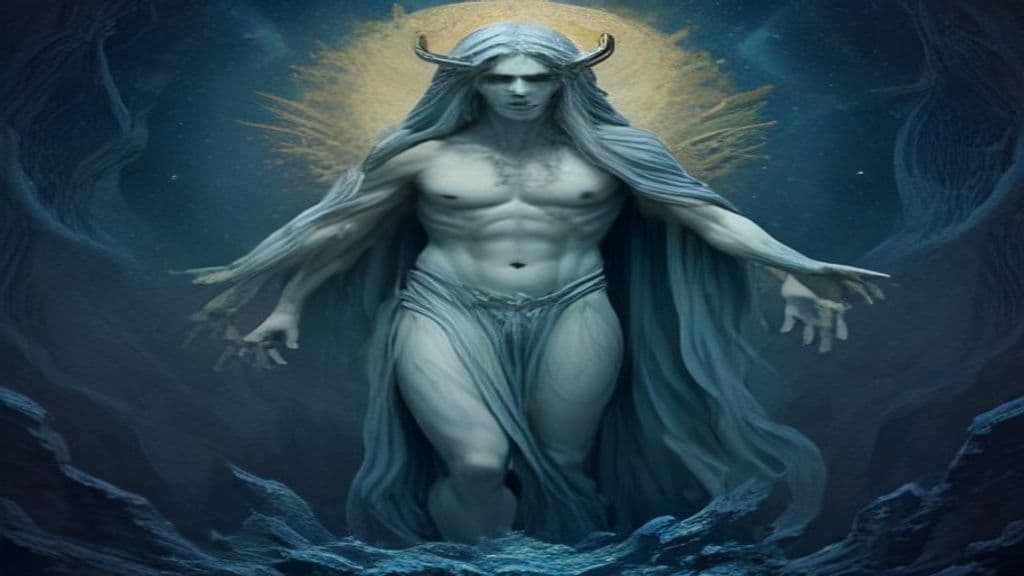
Ceto (Ancient Greek: Κητώ, Kētṓ) is a primordial sea goddess in Greek mythic cosmology, daughter of Pontus and Gaia, primarily notable as the maternal progenitor of various named monstrous beings (e.g., the Graeae and Gorgons) by Phorcys. Her name is etymologically linked to the common Greek term for sea-monster (kētos), and she functions chiefly as a genealogical and cosmological figure rather than an active, individualized actor in surviving narratives.
Typhon
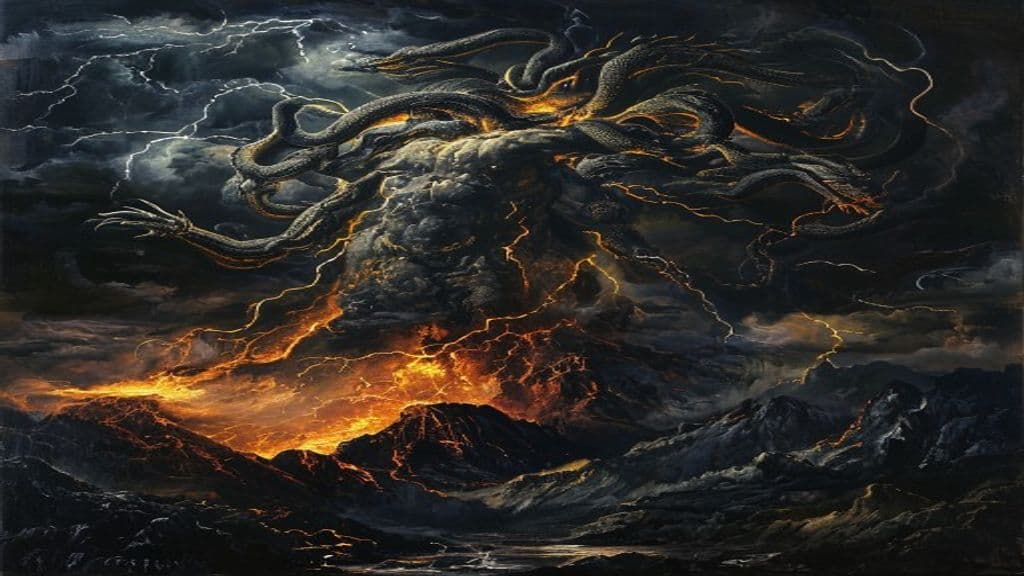
The last great monster of Greek mythology — a vast, fire-breathing giant whose shoulders sprouted a hundred serpent heads, nearly toppling Zeus from Olympus.
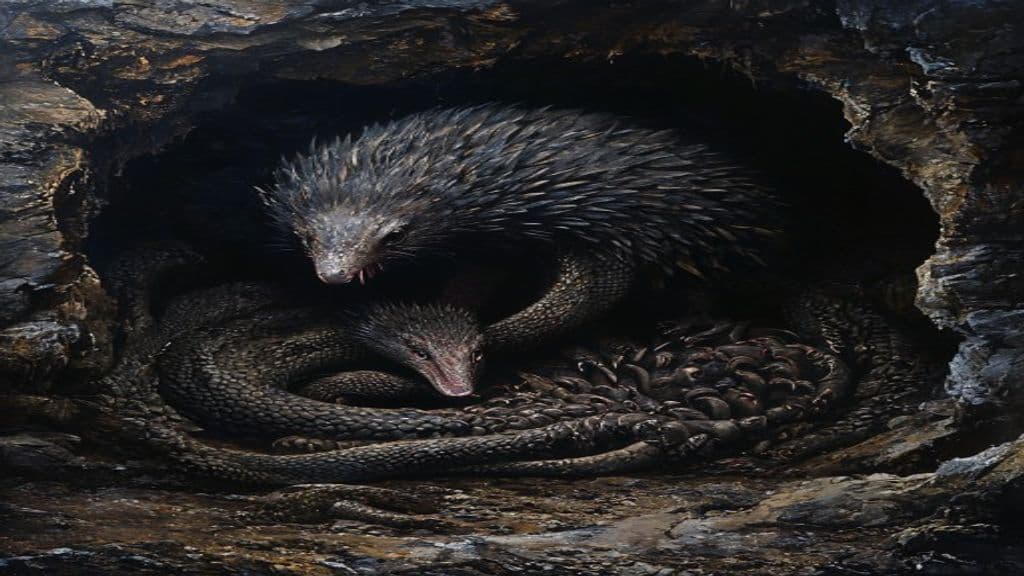
Echidna
The 'Mother of Monsters' — half beautiful woman, half enormous serpent — who with Typhon gave birth to nearly every great monster of Greek mythology.
Community Record
- [1]Stheno and Euryale (Wikipedia). Wikipedia entry summarizing Hesiod, Apollodorus, Pindar, Nonnus, and iconographywiki
- [2]Cultural depictions of Medusa and Gorgons (Wikipedia). Wikipedia summary noting modern reinterpretations and mentions of Stheno and Euryalewiki
- [3]Top 10 Strongest Greek Mythical Creatures (archive.org video listing). Archive.org video listing referencing Gorgons among Greek monsters (modern popular taxonomy)other
- [4]Returning We Hear the Larks - Far-Stepper/Of Wide Sea (archive.org tracklist). Archive.org album tracklisting invoking Stheno and Euryale as thematic elements (modern cultural use)other
- [5]Medusa (Gorgons/Olympian gods) (marvunapp summary). Modern summary of Gorgons and mythic episodes (used in compiling modern summaries)other
- [6]Various modern retellings and illustrations (The Nameless Zine; Alison Eldred gallery; fandom pages). Modern novella, illustrations and fandom summaries that reinterpret Stheno and Euryale (cultural reception material)other