
Two main traditional strands appear in the sources. In early (17th‑century and runestone) tradition the being is a sjöorm—an ancient lake/sea‑serpent—tied to narratives in which a rune‑master carves a spell into the Frösö Runestone to bind the creature to the lake bottom; variants of the rune‑master’s name (Kettil Runske / Ketil Jamte / Ketil Ruske / Gudfast) occur across accounts. In later folktale variants the creature is presented as the accidental by‑product of troll magic: two trolls brewing in a cauldron create a strange animal with a serpent body and cat‑like head that becomes a menace. These accounts coexist in the tradition rather than being reconciled into a single canonical origin.
Descriptions vary across manuscript, folktale and eyewitness reports. Early manuscript and runestone tradition present it as a sjöorm (lake‑serpent) and the Frösö Runestone has been read as showing a large serpent. Folktale accounts describe a black, serpent‑like body with a cat‑like head and, in some versions, the capacity to grow large enough to encircle Frösön and bite its tail. Eyewitness reports from the 19th century onward commonly mention a long neck, snake‑like undulating body, several humps or undulations on the back, and head shapes variously characterized as cat‑like, dog‑like, or “black and gleaming”; reported length estimates in collected testimonies range roughly from about 3.5 to 14 metres (reported claims, not verified measurements).
Folklore presents the creature as a potentially dangerous lake‑dweller whose presence could render crossings of Storsjön unsafe; manuscript tradition asserts that while the stone lay down the lake was unsafe until the stone was re‑erected. Behavioural traits in accounts include surfacing intermittently, producing undulating movements and multiple humps, and the capacity (in tale) to encircle an island. No documented authenticated capture exists in the cited sources; the record includes organized attempts and ongoing eyewitness reports rather than verifiable removal or death of the creature. The entity’s restraint in many versions is a product of rune‑magic rather than a natural containment.
Weaknesses
- ritualbinding by runic inscription on the Frösö Runestone
Wards
- ritualFrösö Runestone inscription and re‑erection (rune‑binding tradition)
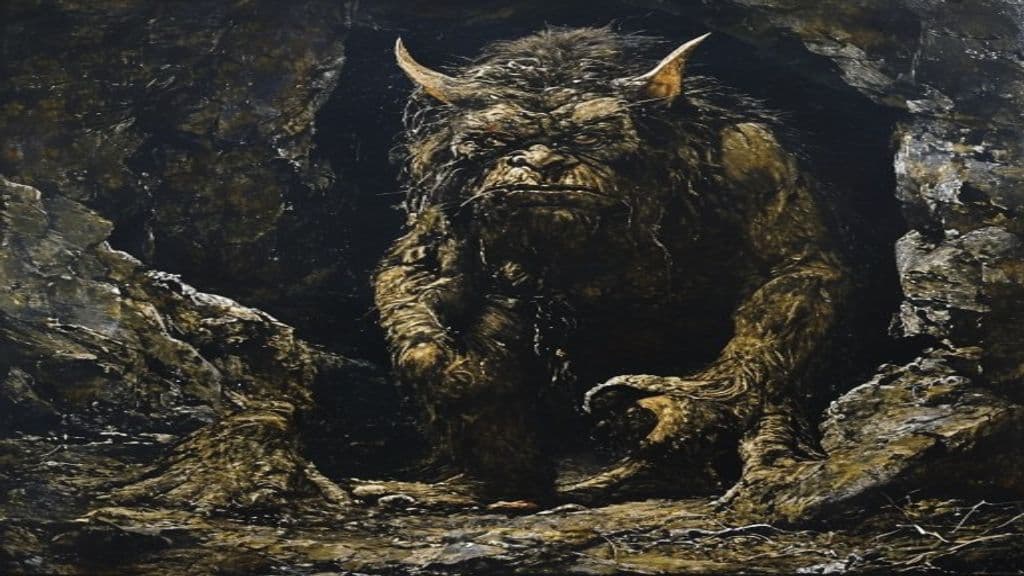
Stihi
Stihi is an Albanian folkloric storm-associated female supernatural being described as a fire-breathing demon or dragon that is sometimes represented as a treasure-guardian. Sources present it as a dangerous elemental force linked to storms and compared to the kulshedra.
Stilbe
Stilbe (Ancient Greek: Στίλβη, Stílbē, 'glittering, gleaming') is a named female figure in Greek myth, usually presented as a nymph or mortal woman whose primary role in surviving accounts is genealogical: mother of eponymous ancestors and notable offspring by gods (principally Apollo, and in some traditions by Hermes or mortals). Sources preserve variant parentages and progeny but do not ascribe cult, powers, or iconography to her.
Stilt-owl (Grallistrix)
Grallistrix, commonly called the 'stilt-owl' or 'owl on stilts', is an extinct genus of true owls (family Strigidae) known from subfossil remains on the Hawaiian Islands. Described by paleontologists from skeletal material, these owls are reconstructed as long-legged, primarily ground-foraging predators that inhabited multiple Hawaiian islands during the Late Quaternary.
Stolas
Stolas is named in modern reference works as a demon associated with the Ars Goetia and is used as a character in contemporary media. In the animated series Helluva Boss Stolas is presented as a Goetial demon of Hell who possesses an ancient book that enables travel between Hell and the human world.
Stoneco (Stone people / Rock spirits - lesser-known stone sentinels)
No evidence in the provided sources supports the existence of a Lakota supernatural entity named "Stoneco" or a folkloric tradition of "stone people" or "rock spirits." The materials supplied refer to corporate entities or municipal contractor listings that include the string "Stoneco" or "StoneCo," and an unrelated corporate Wikipedia page; they contain no ethnographic or folkloric information about Lakota stone spirits.
Stoor Worm
The Stoor Worm (Mester Stoor Worm) is a colossal, malevolent sea‑serpent of Orcadian (Orkney) folklore known from 19th‑century preservations and later retellings. In the tradition it threatens coastal communities with physical destruction and a poisonous, putrid breath; in the central tale the hero Assipattle kills it by thrusting burning peat into its liver.
Stratichus (Stratius)
Stratichus (Ancient Greek: Στράτιχος), also called Stratius, is a minor mythological figure — a prince of Pylos and one of the sons of King Nestor. He is named among Nestor's children in Homeric and mythographic listings (notably in contexts summarizing The Odyssey and in genealogical compilations such as Apollodorus) but is not the subject of independent myths in the provided sources.
Stratobates
Stratobates (Ancient Greek: Στρατοβάτην) is a Mycenaean prince in Greek genealogical tradition, recorded as one of the sons of King Electryon and Anaxo. He is primarily attested in lists of Electryon's children and is reported to have been killed, along with his brothers, by the sons of Pterelaus during a dynastic dispute that frames the ancestry of Alcmena and the later story of Heracles.
Straw Millionaire
A supernatural entity representing moral lessons in frugality and cleverness, appearing in Japanese Buddhist folk tales to illustrate the power of resourcefulness and determination. (Note: - Power tier: Lower to Greater (The Straw Millionaire's abilities are more in line with a regional entity, given its focus on moral lessons and resourcefulness rather than cosmic power.) - Origin stor)
Stray Sod
A clump of enchanted grass attributed to faeries in Celtic tradition, causing disorientation and loss of direction. (Note: - Power tier: Primordial (not Lesser), as the effect described is far-reaching, causing disorientation even in familiar surroundings. - Abilities: Add that the effect can persist even after leaving th)
Stree
A vengeful female spirit from Chanderi who abducts men during festival nights. Warded off by the inscription 'O Stree, kal aana' — her legend, still practised on walls across Madhya Pradesh, inspired the 2018 Bollywood horror-comedy.
Strigoi
The vampire of Romanian folklore — either a living witch (strigoi viu) or an undead blood-drinker (strigoi mort). The source tradition from which the literary vampire emerged.
Community Record
- [1]Storsjöodjuret. Wikipedia: Storsjöodjuret (overview, quotations from Plantin, summary of traditions and eyewitness reports)wiki
- [2]Wikidata: Storsjöodjuret. Wikidata entity summary and metadataother
- [3]Frontiers of Zoology: Storsjoodjuret in Lake Storsjon. Popular/cryptozoology discussion of sightings and modern contextother
- [4]Storsjöodjuret Cam Permits?. Discussion of modern camera permits and alleged footage in popular cryptid mediaother
- [5]Storsjöodjuret | Cryptid Wiki | Fandom. Compiled popular summaries and eyewitness report excerptsother
- [6]Archive: Storsjöodjuret, betong form. Concrete mold Great Lake Monster (2451557). Material culture reference to modern uses of the monster motifother
- [7]Archive: 51. Conspiracygate II : Obehaglig pasta. Podcast/archive material referencing the monster in modern mediaother
- [8]Sandy Ewen & Henry Kaiser: 'Storsjöodjuret' (music track). Example of contemporary cultural/artistic use of the legendother