
In the principal tradition preserved in classical mythographic summaries, Stilbe is daughter of the river god Peneus and the Naiad Creusa, situating her in Thessalian riverine genealogy; an alternate account names Eosphoros as her father. By unions with gods and mortals she becomes progenitor of important lines: by Apollo she is said to have borne twin sons, Centaurus (ancestor of the Centaurs) and Lapithus (ancestor of the Lapiths); other traditions attribute to her sons such as Aineus (father of Cyzicus) and, in another variant, she is cited as possible mother of Autolycus by Hermes. In one account she is mother of the nymph Chariclo by Cychreus. These competing genealogies exemplify the localized and multi-authorial nature of Greek myth.
Ancient sources supplied in the surviving summaries provide no physical description or standardized iconography for Stilbe. She is named and located through parentage and offspring rather than by appearance. Her name's literal meaning, 'glittering' or 'gleaming' (from Greek stilbē), may be a literary epithet conveying radiance, but the sources do not record any depiction, costume, or visual attributes tied to her in cult or art.
No explicit supernatural abilities, magical functions, or habitual behaviors are recorded in the available material. Stilbe's role in the sources is genealogical and reproductive: she bears children to gods (notably Apollo, and in some variants Hermes) and mortals, thereby linking divine parentage to later human or semi-divine lineages (Lapiths, Centaurs, Cyzicus). The lack of described agency or powers in the sources is the basis for treating her as a named ancestral figure rather than an active magical agent.
Weaknesses
- otherNo recorded weaknesses — ancient sources and modern summaries do not list any vulnerabilities or means to harm or repel Stilbe (sources: Wikipedia summary; archival summaries).
Wards
- otherNo recorded wards — there are no preventive, protective, or exorcistic rites associated with Stilbe in the supplied materials (sources: Wikipedia summary; archival summaries).
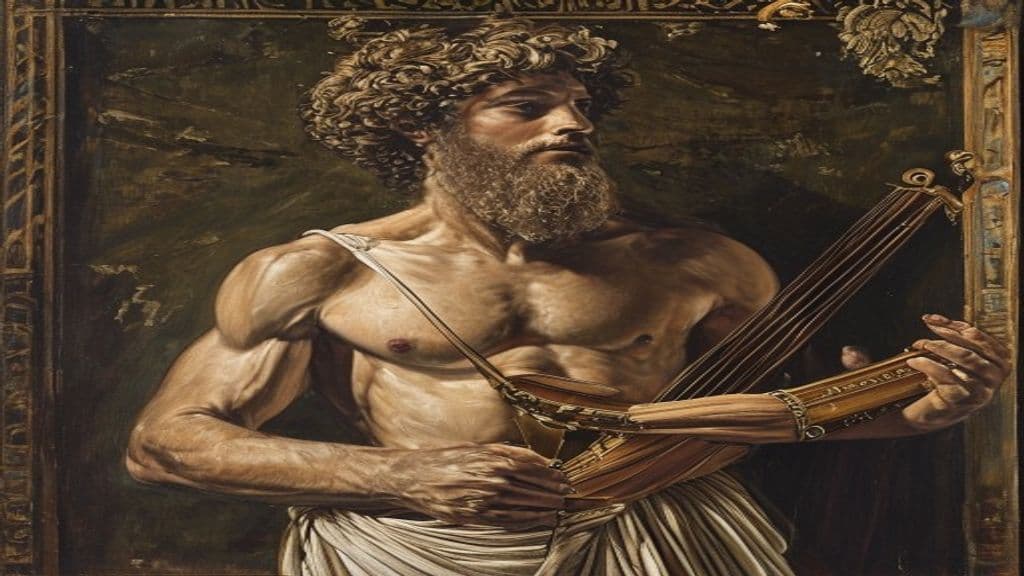
Aegeas (Aegeus)
Aegeas (classical Aegeus) is the mytho-historical king of Athens from Greek myth, father of Theseus and traditional eponym of the Aegean Sea. The provided sources treat him as a mortal royal figure embedded in epic and local foundation narratives rather than a supernatural spirit or cultic being.
Aglaia (Grace)
Aglaia (Ancient Greek: Ἀγλαΐα) is one of the Charites (the Graces) in classical Greek myth, the personification of splendor, brilliance and festive radiance. She appears in poetic narratives as an attendant of Aphrodite, a dancer of Orchomenus in Nonnus's Dionysiaca, and in some traditions as the wife of Hephaestus and mother of personified social virtues.
Ampyx
Ampyx (Ancient Greek Ἄμπυξ, also Ampycus/Ampykos) is a personal name borne by several distinct mortal figures in Greek myth. The name is attached to seers, a priest, warriors, and ancestral/founder figures across different local traditions rather than to a single supernatural species or class.
Androgeus
Androgeus is a mythic human name borne by at least two distinct figures in Classical Greek and Roman tradition: a Cretan prince, son of Minos and Pasiphaë, famed for athletic victories and whose death in some accounts is linked to the Marathonian/Cretan bull; and Androgeos, a Greek soldier named by Virgil in the Aeneid who, during the sack of Troy, mistakes Aeneas and his companions for fellow Greeks. Both are mortal figures woven into larger heroic and epic cycles rather than supernatural beings.
Aora
Aora (Ancient Greek: Ἀώρα) is attested in the classical Greek mythic record as a nymph and eponymous ancestress: the town of Aoros in Crete was said to have been named for her, and aristocrats of Eleutherna claimed descent from her and her husband Eleuther, one of the Kouretes.
Ariadne
Ariadne is a figure from Greek myth—described as a Cretan princess, helper of the hero Theseus, and in many accounts the consort of Dionysus—whose narratives range from abandoned mortal lover to deified cult figure associated with the labyrinth, weaving, and a wedding diadem set among the stars (Corona Borealis).
Astydamia
Astydamia is a mortal woman attested in classical Greek genealogical myth. In the primary mythographic excerpt provided she is named as a daughter of Pelops and as wife of Alcaeus (mother of Amphitryon and Anaxo in that account); a modern botanical note alternatively identifies an Astydamia as wife of Acastus, son of Pelias, a conflicting attribution in the sources given.
Cassiopeia (mother of Andromeda)
Cassiopeia is a named mortal figure from Greek myth presented in the sources as the queen of Aethiopia and mother of Andromeda; her name is also applied to a northern constellation that represents that mythic queen. The provided materials also record other mythic women bearing the same name in varied genealogies and many modern cultural and scientific reuses of the name.
Eurybius
Eurybius (Ancient Greek: Εὐρύβιος, Eurybios) is a personal name borne by multiple mortal personages in Greek mythic genealogies — notably a son of Neleus of Pylos and a son of Eurystheus of Tiryns. Attestations are genealogical and narrative, recording parentage and reported fates rather than supernatural attributes.
Evadne
Evadne (Ancient Greek: Εὐάδνη, Euádnē) is an ancient Greek personal name borne by several mortal women in classical mythic genealogies and dramas; in modern usage it appears as a personal or taxonomic name. The supplied sources treat Evadne primarily as an anthroponym rather than a discrete supernatural class or persistent spirit.
Lycaon of Arcadia
Lycaon is a mythic king of Arcadia who, in the commonly attested classical version, murders and cooks his son to test Zeus's omniscience and is by divine retribution transformed into a wolf; the tale functions as an etiological and moral narrative about impiety and metamorphosis in Greek myth.
Palaechthon
In classical Greek literary context Palaechthon (Παλαίχθονος) is an earth-linked eponymous ancestor invoked to mark indigenous origin; attested only in Aeschylus' The Suppliants and discussed by later commentators and modern reference works. The name combines elements meaning 'old/long' (palai-) and 'earth' (chthon-) and functions as an aetiological device legitimizing Pelasgian claims to the land.
Community Record
- [1]Stilbe — Wikipedia (summary of classical traditions). Stilbe. Wikipedia. https://en.wikipedia.org/wiki/Stilbewiki
- [2]Wikidata: Stilbe. Wikidata entry Q147352 for Stilbe. http://www.wikidata.org/entity/Q147352other
- [3]Archival search results and notes (selection). GeoDIL-131 (archive search results referenced in research notes). https://archive.org/details/GeoDIL-131other