
In Greek and Roman literary tradition the strix appears both as a monstrous nocturnal bird and as a term applied to certain malignant women. Antoninus Liberalis preserves a version (from Boios) in which a metamorphosed woman becomes a bird that cries by night with head downward and feet upward and is said to be a harbinger of war and civil strife. Latin authors (from Plautus through Ovid and later glossators) extend the concept into manifold literary episodes: metamorphosis narratives, witchcraft glosses, and anecdotes of corpse theft and infant attack.
Classical descriptions vary. Ovid (Fasti) gives a detailed birdlike account summarized as a large-headed bird with intense eyes, a rapacious beak, greyish-white wings, and hooked claws. Other accounts describe the strix as dark-colored or emphasize an inverted, hanging posture (head below, feet above) in origin-myth contexts. Literary usage also pictures human women who fly or transform into striges, so appearance can be avian, hybrid, or a denotation applied to certain women.
Sources attribute nocturnal cries and violent feeding on human flesh and blood to the striges: Ovid describes disemboweling of infants and blood-feeding; Plautus uses the image metaphorically of devouring humans; Petronius recounts striges snatching a corpse and substituting a dummy. Some classical and later reports (noted by Pliny and Titinius summaries) assert a motif of the strix squirting foul-smelling milk onto infants' lips. The name and parts of the creature (feathers, wings) appear in magical recipes (Horace, Propertius, the mythic catalogue of Medea's concoctions), and the term is used in maledictions and lexical glosses equating striges with witchy women (Festus, Isidore, John of Damascus).
Weaknesses
- substancegarlic (placed on the infant)
- ritualexpulsion from doorways by a whitethorn (spina) wand used by Cranae/Carna (Ovid's Fasti account)
Wards
- substancegarlic amulet for infants (Titinius/Pliny tradition)
- ritualdoor-warding with a whitethorn wand given by Janus and used by Cranae/Carna to keep striges from a newborn (Ovid, Fasti)

Stree
A vengeful female spirit from Chanderi who abducts men during festival nights. Warded off by the inscription 'O Stree, kal aana' — her legend, still practised on walls across Madhya Pradesh, inspired the 2018 Bollywood horror-comedy.
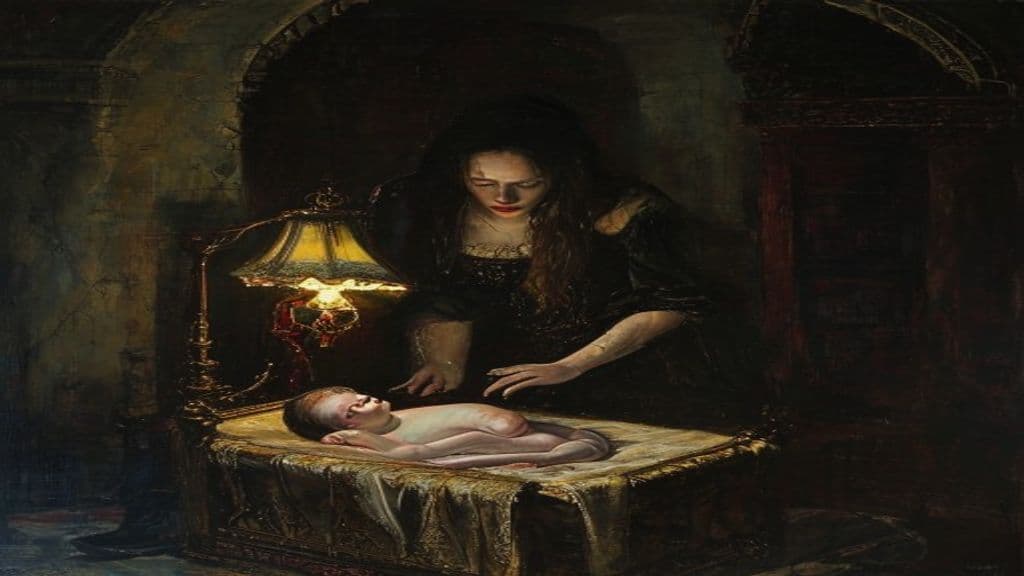
Gello
A child-strangling demoness of Greek and Byzantine tradition, the spirit of a young woman who died before marriage, now preying on pregnant women and newborns.
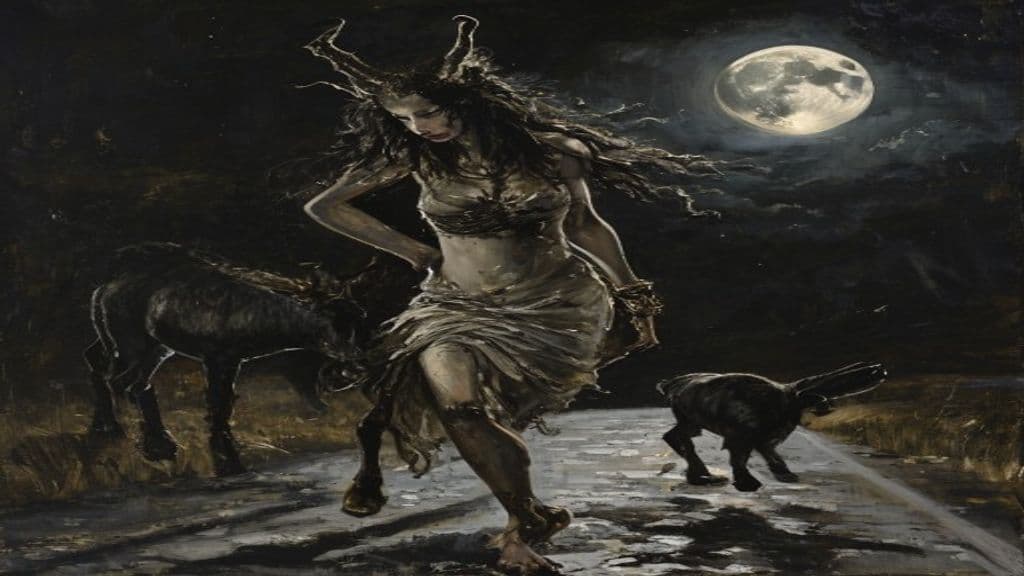
Empusa
A shape-shifting seductress-demon of ancient Greek folklore — sent by the goddess Hecate to ambush travellers at night, taking the form of beautiful women to feed on the blood and flesh of young men.
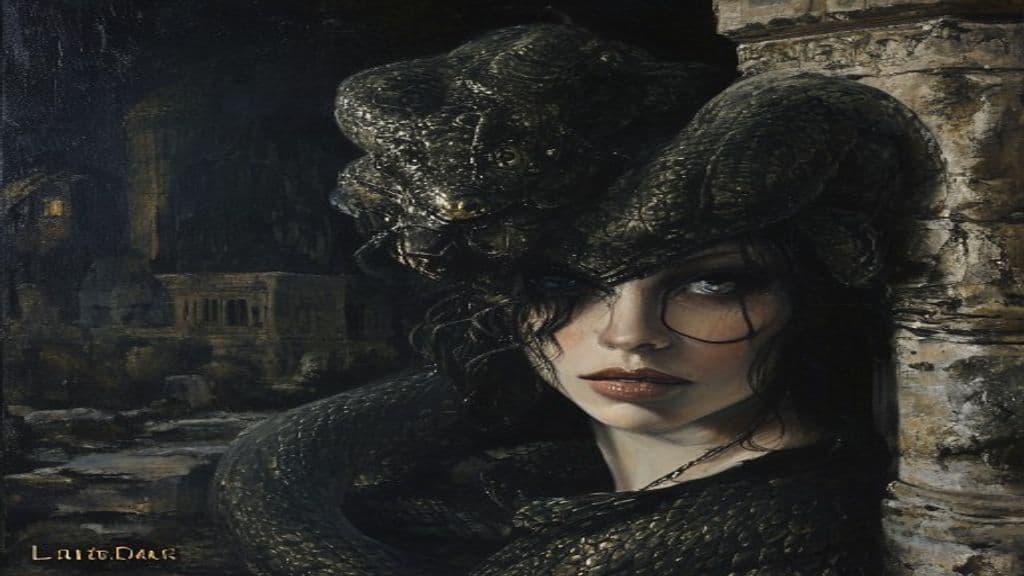
Lamia
A child-devouring demon of Greek mythology — once a queen of Libya and lover of Zeus, driven mad by Hera's destruction of her children and transformed into a monstrous hunter of other women's children.

Ghoul
A ghoul is a demon-like or monstrous humanoid originating in pre-Islamic Arabian religion, traditionally associated with graveyards and the consumption of human flesh. The concept later entered broader folklore and has been widely reused and transformed in modern fiction and popular culture.
Community Record
- [1]Strix (mythology) — Wikipedia. Wikipedia article 'Strix (mythology)' summarizing classical sources (Antoninus Liberalis, Ovid, Plautus, Petronius, Pliny, Festus, Isidore, John of Damascus, etc.)wiki
- [2]Mythical Monsters in Classical Literature (overview). Scholarly collection treating monsters of classical literature; used in research notes regarding thematic placement of the strix among vampiric/child-harming entitiesacademic
- [3]Ovid, Fasti (summarized). Ovid's Fasti — gives the detailed physical description of the strix and the narrative of the cradle attack and the whitethorn wand (as summarized in the collected sources)literary
- [4]Antoninus Liberalis (preserving Boios). Antoninus Liberalis preserves a Boios tale describing metamorphosis into a bird that cries by night with inverted posture and serves as harbinger of war/civil strife (summarized in source material)literary
- [5]Petronius, Satyricon (anecdote). Petronius' Satyricon anecdote of striges snatching a corpse and announcing themselves by a scream (summarized)literary
- [6]Pliny the Elder (natural history summaries). Pliny records reports that the strix squirts milk on infants' lips and notes the term's use in maledictions, while expressing skepticism about identifying it as a real species (summarized)literary
- [7]Plautus, Pseudolus (usage). Plautus uses 'striges' metaphorically as 'vampyre owls' to evoke man-eating imagery (summary)literary
- [8]Horace and Propertius (magical recipes mention). References to the use of feathers/wings in love potions and magical preparations citing Horace, Propertius, and mythic lists such as Medea's brew (summarized)literary