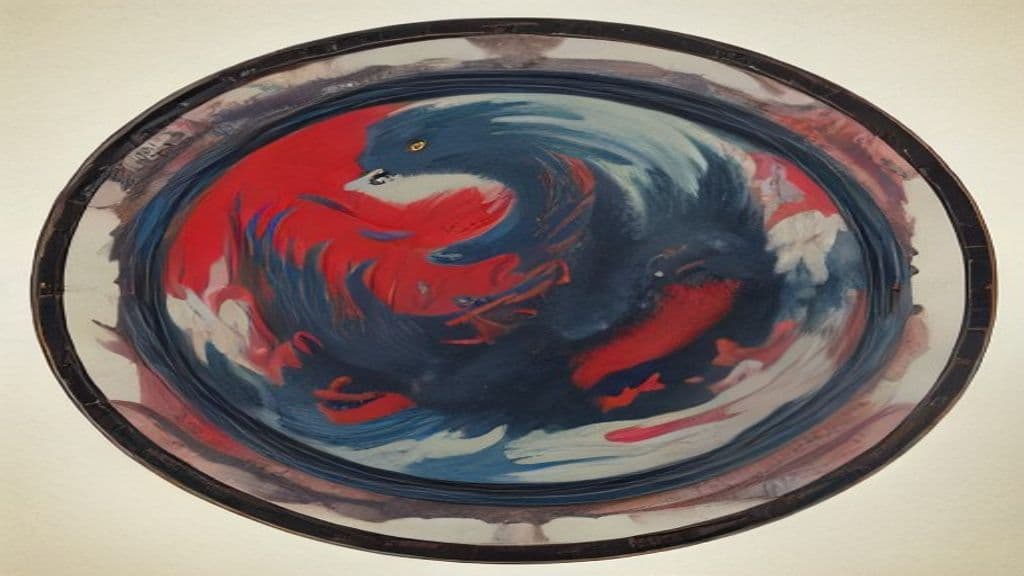
The entity is attested in the Japanese yōkai/bestiary tradition via Toriyama Sekien's Konjaku Hyakki Shūi (as cited in Kappapedia), where it is recorded under the reading toodai ki / toodaki (灯台鬼). Wikidata also links the term to appearances in narrative material such as the Tale of the Heike and other stories (as noted in the supplied excerpts). Beyond these cataloguing and indexing attestations, modern secondary sources and fiction rework the motif: a Monster Wiki entry presents a folkloric-style origin in which a human is transformed by dark magic into a candlestick-like cursed spirit, while Tezuka Osamu's manga Duke Goblin employs a Todaiki image as a giant lighthouse demon within a prophetic dream sequence. The supplied materials do not provide a single canonical medieval origin narrative or a detailed primary-source origin myth.
Primary documentary evidence in the supplied material is classificatory and pictorial rather than descriptive prose. Kappapedia's citation of Sekien records the term with the characters 灯台鬼 and labels it 'Demon with a candlestick,' indicating a hybrid of a lamp/lighthouse/candlestick and a demonic figure in Sekien's plate. The Monster Wiki describes a 'twisted humanoid version of a candlestick' that may be immobile and mute. Tezuka's usage characterizes it as a 'giant lighthouse demon' in a dream. No further consistent visual details (colors, exact anatomy, scale beyond 'giant' in one fiction) are provided in the supplied excerpts.
Accounts in the supplied sources disagree or emphasize different roles rather than a consistent set of powers. Sekien's inclusion in Konjaku Hyakki Shūi places the Tōdaiki among catalogued supernatural beings but the supplied citation gives no explicit powers. The Monster Wiki frames it as a cursed spirit transformed from a human by dark magic and often rendered immobile and mute, used as an ornament by sorcerers or evil spirits (this narrative detail appears only in that modern secondary source). Tezuka's Duke Goblin uses the motif as a visionary or prophetic monstrous figure in a dream sequence. The supplied material does not document traditional abilities such as possession, disease-causing, or weather control, so specific powers remain uncertain in these sources.
Tākitimu
An ancestral waka (canoe) in Māori tradition, representing a cultural and historical connection between Polynesia and New Zealand. (Note: - Power tier: Primordial (due to its role in facilitating a major cultural and historical event) - Abilities: Not applicable, as it doesn't possess supernatural powers or behaviors; instead, describe )
Tāne (Māori)
A god in Māori mythology associated with forests and birds, son of Ranginui and Papatūānuku. (Note: - Power tier: Greater (Tāne's association with forests and birds is significant, but not deity-level) - Abilities: Add specific examples from source material, such as his role in shaping the world - A)
Tāne Mahuta
Tāne Mahuta is a major Māori deity associated with forests and birds, celebrated as the child of Ranginui and Papatūānuku who separated sky and earth and established the forest realm. The name is also given to a famous living kauri tree (Agathis australis) in Waipoua Forest, New Zealand, which is venerated and protected as a cultural and natural landmark.
Tārā
Tārā is a major female sacred figure in Mahāyāna and Vajrayāna Buddhism — variably described as a bodhisattva, a Buddha, a yidam (meditation deity), and a motherly saviouress who rescues beings from worldly and spiritual danger. She functions as both an object of devotion and a meditational realization, with prominent forms such as Green and White Tārā and a liturgical corpus centered on mantras and sadhana practice.
Tāwhirimātea
Tāwhirimātea is the atua of weather in Māori cosmology, the personified ancestral being of winds, clouds, storms, thunder, lightning, rain, mist and related atmospheric phenomena. A son of Ranginui (Rangi) and Papatūānuku (Papa), he wages war on his siblings after their separation and his progeny are named winds, cloud-forms and kinds of precipitation.
Tāwhirirangi (Māori tradition)
A large, ocean-going voyaging canoe in Māori tradition that played a significant role in the migrations to New Zealand. (Note: 1. Power tier should be revised from Greater to Ancient, as it carried people "from one place to another, traversing the heavens or having spiritual significance". 2. Appearance is not fully supported)
Tōfu-kozō
An Edo-period yōkai figure depicted as a childlike attendant carrying a tray of tōfu. Originating in urban printed culture (kusazōshi/kibyōshi) in the An'ei era, it functions in early sources as a comic, timid servant-like supernatural character rather than a dangerous spirit.
Tōtara-i-kāria
A powerful ancestral waka from Māori tradition, central to the migrations that settled New Zealand. (Note: 1. Power tier: Lowered from Primordial to Greater, as it is described as an ancestral waka and its abilities are more aligned with powerful regional forces rather than cosmic. 2. Abilities: Clarify th)
Tū-te-wehiwehi
Tū-te-wehiwehi (also Tū-te-wanawana) is an ancestral atua in Māori cosmology presented as the progenitor of reptiles and the father of lizards. He is placed in whakapapa as a descendant of Tangaroa and as a brother of Ikatere, whose flight from Tāwhirimātea explains the separation of life into sea and forest domains.
Tūmatauenga
A primary god in Māori mythology associated with war, human activities related to sustenance and provision. (Note: - Power tier: Greater (not Ancient) - Abilities: Remove "food cultivation" as it's not mentioned in the source material - Sensory cues: Add "no explicit mention" - Weaknesses: Not specified in source )
Tūnui-ā-rangi
A great ocean-going, voyaging canoe in the Māori tradition. (Note: 1. Power tier should be Primordial, as it's a "great ocean-going, voyaging canoe" used in migrations that settled New Zealand, implying a cosmic or foundational role. 2. Appearance: Remove statement a)
Tūpurupuru
Tūpurupuru is a named human rangatira/warrior in Māori tradition, remembered in regional narratives (notably Wairarapa and some East Coast accounts) as a leader who confronts and kills the taniwha Ngārara Huarau and who appears in related genealogical and local-place stories. He functions as an ancestral/heroic human agent rather than a class of supernatural being.
Community Record
- [1]Todaiki Candlestick Oni (Kappapedia blog citing Toriyama Sekien). Kappapedia — entry citing Toriyama Sekien's Konjaku Hyakki Shūi for 'toodaiki, toodai ki 灯台鬼' labeled as 'Demon with a candlestick.'other
- [2]Todaiki | Monster Wiki | Fandom. Monster Wiki — 'A Todaiki is a horrific cursed spirit from Japanese folklore that was once human but has been transformed via dark magic into a twisted humanoid version of a candlestick. Often rendered immobile and mute...used as macabre ornaments by sadistic sorcerers or evil spirits.'wiki
- [3]Tōdaiki (Wikidata entry). Wikidata — lists the Tōdaiki as a 'yōkai from the "Tale of the Heike" and other stories' (as represented in the supplied excerpt).other
- [4]Duke Goblin|MANGA|TEZUKA OSAMU OFFICIAL. Tezuka Osamu official site — describes a prophetic dream containing a 'Todaiki (giant lighthouse demon)' in the Duke Goblin manga (as noted in the supplied excerpt).literary
- [5]Konjaku Hyakki Shūi (general reference). Konjaku Hyakki Shūi — Toriyama Sekien's Edo-period bestiary, the work cited in the supplied materials as the pictorial source for Tōdaiki's listing.academic
- [6]Duke Goblin (Wikipedia page referencing the work in which Todaiki appears). Wikipedia — summary noting the Duke Goblin work in which Tezuka uses the Todaiki motif (as referenced in the supplied materials).other