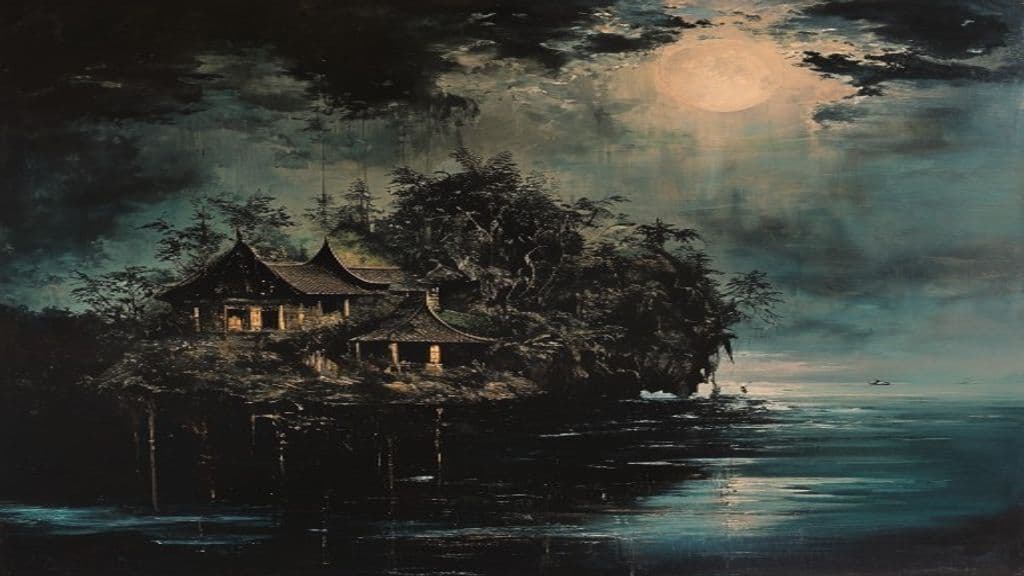
Associated with the Côn Đảo archipelago, where she lived during Lord Nguyễn Phúc Ánh's time. The legend likely originated in this specific location.
No description of physical appearance exists in source material.
Her actions have a significant impact on those around her due to her motivations and desires, indicating some form of agency or influence beyond mere human capabilities.
Weaknesses
- physical contactduring a vegetarian festival
Wards
- imprisonmentdue to Lord Ánh's suspicions
Thánh Gióng
Thánh Gióng is a legendary Vietnamese culture-hero and sainted warrior celebrated as a symbol of national courage and patriotism. Remembered as one of the canonical 'Four Immortals' of Vietnamese spirit, he functions in folk religion and public memory as a miraculous martial figure honored in festivals and communal veneration.
Thyreus
Thyreus is a minor figure in Greek mythographic tradition, named as a son of King Oeneus and Althaea of Calydon and listed among the royal siblings of Meleager. Separately, Thyreus is the name of an Old World genus of kleptoparasitic bees; the mythological and biological usages are unrelated in the provided sources.
Thyrsus (Giant)
A giant from the Germanic tradition, associated with a specific location in Tyrol. (Note: * Power tier should be Greater=powerful regional, as the source implies significant local presence and legend. * Origin story and Abilities sections need expansion or deletion, as they contradict the )
Thành Hoàng
A local Vietnamese deity protecting villages from natural disasters and calamities. (Note: - Power tier should be Lesser, as they are local spirits. - Summary is accurate but could be expanded. - Origin story is missing; include source material description of how these spirits came to be en)
Thánh Trần
Vietnamese venerated ancestor spirit and national hero associated with bravery, loyalty, protection, and national pride. (Note: - Power tier: Minor Spirit (as it is an ancestor spirit and not a deity) - Abilities: add that these qualities are believed to be bestowed upon people through his worship, such as protection from harm)
Thánh Tông di thảo
A collection of 19 tales in the truyền kỳ (traditional Vietnamese folktales) genre, written by Emperor Lê Thánh Tông during his reign in 15th-century Vietnam. (Note: 1. Power tier: Lowered to Greater, as there's no indication of Primordial-level powers. 2. Origin story: Simplified to focus on Lê Thánh Tông's promotion of Confucian learning and his writing in Liter)
Thần Trụ Trời
A Primordial deity responsible for creating the world by establishing pillars in Vietnamese mythology. (Note: 1. Power tier: Primordial (consistent with being a creator deity) 2. Add sensory cues (e.g., description of pillars, sound, or other unique characteristics associated with Thần Trụ Trời's presence) 3)
Tiamat
The primordial salt-sea dragon of Babylonian creation myth — the chaos-mother from whose slain body the universe was built, and whose blood became the first humans.
Tiangou
Tiangou (天狗, tiāngǒu, 'Heavenly Dog') is a Chinese legendary canine associated with eclipses and with an asterism in traditional Chinese astronomy. Sources present Tiangou in two contrasting roles: a hostile black dog thought to devour the Sun or Moon during eclipses, and a benevolent guardian spirit (sometimes a white-headed fox) associated with protection and welfare.
Tiberinus
Tiberinus is the Roman name attested for the divine personification of the River Tiber and separately for a legendary king, Tiberinus Silvius, listed among the early kings of Alba Longa. The name thus appears in two registers of Roman tradition: as a river-god tied to Rome's central watercourse and as a figure in mytho-historical genealogies.
Tibetan Mountain Spirit (Lu / Srin)
Lu (klu) and srin (srin / srin sngon) are classes of local mountain, earth, and water-associated spirits in Tibetan cosmology. They function as site deities, ancestral/household spirits, and ambiguous local powers that may be beneficent or dangerous depending on ritual relations; tantric adepts in Buddhist tradition are recorded as subjugating or oath-binding them into protector roles.
Tibetan Rakshasa (Dämo / Takma)
Rakshasa (Sanskrit: rākṣasa) in the supplied materials appears as a class of malevolent non‑human beings — rendered in English as “demons” or “ogres” — known from South Asian epic literature and referenced in Himalayan/Tibetan geographic and popular materials. The sources do not provide a single, systematic Tibetan doctrinal account; instead rakshasas appear across epic narrative (e.g., Ravana) and place‑names (e.g., Lake Rākṣasatāla / Rakshastal), suggesting their presence in a shared South Asian–Himalayan imagination as antagonistic beings associated with danger and certain locales.
Community Record
- [1]Thứ phi Hoàng Phi Yến. Wikipedia article on Thứ phi Hoàng Phi Yếnwiki