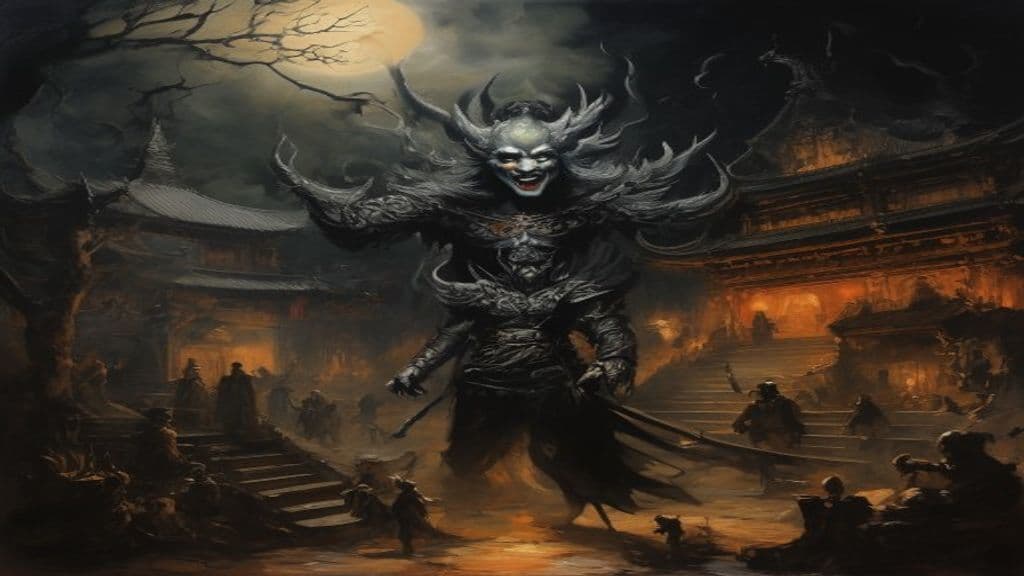
No detailed physical description is provided in the source material.
Thành Hoàng are believed to possess the power to protect villages from natural disasters and calamities.
Weaknesses
None recorded.
Wards
- ritualofferings and rituals at the Đình temple
Thuận Thiên (sword)
Mythological sword imbued with magical power associated with Emperor Lê Lợi's liberation of Vietnam from Ming occupation. (Note: 1. Power tier: Reduce to Greater (powerful regional) as Thuận Thiên's abilities are tied to a specific ruler and region, rather than being on a deity-level. 2. Origin story: Clarify that Lê Lợi procla)
Thyestes
Thyestes is a mythic human king of the Pelopid/Atreid cycle in ancient Greek and Roman tradition, central to a notorious family curse and a sequence of intra-familial crimes (adultery, fratricide, incest, and a cannibalistic banquet). His story is recounted in classical summaries and dramatized in Roman tragedy (notably Seneca) and later adaptations, and functions as a paradigmatic tale of inherited pollution and revenge.
Thyia
Thyia (Ancient Greek Θυία) is attested in Greek mythic-cultic tradition as a naiad — a freshwater nymph of a spring on Mount Parnassos in Phokis — and as a local female figure connected with cult activity. Her name is derived from the verb θύω ('to sacrifice'), and some sources connect the name-form with Thyiad/’Bacchic’ terminology, suggesting a possible link to cultic or ecstatic contexts.
Thyraeus
Thyraeus is a figure from Greek mythic genealogy described as an Arcadian prince, one of the fifty sons of King Lycaon, and an eponymous founder credited in ancient tradition with giving his name to the Arcadian city Thyraeum and (per Arcadian belief) to Thyrea in Argolis and the Thyrean Gulf.
Thyreus
Thyreus is a minor figure in Greek mythographic tradition, named as a son of King Oeneus and Althaea of Calydon and listed among the royal siblings of Meleager. Separately, Thyreus is the name of an Old World genus of kleptoparasitic bees; the mythological and biological usages are unrelated in the provided sources.
Thyrsus (Giant)
A giant from the Germanic tradition, associated with a specific location in Tyrol. (Note: * Power tier should be Greater=powerful regional, as the source implies significant local presence and legend. * Origin story and Abilities sections need expansion or deletion, as they contradict the )
Thánh Gióng
Thánh Gióng is a legendary Vietnamese culture-hero and sainted warrior celebrated as a symbol of national courage and patriotism. Remembered as one of the canonical 'Four Immortals' of Vietnamese spirit, he functions in folk religion and public memory as a miraculous martial figure honored in festivals and communal veneration.
Thánh Trần
Vietnamese venerated ancestor spirit and national hero associated with bravery, loyalty, protection, and national pride. (Note: - Power tier: Minor Spirit (as it is an ancestor spirit and not a deity) - Abilities: add that these qualities are believed to be bestowed upon people through his worship, such as protection from harm)
Thánh Tông di thảo
A collection of 19 tales in the truyền kỳ (traditional Vietnamese folktales) genre, written by Emperor Lê Thánh Tông during his reign in 15th-century Vietnam. (Note: 1. Power tier: Lowered to Greater, as there's no indication of Primordial-level powers. 2. Origin story: Simplified to focus on Lê Thánh Tông's promotion of Confucian learning and his writing in Liter)
Thần Trụ Trời
A Primordial deity responsible for creating the world by establishing pillars in Vietnamese mythology. (Note: 1. Power tier: Primordial (consistent with being a creator deity) 2. Add sensory cues (e.g., description of pillars, sound, or other unique characteristics associated with Thần Trụ Trời's presence) 3)
Thứ phi Hoàng Phi Yến
Legendary figure and imperial concubine from Vietnamese tradition, known for her involvement with Lord Nguyễn Phúc Ánh and the fate of their son, Prince Cải. (Note: 1. The power tier should be Primordial -> Ancient (Her abilities seem more deity-level, influencing Lord Ánh's decisions and having an impact on those around her). 2. The summary should mention that t)
Tiamat
The primordial salt-sea dragon of Babylonian creation myth — the chaos-mother from whose slain body the universe was built, and whose blood became the first humans.
Community Record
- [1]