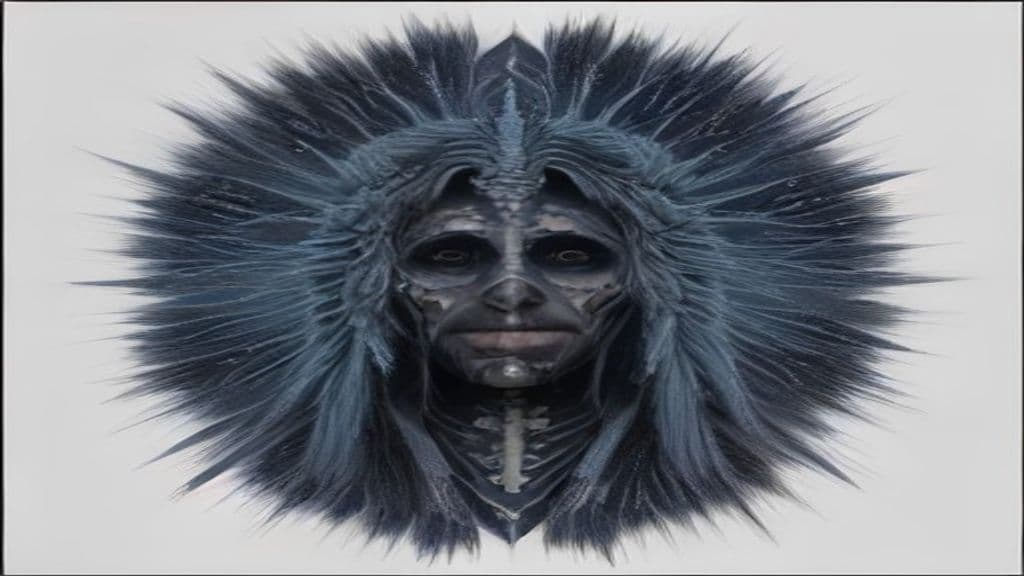
Not applicable: the sources do not provide any mythological origin story for a supernatural being called Tühi. Instead, the lexical root tuhi is recorded in Te Aka — the Māori dictionary — as a verb meaning 'to write, draw, record', and the phrase Te Tuhi appears as the name of a contemporary public art gallery in Pakuranga, Auckland. Personal-name uses (for example Tuhi Martukaw and Tuhi Timoti) and a Wikidata place-name (Tuhiba) are attested in the corpus but are not presented as mythic origins or as indicators of a spirit.
Not applicable as a supernatural entity: no source describes any physical or spectral appearance for a being named Tühi. The materials instead describe human-scale referents — the Te Tuhi gallery and individuals bearing the name — and the lexical meaning of tuhi in te reo Māori related to writing and drawing.
Not applicable as a supernatural entity: the provided sources do not ascribe powers, behaviors, or agency to any spirit named Tühi. The only behavioral content tied to the lemma 'tuhi' is the human action expressed by the verb in Māori — to write, draw, record — and descriptions of cultural activities at the Te Tuhi arts centre (exhibitions, programming).
Tyet
Egyptian symbol associated with the goddess Isis, representing her powers and attributes. (Note: - Power tier: Primordial is not supported by source material (no evidence suggests Tyet has primordial powers or abilities). - Abilities: Add that Tyet is often associated with Isis' protective and nu)
Typhon
The last great monster of Greek mythology — a vast, fire-breathing giant whose shoulders sprouted a hundred serpent heads, nearly toppling Zeus from Olympus.
Tzitzimimeh
Tzitzimimeh (Nahuatl: Tzitzimītl, pl. Tzitzimimeh) are a class of celestial female beings in Aztec tradition associated with the stars. Sources describe them as ambivalent figures: generative and protective of the feminine and linked to fertility, yet feared as dangerous during liminal, cosmically unstable times such as the Nemontemi and the New Fire ceremony.
Tzitzimītl (Tzitzimime)
Tzitzimītl (plural Tzitzimime) are a class of celestial deities in Aztec mythology associated with stars. They are commonly depicted as skeletal female figures and in post‑conquest sources are sometimes labeled as "demons" or "devils," a characterization that later authors applied to pre‑contact categories.
Tó Neinilii
Navajo rain god, trickster figure associated with precipitation and weather. (Note: 1. Power tier: Primordial (as Tó Neinilii has abilities related to weather control and creation) 2. Origin story: Add a sentence about Tó Neinilii saving the first Navajo people from the sea monster T)
Tübja
No ethnographic, mythological, or folkloric information about a supernatural entity named Tübja is present in the supplied sources. The term appears in the materials only as a family-name entry (Tubjanski) on Wikidata and as fragmented bibliographic/indexing strings in CIA archive documents.
Tākitimu
An ancestral waka (canoe) in Māori tradition, representing a cultural and historical connection between Polynesia and New Zealand. (Note: - Power tier: Primordial (due to its role in facilitating a major cultural and historical event) - Abilities: Not applicable, as it doesn't possess supernatural powers or behaviors; instead, describe )
Tāne (Māori)
A god in Māori mythology associated with forests and birds, son of Ranginui and Papatūānuku. (Note: - Power tier: Greater (Tāne's association with forests and birds is significant, but not deity-level) - Abilities: Add specific examples from source material, such as his role in shaping the world - A)
Tāne Mahuta
Tāne Mahuta is a major Māori deity associated with forests and birds, celebrated as the child of Ranginui and Papatūānuku who separated sky and earth and established the forest realm. The name is also given to a famous living kauri tree (Agathis australis) in Waipoua Forest, New Zealand, which is venerated and protected as a cultural and natural landmark.
Tārā
Tārā is a major female sacred figure in Mahāyāna and Vajrayāna Buddhism — variably described as a bodhisattva, a Buddha, a yidam (meditation deity), and a motherly saviouress who rescues beings from worldly and spiritual danger. She functions as both an object of devotion and a meditational realization, with prominent forms such as Green and White Tārā and a liturgical corpus centered on mantras and sadhana practice.
Tāwhirimātea
Tāwhirimātea is the atua of weather in Māori cosmology, the personified ancestral being of winds, clouds, storms, thunder, lightning, rain, mist and related atmospheric phenomena. A son of Ranginui (Rangi) and Papatūānuku (Papa), he wages war on his siblings after their separation and his progeny are named winds, cloud-forms and kinds of precipitation.
Tāwhirirangi (Māori tradition)
A large, ocean-going voyaging canoe in Māori tradition that played a significant role in the migrations to New Zealand. (Note: 1. Power tier should be revised from Greater to Ancient, as it carried people "from one place to another, traversing the heavens or having spiritual significance". 2. Appearance is not fully supported)
Community Record
- [1]Te Tuhi (Wikipedia). Wikipedia, 'Te Tuhi' (accessed in provided source list)wiki
- [2]tuhi - Te Aka Māori Dictionary. Te Aka — Māori Dictionary entry 'tuhi. 1, verb, -a, -ngia, to write, draw, record.'other
- [3]Te Tuhi — Jae Hoon Lee 'Ocean Rain Part 2' exhibition listing. Ocula exhibition listing referencing Te Tuhi programming (29 May 2024–29 May 2025)other
- [4]Te Tuhi – WordPress Showcase. WordPress.org showcase page for Te Tuhiother
- [5]Tuhi Timoti - AudioCulture profile. AudioCulture profile for musician Tuhi Timoti (personal-name attestation)other
- [6]Tuhi Martukaw — Wikipedia. Wikipedia entry for Tuhi Martukaw (personal-name attestation)wiki
- [7]Wikidata: Tuhiba (district). Wikidata entry Q12522515 for Tuhiba (district in West Papua) — homographic place-name attestationother
- [8]Archive: Abdelbasit_Bakara Studyo recordings. Archive.org audio material listed in source set (included in provided list but not related to a supernatural Tuhi)other
- [9]Te Papa — Tuhi | Project Draw (Springload Te Pipītanga). Project page referencing 'Tuhi' in a cultural/art contextother