
The thirty-two forms are a canonical grouping first listed in the Gaṇeśa‑centric scripture Mudgala Purana, and later rendered with detailed meditation verses (dhyāna‑śloka) and illustrations in compendia such as the 19th‑century Kannada Sritattvanidhi. The sources present these not as separate autonomous beings but as distinct named manifestations or iconographic/meditative types of the same deity, used as focal points in worship, temple imagery, and sectarian practice.
Appearance varies by named form: some are depicted with four arms typical of many Gaṇeśa images, others with different arm counts or postures; individual dhyāna‑śloka in the Sritattvanidhi list attributes specific iconographic features to each form. Example: Bala Gaṇapati is described as having an elephant head and a childlike depiction or facial expression. The Sritattvanidhi illustrations and verses record the attributes for each of the thirty-two forms, though regional and historical traditions include other variants (earlier two‑armed forms from the 4th century and multi‑armed Central Indian forms of the 9th–10th centuries are not reproduced in that 19th‑century compilation).
The compiled sources focus on iconography and devotional use rather than enumerating discrete miraculous powers. The thirty-two forms function as objects of worship and meditation through which devotees seek the conventional religious benefits associated with Gaṇeśa; some forms (for example Heramba) are singled out in sources as widely worshipped in particular regions. Ramachandra Rao's summary notes that certain forms—Mahāgaṇapati, Śakti‑gaṇapati, Ucchishṭa‑gaṇapati, and Lakṣmī‑gaṇapati—are associated with tāntrik (esoteric/cultic) worship, indicating specialized ritual and meditative practices directed to those forms.
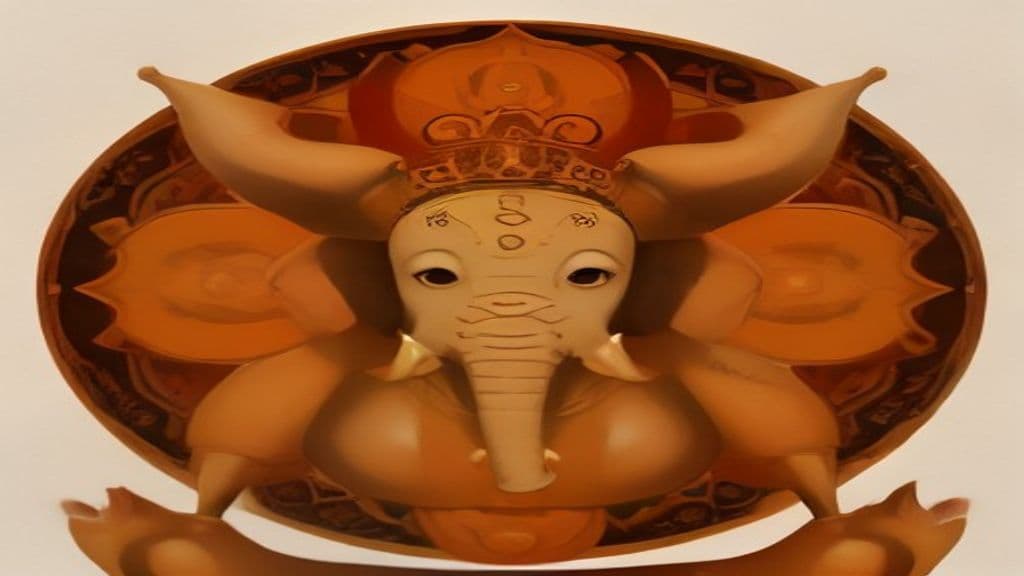
Heramba
Heramba is a named iconographic form of the Hindu god Ganesha, venerated especially within Tantric streams as a protector of the weak who bestows fearlessness and victory. He is classically depicted with five elephant heads and multiple arms, often riding a lion and sometimes accompanied by Ganesha's rat vahana.
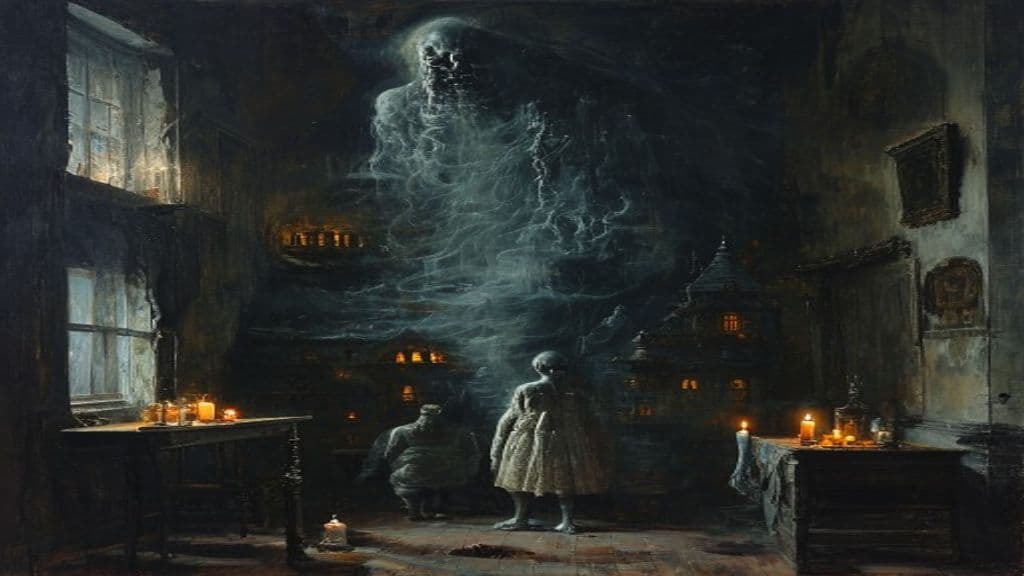
Mahapreta
The 'great ghost' — in Bihar and UP folk classification, a Mahapreta is a preta of exceptional power, born from a death involving multiple injustices simultaneously: wrongful killing, incomplete rites, and unresolved family debt combined. It commands lesser spirits and can cause harm across an entire lineage.
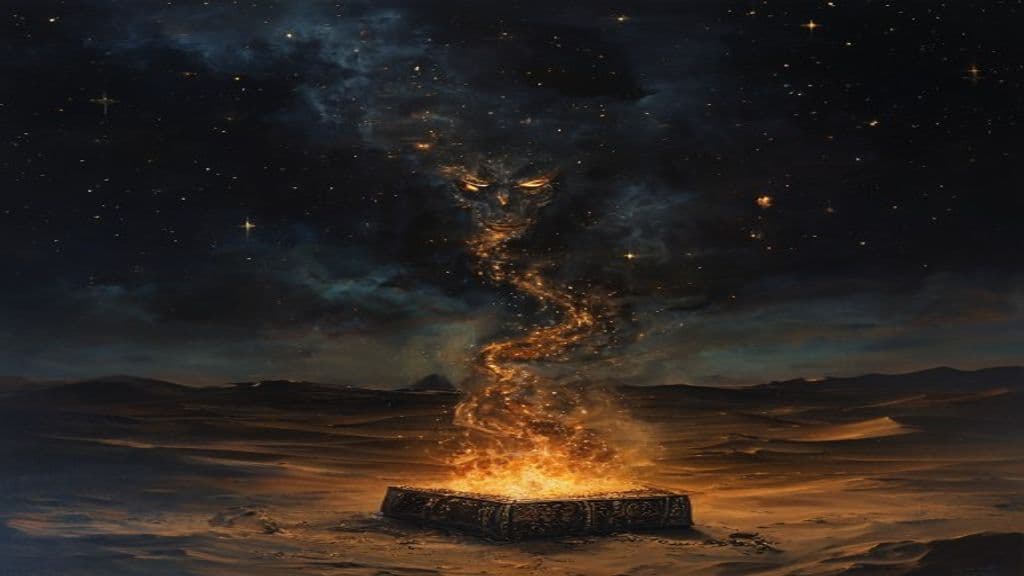
Djinn
The class of supernatural beings created from smokeless fire in Islamic cosmology — a parallel civilization to humanity, capable of belief or unbelief, with their own prophets, society, and judgment before God.
Community Record
- [1]Thirty-two forms of Ganesha (Wikipedia). Wikipedia: Thirty-two forms of Ganesha (summary referencing Mudgala Purana and Sritattvanidhi)wiki
- [2]Bala Ganapati (Wikipedia). Wikipedia article on Bala Gaṇapati (notes childlike depiction; cited in Sritattvanidhi context)wiki
- [3]Heramba (Wikipedia). Wikipedia article on Heramba (Heramba listed among the thirty-two; noted popularity in certain regions and Mudgala Purana attestation)wiki
- [4]Sritattvanidhi (19th‑century Kannada compendium) — referenced summary. Sritattvanidhi summarized in secondary sources as providing illustrations and dhyāna‑śloka for each of the thirty-two forms; text says meditation forms are from the Mudgala Purana (as reported in the cited summary).literary
- [5]Ramachandra Rao on sectarian associations (summary). Summary of Ramachandra Rao noting Mahāgaṇapati and other forms as tāntrik and especially worshipped (reported in the cited summary).academic
- [6]Martin‑Dubost on historical/iconographic limits of Sritattvanidhi (summary). Martin‑Dubost's observation that the Sritattvanidhi is a recent South Indian text which omits some earlier two‑armed and later multi‑armed central Indian forms (reported in the cited summary).academic
- [7]Mudgala Purana (attestation as earliest listing). Mudgala Purana identified in sources as the first text to list the thirty-two forms of Gaṇeśa (as reported in secondary summaries).literary