
Not attested. The available excerpts make no mention of an entity called Titairon. Related material in the sources concerns Greek mythic figures named Chloris (several women appearing as nymphs, wives, or daughters in genealogies) and Ampyx/Ampycus (a name borne by multiple figures); no narrative origin for 'Titairon' is provided in the cited texts.
Not attested. The provided passages describe no physical appearance for any being named Titairon. Descriptions in the sources pertain to characters named Chloris and Ampyx, for whom no consistent physical portraits are given in the excerpts.
Not attested. The sources do not ascribe powers or behaviors to an entity named Titairon. Related figures in the excerpts (Chloris, Ampyx) are presented in familial and genealogical roles; only Mopsus (their descendant in some accounts) is described as a renowned seer.

Apsara
Celestial dancers and water nymphs of Hindu cosmology — beautiful semi-divine beings who dance at the court of Indra and, by his command, descend to earth to distract sages from excessive asceticism.

Ampyx
Ampyx (Ancient Greek Ἄμπυξ, also Ampycus/Ampykos) is a personal name borne by several distinct mortal figures in Greek myth. The name is attached to seers, a priest, warriors, and ancestral/founder figures across different local traditions rather than to a single supernatural species or class.
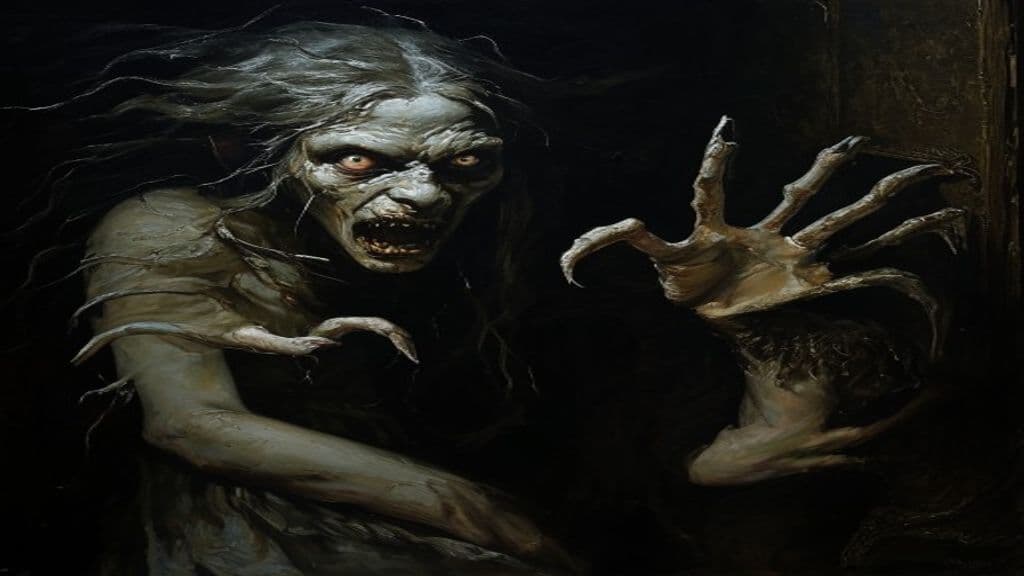
Mormo
A Greek child-eating bogeywoman used to frighten children into obedience, sometimes depicted as a shape-shifting female phantom who bit naughty children.
Tiny Tony
Tiny Tony is a Filipino comic-book character created by Mars Ravelo and illustrated by Jim Fernandez, later adapted into a 2008 television series (Komiks Presents: Tiny Tony) starring John Prats. He is a fictional media superhero/protagonist from Philippine popular culture rather than a supernatural or folkloric being.
Tiphys
Tiphys (Greek: Τῖφυς) is the appointed helmsman of the Argo in the Argonautic tradition. Portrayed across ancient sources as a skilled, practical navigator whose reading of winds, waves, sun and stars is vital to the voyage, he is a mortal specialist whose death during the expedition requires a successor.
Tiresias
Tiresias is the canonical Theban seer of Greek myth: a human prophet granted divinatory gifts by the gods, famed for longevity, episodes of gender transformation, physical blindness paired with supernatural sight, and continued prophetic authority even after death.
Tirian
Tirian is a fictional human character in C. S. Lewis's Chronicles of Narnia, the last King of Narnia and the protagonist of The Last Battle. He is a mortal ruler and skilled swordsman who leads Narnia in its final conflict, witnesses the deception of a false Aslan, and ultimately enters Aslan's Country.
Tisamenus
Tisamenus is a name attested in classical Greek myth and history for multiple human figures (notably mythic kings of Argos and Thebes and an historical seer of Elis) and is also the modern scientific name of a genus of Philippine stick insects (family Heteropterygidae). The classical attestations place Tisamenus within dynastic genealogies and as a divinatory specialist; the taxonomic usage names an endemic insect genus redescribed in modern entomology.
Tishpak
Tishpak (Tišpak) was the primary tutelary deity of Eshnunna (Diyala region) in Mesopotamia, chiefly characterized as a warrior and protector of the city and associated with serpents and dragonlike monsters (mušḫuššu, bashmu). He displaced the earlier local god Ninazu in Eshnunna’s temple tradition and appears in myths (e.g., the poorly preserved Labbu tradition) where he combats great serpentine foes.
Titania
Titania is the proper name used most prominently for the Queen of the Fairies in William Shakespeare's A Midsummer Night's Dream; the name also appears across astronomy, chemistry/mineralogy, and modern fiction as distinct, homonymous referents rather than a single folkloric entity. In the Shakespearean context she appears onstage as a sovereign fairy figure who enters accompanied by her retinue.
Titans
A generation of powerful primordial divine beings in Greek myth who preceded and were overthrown by the Olympian gods. They function as progenitors of many cosmic forces and later become chthonic powers confined beneath the earth (Tartarus) though some traditions allow certain Titans to remain free.
Titivillus
Titivillus is a medieval Christian demon associated with the collection of omitted, syncopated, or mispronounced syllables and fragments from liturgy and the errors of scribes and printers; he is depicted chiefly as an infernal agent who gathers these fragments in sacks to be counted against offenders.
Tiyanak
The tiyanak is a malevolent Philippine supernatural being typically depicted as an infant‑shaped spirit that lures people by imitating a baby’s cry and then attacks or abducts them. It is variously understood as the restless soul of an infant who died unnamed or unbaptized and, in older Spanish‑era accounts, as an obstetric spirit (patianac) that obstructs childbirth.
Tizheruk
A serpent‑like sea creature of Inuit oral tradition, reported in sources as inhabiting cold Alaskan waters (notably near Key Island / the Kenai Fjords). Traditional accounts describe it as a large, physical aquatic predator reported to seize people from piers and kayaks.
Tiʻitiʻi
Tiʻitiʻi is a Samoan mythological culture-hero, a Māui-type figure who performs transformative deeds for humans — most notably wresting the secret of fire from the earthquake god Mafuiʻe. He is presented in Samoan tradition as an extraordinary being whose exploits explain origins and important cultural goods rather than as a regularly worshipped deity.
Community Record
- [1]Chloris. Wikipedia contributors, 'Chloris,' Wikipedia, The Free Encyclopediawiki
- [2]Ampyx. Wikipedia contributors, 'Ampyx,' Wikipedia, The Free Encyclopediawiki