In the Diné Bahaneʼ (Navajo creation story), Áłtsé Hastiin (First Man) emerges as one of the original personages who come into the successive worlds of emergence. He appears paired with First Woman (ltse Asdzaa / ltse Asdzayay) and is present across the stages of the mythic sequence (for example, the Yellow World). Tradition links him to the founding landscape of Dinétah; some sources note Huérfano Mountain is thought to be the original home of First Man and First Woman. Áłtsé Hastiin figures in narratives that establish later social and ceremonial life — notably, he and First Woman find and raise Changing Woman, whose rapid growth and coming-of-age occasions the first puberty ceremony in Navajo tradition.
The available sources identify Áłtsé Hastiin by role and name rather than by a consistent physical iconography. Ethnographic and summary accounts cited treat him as a humanlike ancestral person in the creation narrative and do not provide a standardized or detailed physical description for the figure in the material provided.
Sources describe Áłtsé Hastiin chiefly in familial and narrative roles: as a protoplast who participates in emergence episodes, accompanies First Woman and other early personages through the worlds, and raises and teaches Changing Woman. The cited materials do not ascribe explicit magical powers, shape‑shifting, possession, or hostile supernatural abilities to him; he functions as a foundational ancestral actor in mythic events rather than as a trickster or demon.
Zār (possession spirit, regional/Armenian context)
Zār is presented in the supplied materials as an instance of spirit-possession phenomena: nonhuman agents purported to control a human body and produce altered states of consciousness. The supplied corpus does not contain Armenia-specific ethnographic detail for Zār; statements below are drawn from the general description of spirit possession in the provided source material.
al-Burāq
Al-Burāq is the supernatural prophetic mount in Islamic narrative tradition, described in hadith and later exegesis as the white, lightning‑swift steed that carried the Prophet Muḥammad on the Night Journey (Isrāʾ and Miʿrāj) from Mecca to al‑Masjid al‑Aqṣā and thence through the seven heavens. The creature appears in later local traditions tied to specific sacred places (the Rock in Jerusalem, tethering traditions at the Haram/Western Wall) and in visual art, which sometimes expands on the terse textual descriptions.
qarāqaṣ / qarāqāsh (no attestation)
No reliable folkloric or ethnographic information about an entity called qarāqaṣ or qarāqāsh was found in the supplied sources. The term is unattested in the provided materials, which do not treat it as a supernatural being.
Áillen (Aillen)
Áillen is an otherworldly incendiary figure in Irish tradition who annually harasses the royal site of Tara at Samhain by lulling inhabitants to sleep with harp or timpán music and burning the place with fiery breath; his cycle is broken in the story-cycle when the hero Fionn mac Cumhaill resists the soporific music and kills him.
Álfröðull
Álfröðull is an Old Norse poetic term and mythic element denoting the sun as a shining disc or glory and the sun-chariot (and rider) associated with the goddess Sól. It functions both as a kenning in skaldic verse and as a cosmological actor whose fate is tied to the wolves and the eschaton of Ragnarök.
Ámsvartnir
Ámsvartnir is a named lake in Old Norse mythic geography attested in Snorri Sturluson's Prose Edda (Gylfaginning). Its name literally means "pitch black," and it is described as containing the island Lyngvi, the site where the gods bound the wolf Fenrir.
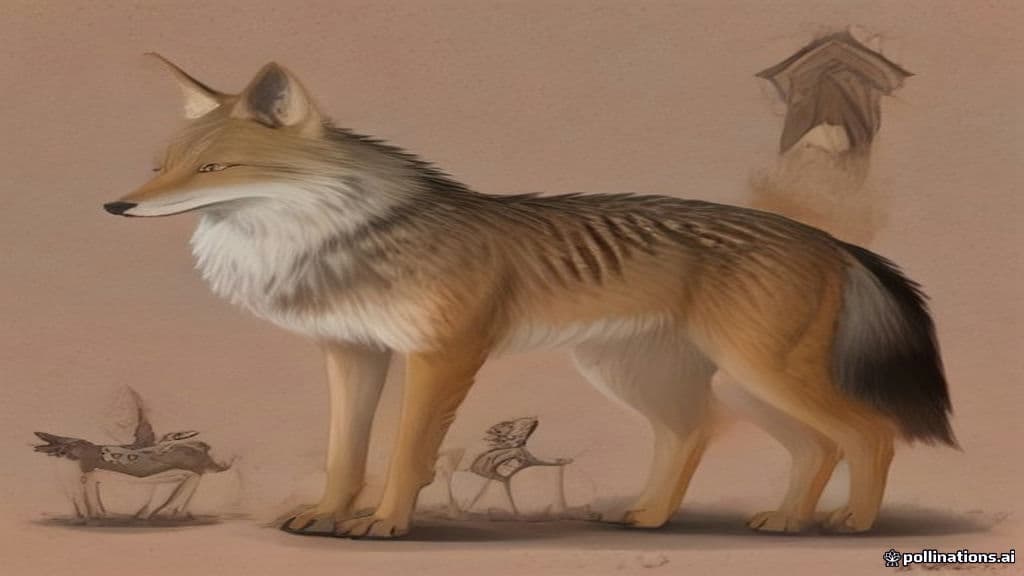
Áłtsé hashké (Coyote)
A complex figure in Navajo mythology embodying multiple roles and attributes, revered for his powers over rain. (Note: - Power tier should be adjusted to Greater (powerful regional) as the source material does not indicate primordial power. - Sensory cues are not specified but the article could note that Coyote's role)
Âu Cơ (Vietnamese Mountain Snow Goddess)
Immortal goddess associated with mountains, snow, and fertility in Vietnamese creation myth. (Note: - Power tier should be Ancient (deity-level) rather than Primordial (cosmic), as there's no indication she has cosmic powers. - Abilities: While fertility and creation are associated with Âu Cơ, stati)
Äio
No folkloric or mythological entity named "Äio" is attested in the provided source set. The available materials contain unrelated uses of similar letter sequences (e.g., the plant genus Aiouea, the astronomical body Io, software terms "io"), but none describe a being, tradition, or rituals called Äio.
Ægir
Ægir is a jötunn in Old Norse myth who personifies the sea and is depicted as a host who entertains the gods in a great hall; he is associated with brewing ale and is paired with the sea-goddess Rán, with whom he begets personified sea-waves.
Æsir
Æsir are the principal gods of Old Norse and wider Germanic religion, used both as a general term for gods and as a specific family of deities contrasted with the Vanir; the term is also attested in some early-medieval English contexts as a label for potentially harmful unseen beings.
Èṣù
Èṣù is a central orìṣà in the Yoruba religious system associated with trickery, chance, crossroads, judgement, duality, and languages. Described as a primordial divinity who descended from Ìkọ̀lé Ọ̀run, he functions as an intermediary who enforces natural and divine laws and governs liminal spaces and communication.
Community Record
- [1]Diné Bahaneʼ (overview). Wikipedia, 'Diné Bahaneʼ' (overview of Navajo creation story and First Man/First Woman roles)wiki
- [2]Huérfano Mountain. Wikipedia, notes that Huérfano Mountain is thought to be the original home of ltse Hastiin and ltse Asdzaa in traditionwiki
- [3]A Bridge Between Cultures: Chapter 5 (Rainbow Bridge administrative history). National Park Service administrative history, discusses Diné Bahaneʼ contexts and landscape associationsother
- [4]First Man | The Tony Hillerman Portal. Tony Hillerman Portal entry summarizing First Man (ltse Hastiin) in Navajo tradition, including role raising Changing Womanfolk
- [5]First Woman | The Tony Hillerman Portal. Tony Hillerman Portal entry on First Woman (ltse Asdzaa), paired with First Man in the emergence narrativefolk
- [6]List of protoplasts in religion. Wikipedia list noting cultural category of 'first humans' and including Navajo First Man as a protoplast figurewiki
- [7]Navajo Word of the Day: hastiin. Navajo Word of the Day entry providing lexical context for 'hastiin' (man) and related name formsother