
There is no single mythic origin for the undead as a category; the term in English predates Bram Stoker but Stoker's Dracula popularized the modern sense that associates the label chiefly with vampires and similar revenant beings. Traditions and works cited in modern summaries (e.g., encyclopedic entries and fiction) present multiple origins for specific undead types, ranging from spiritual animation to literary or pseudo‑scientific reanimation (examples cited in modern fiction such as Frankenstein and speculative explanations like bacteria or radiation).
No single canonical appearance defines the undead category. Sources list common examples that fall under the label: corporeal reanimated forms such as mummies, zombies, and skeletons, and incorporeal continuations such as ghosts; literary and game portrayals vary widely and may combine features (e.g., vampiric revenants, animated corpses).
Described broadly as deceased beings that 'behave as if they were alive,' undead in the cited materials may be animated by spiritual or supernatural forces (traditional/fictional accounts) or by scientific or pseudo‑scientific means in modern fiction. Narrative roles commonly assign them as antagonists or hazards that prey on, obstruct, or otherwise threaten the living (Bram Stoker's Dracula frames vampiric Undead as creating further Undead). In gaming and role‑playing contexts they are treated as a distinct class or faction, with specific mechanics varying by work.
Weaknesses
- conditionbeing 'made to rest as true dead' (destruction/putting to rest)
Wards
- ritualdestruction or 'making to rest as true dead' (literary remedy)
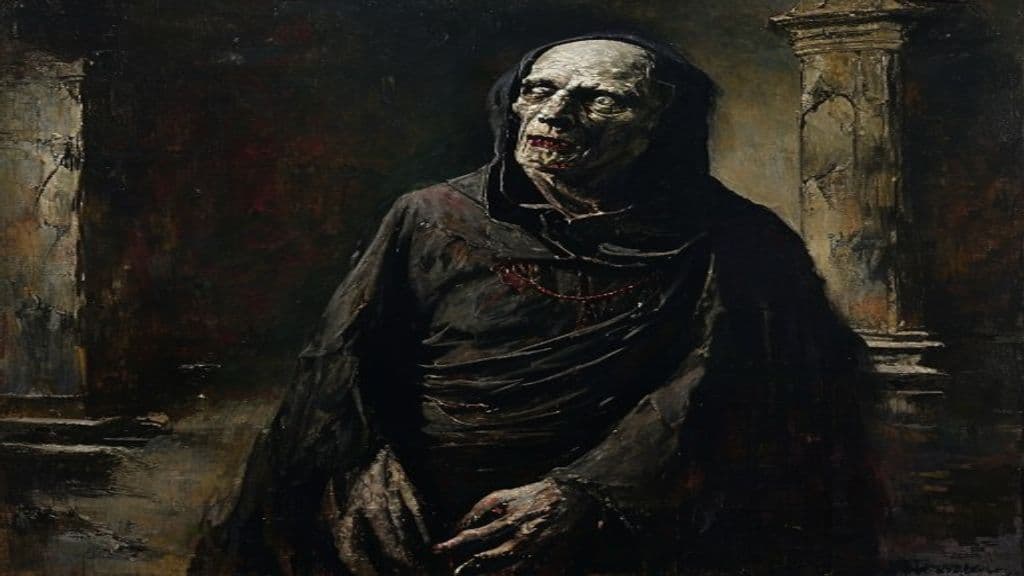
Vampire (tradition)
A class of revenant beings in southeastern and eastern European folk belief that subsist by feeding on the vital essence (generally blood) of the living. Recorded chiefly in early modern to modern oral traditions, these vampires are typically described as reanimated corpses whose presence explains unexplained illness, death, and post-mortem disturbances in their communities.
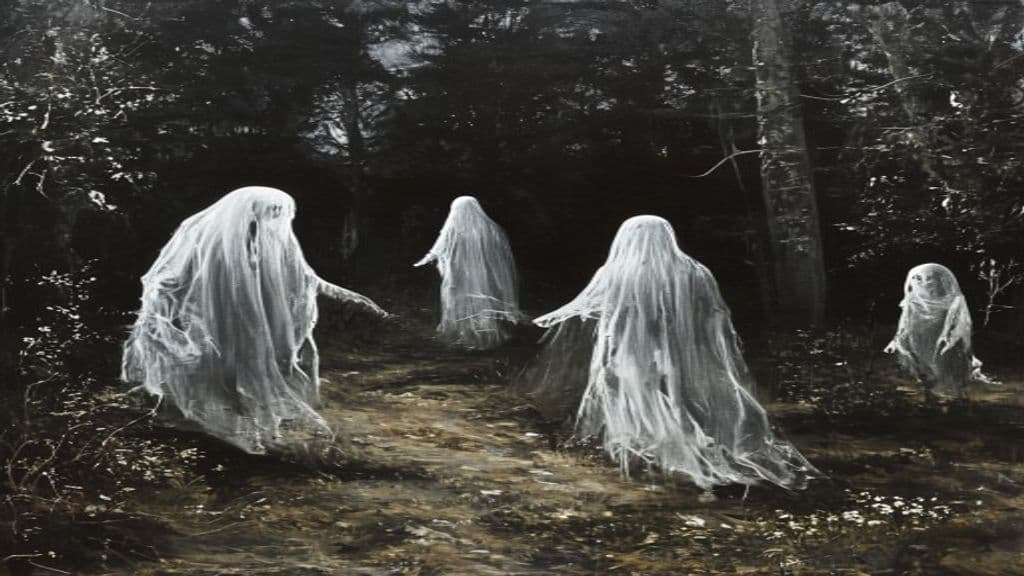
Ghost
A ghost is, in folklore, the soul or spirit of a dead person or non-human animal believed by some to be able to appear to the living. The concept functions across many cultures as an afterlife manifestation tied to ancestor belief, animism, and rituals intended to rest or manage the dead, while modern scientific accounts treat reported phenomena as lacking proof and often propose physiological or environmental explanations.
Ghost
A ghost is, in folklore, the soul or spirit of a dead person or non-human animal believed by some to be able to appear to the living. The concept functions across many cultures as an afterlife manifestation tied to ancestor belief, animism, and rituals intended to rest or manage the dead, while modern scientific accounts treat reported phenomena as lacking proof and often propose physiological or environmental explanations.
Nang Mai (Tree Spirits)
Nang Mai are female tree spirits in Thai folklore inhabiting individual large trees or tree clumps. They are localized tutelary/ghostly presences tied to the well‑being of particular trees and are said to punish those who cut or harm their trees.
Umay
Umay is a maternal fertility and child-care divine figure in Turkic myth and Tengrism, conceived as a celestial mother who guards unborn souls, protects infants and mothers, confers community prosperity, and is associated with the sun and the color yellow.
Umi Zatō
Umi Zatō (海座頭) is a yōkai — a supernatural figure — attested primarily as an illustrated entry in Toriyama Sekien's Gazu Hyakki Yagyō (1776) and in related Hyakki Yagyō emakimono such as the Matsui Library's Hyakki Yagyō Emaki. Beyond its pictorial attestations, the supplied sources give no narrative, powers, or ritual lore for this figure.
Umibōzu
Umibōzu is a yōkai from Japanese folklore depicted as a giant, dark, human-shaped sea apparition encountered by sailors and coastal communities. Sources classify it within paranormal phenomena/yōkai traditions but the provided materials offer limited detail on its deeds, origins, or countermeasures.
Umā (Parvati)
Umā, better known in the provided source as an epithet of the Hindu goddess Parvati (also called Gauri), is presented as a principal goddess associated with power, energy, nourishment, harmony, love, beauty, devotion, and motherhood and forms a triad (Tridevi) with Lakshmi and Sarasvati.
Unclean Force
A collective term for malevolent entities from Slavic paganism, associated with evil or negative forces. (Note: 1. Power tier should be Ancient (deity-level) instead of Primordial (cosmic), as the Unclean Force is associated with malevolent mythological forces and creatures. 2. Appearance: Add that there is no )
Undine (Ondine)
An elemental water spirit from Paracelsian occult cosmology later developed into a literary water-nymph archetype. Undines are humanoid, almost always presented as female, inhabit watery places, lack an immortal human soul by default, and—according to Paracelsus and later literature—may acquire a human soul through marriage with a human.
Unk Cekula
Unk Cekula is a serpentoid supernatural creature in Lakota mythology identified as responsible for many unexplained disappearances and deaths; a male counterpart is named Unk Tehi. Sources classify the figure as a mythological serpent within Lakota narrative material and note a possible relation to broader North American 'horned serpent' traditions.
Untamo
Untamo is a named human antagonist in the Finnish–Karelian Kullervo cycle. In the supplied sources he is depicted as a harmful magician figure who kills Kullervo's father, kidnaps his mother, and attempts three times to kill Kullervo as a child; one modern retelling summary calls him a "dark magician."
Untunktahe (Lakota Water Spirit)
In Lakota mythology, Untunktahe is a water spirit associated with bodies of water. (Note: 1. Power tier: Greater seems inconsistent with "associated with bodies of water", which could imply Lesser or Primordial. 2. Abilities: Not enough information to determine abilities; should be marked )
Unu
No supernatural being named 'Unu' is attested in the supplied sources. The string 'unu' appears only as a modern Romanian word meaning 'one', place name, institutional acronym (UNU), or in software/product/brand names; the corpus provides no folkloric cosmology, descriptions, powers, or rites for an entity called Unu.
Community Record
- [1]Undead - Wikipedia. Wikipedia: 'The undead are beings in mythology, legend, or fiction that are deceased but behave as if they were alive.'wiki
- [2]Undead (Dungeons & Dragons) - Wikipedia. Dungeons & Dragons category discussion cited in sources as treating undead as a class of animated beings.wiki
- [3]Dracula (quoted on Wikipedia). Quotation summarizing Bram Stoker: 'For all that die from the preying of the Undead become themselves Undead... when this now UnDead be made to rest as true dead, then the soul... shall again be free.'literary
- [4]Undead puzzle documentation. Puzzle example: assigns ghosts, vampires, and zombies as undead monster types.other
- [5]The Battle for Wesnoth — Undead faction. Wesnoth wiki: undead used as a faction/monster class in a game setting.other
- [6]RPG Maker game description (Archive). Archive summary: references 'Keltabot's undead followers' as game antagonists.other