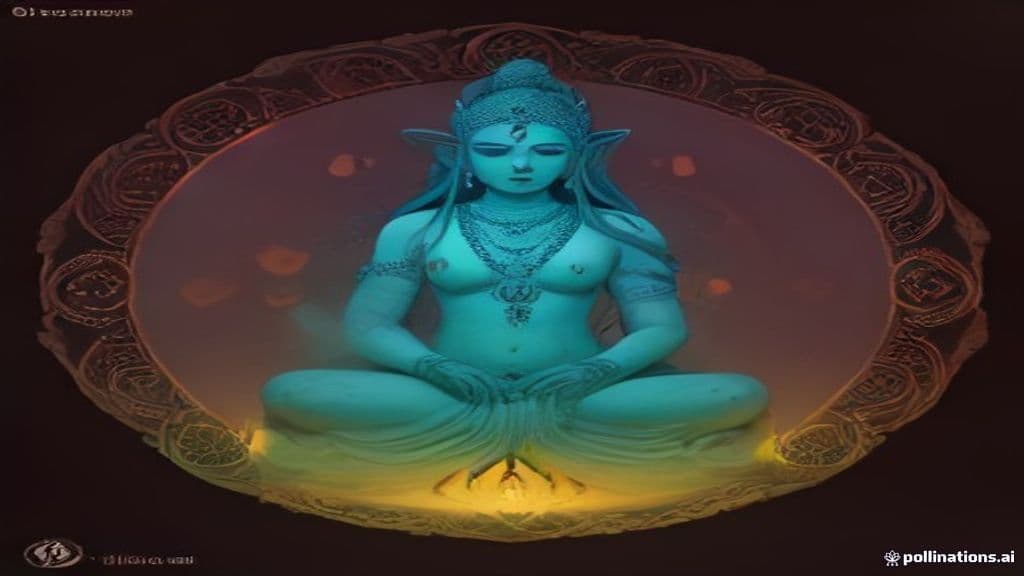
Vāmadeva appears in multiple strata of Sanskrit literature. He is credited with composing Mandala 4 of the Rigveda (Vedic layer). He is named in Upanishadic texts such as the Bṛhadāraṇyaka and the Aitareya (philosophical/teaching layer). In epic literature he serves as priest to King Daśaratha in the Valmiki Rāmāyaṇa (Ayodhyā Kāṇḍa) and appears in narratives of the Mahābhārata (Vana, Sabhā, and Śānti Parvas). Later Purāṇic material (e.g., the Ganeśa Purāṇa) recounts additional episodes. Sources describe him as belonging to the line of seers (son of Gotama; associated with the Angiras lineage) and as an authoritative ritual figure across these textual periods.
The sources do not provide a sustained physical description. Literary episodes place Vāmadeva in settings such as an ashrama/hermitage, royal assemblies, and forests; narratives describe him as present and active in these contexts (for example, keeper of horses in the Vana Parva episode and physically confronted by a gandharva in the Ganeśa Purāṇa), but no detailed corporeal features are given in the cited summaries.
Textual attestations present Vāmadeva as a composer of ṛc (author of Rigveda Mandala 4), a teacher and Upanishadic interlocutor, and a priest/adviser to kings. Epic and Purāṇic narratives ascribe to him the ritual authority to pronounce curses and benedictions that have tangible social and narrative consequences (e.g., cursing King Śala to be slain by rakṣasas in the Mahābhārata episode; cursing a gandharva to become a mouse, later made Ganesha's vahana, in the Ganeśa Purāṇa). He acts as an arbiter of social-ritual order, prescribing remedies, granting boons, and negotiating restitution in stories involving transgression and expiation. The tradition also records a personal transgressive act—his admitted eating of a dog's intestines as noted in Manusmṛti and a self-confession in the Rigveda—showing textual complexity regarding his sanctity.
Gandharva
A class of non-human celestial or semi-celestial beings in Indic religions associated principally with music, song, dance, fertility, and an escort/guardian role for liminal arrivals (such as Soma or beings). In Hinduism they are minor deities and musicians of the devas; in Buddhist cosmology they are a low rank of devas and the term (gandhabba in Pāli/commentary) is also used doctrinally for a sentient intermediate state between death and rebirth.

Rakshasa (Himalayan variants)
A Himalayan reception of the pan-Indian rakshasa motif: hostile or disruptive non‑human beings known from Sanskrit epic and Puranic literature, here noted where Himalayan sources and discussions intersect with the broader epic tradition. The supplied sources do not document distinct, well‑attested Himalayan folklore variants; the entry therefore presents primarily the epic/legendary profile as transmitted into Himalayan contexts in general references.

Angiras
Angiras (Sanskrit Aṅgiras/Aṅgirāḥ) is primarily a Vedic rishi (sage) and eponymous lineage (Angirasa) associated with authorship of Vedic hymns, priestly/fire functions, and transmission of mantras; later Puranic accounts multiply his identities in genealogies and lists of sages.
Community Record
- [1]Vamadeva - Wikipedia. Wikipedia, article 'Vamadeva'.wiki
- [2]Valmiki Rāmāyaṇa - Ayodhyā Kāṇḍa Sarga 3 (prose). Valmiki Rāmāyaṇa, Ayodhyā Kāṇḍa, Sarga 3 (online translation/transliteration).literary
- [3]Valmiki Rāmāyaṇa - Ayodhyā Kāṇḍa Sarga 3 (alternate). Valmiki Rāmāyaṇa, Ayodhyā Kāṇḍa, Sarga 3 (alternate edition).literary
- [4]Valmiki Rāmāyaṇa - Ayodhyā Kāṇḍa Sarga 3 (text). Valmiki Rāmāyaṇa, Ayodhyā Kāṇḍa, Sarga 3 (Sanskrit text resource).literary
- [5]Ganeśa Purāṇa (summary reference in sources). Summary reference to Ganeśa Purāṇa episode in secondary source (Wikipedia).literary
- [6]Mahābhārata (episodes summarized in secondary sources). Summary references to Mahābhārata Vana Parva, Śānti Parva, and Sabhā Parva episodes (Wikipedia).literary
- [7]Wikidata: Vamadeva. Wikidata entry for Vamadeva.other