
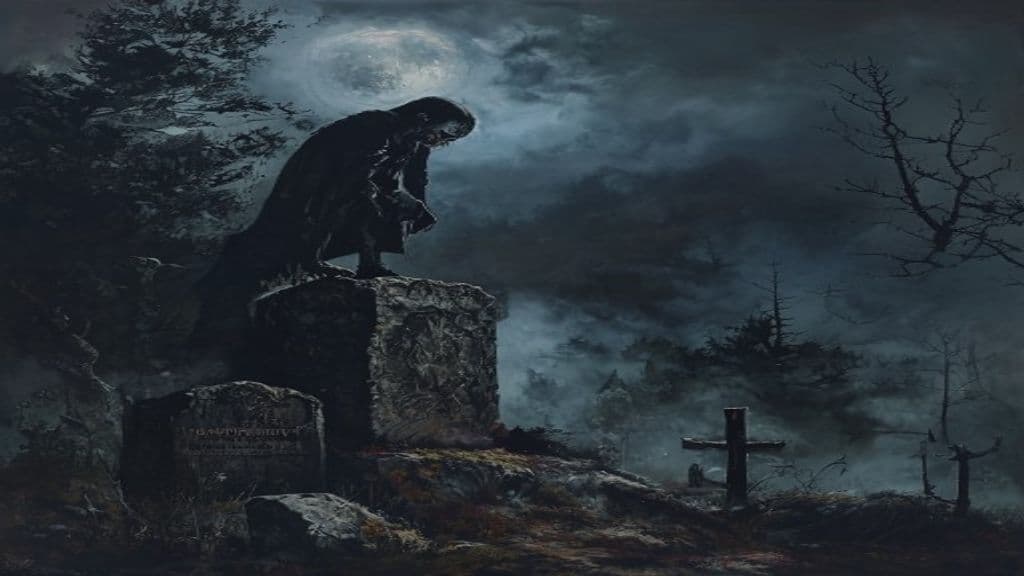
Across source traditions the vengeful ghost is not a single origin myth but a functional type: a deceased person whose death was cruel, unnatural, unjust, or followed by failure in funerary rites becomes restless and returns to demand redress. Examples named in the sources include the Chinese yuan gui (‘ghost with grievance’) tied to wrongful death, Japanese onryō who 'come back from purgatory' for wrongs done in life, and Roman lemures associated with those not afforded proper burial or cult. The emphasis in the literature is on social or ritual failure (murder, denial of rites, improper disposal) rather than a single creation story.
Descriptions vary by culture and story; the aggregated sources do not fix a universal appearance. Motifs documented in specific traditions include female-associated forms (Chinese nü gui often pictured with untied hair) and culturally specific images such as Japanese onryō, which in some tales manifest physically rather than only as insubstantial spectres. Many local types (for example, La Llorona or kuchisake-onna) have their own distinctive visual markers, but the comparative sources stress variation rather than a single standardized look.
The core behavioral trait reported across sources is grievance-driven activity: returning to the living world to seek revenge or redress. How that manifests differs by tradition — some accounts (e.g., certain onryō stories) emphasize physical manifestation and direct harm, others emphasize possession or affliction (Jewish dybbuk is cited as a malicious possessing spirit in comparative lists), and still others disturb households or social order (Roman lemures). The encyclopedic summaries aggregate these as a family of restless spirits capable, in various cultural narratives, of haunting, tormenting, possessing, cursing, or otherwise affecting the living.
Weaknesses
- ritualreburial with correct funerary rites
- ritualsalting and burning of remains (bones) — cited as a remedy in some contexts
Wards
- ritualexorcism or appeasement rites (culturally specific)
- ritualproper cremation or burial according to local custom
- conditionrestoration of social/ritual obligations to the deceased
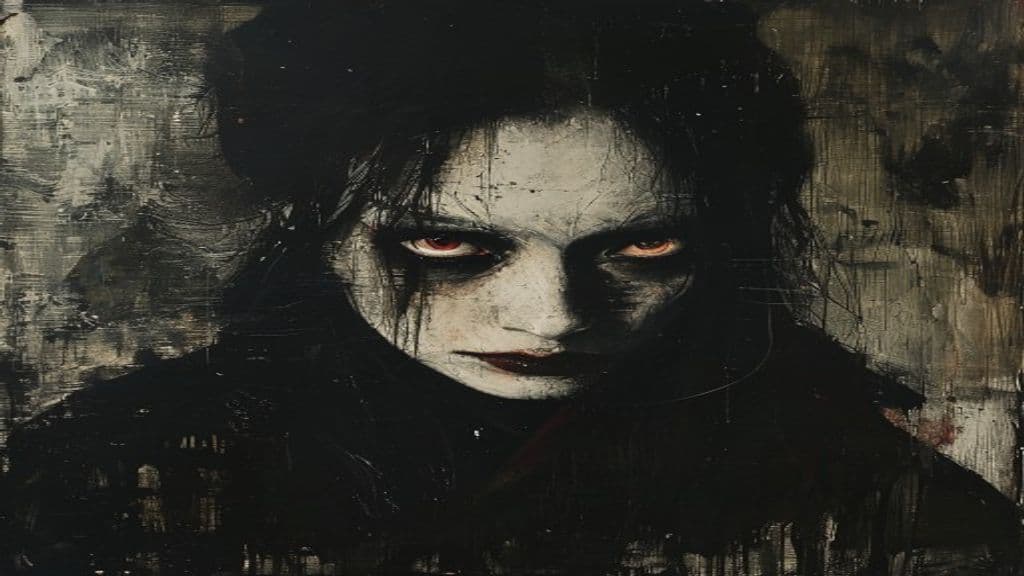
Onryō
Onryō are vengeful spirits in Japanese folklore who return after death to redress wrongs suffered in life by harming the living; they are commonly portrayed in literature and film as wronged individuals—frequently women—whose resentment manifests as lethal retribution, and in some accounts as causing wider calamities.
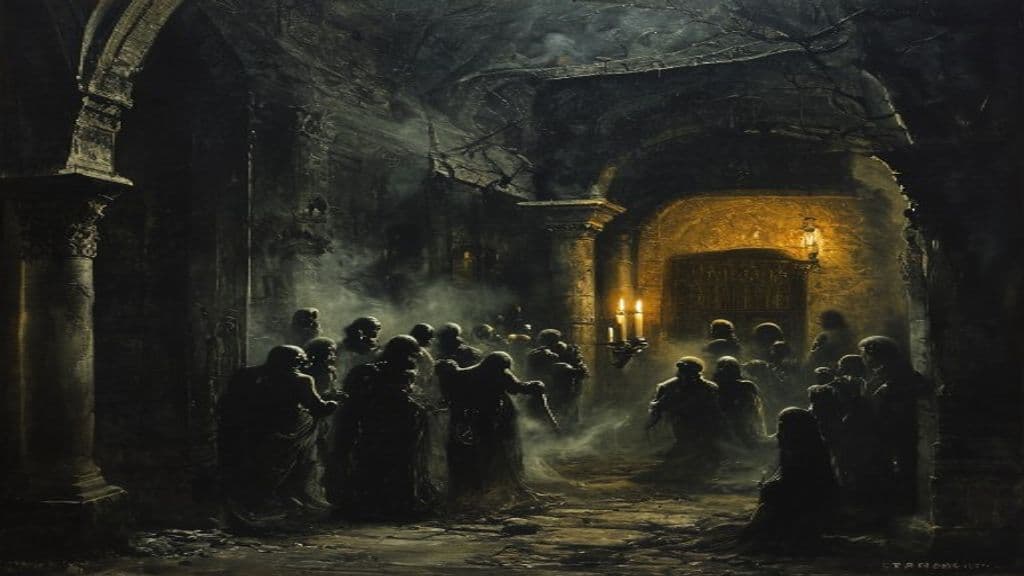
Lemures
The malevolent restless dead of Roman religion — spirits of those who died without proper burial or with unresolved grievances, haunting their former homes until appeased.
Dybbuk
A malicious possessing spirit in Jewish mythology, believed to be the dislocated soul of a dead person. (Note: Power tier should be Lesser or Greater, not Primordial (the entity's power level seems too high for a dislocated soul). Origin story and Appearance sections are missing. Abilities should be more sp)
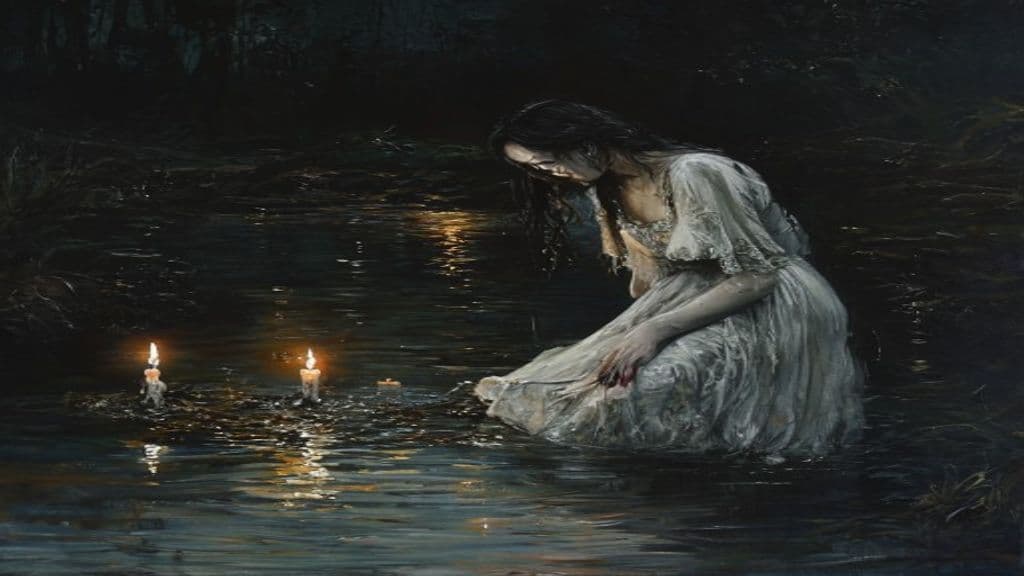
La Llorona
The Weeping Woman of Mexican folklore — the ghost of a mother who drowned her children and now wanders rivers and lakes, weeping for them and taking other children she finds at night.
Strigoi
The vampire of Romanian folklore — either a living witch (strigoi viu) or an undead blood-drinker (strigoi mort). The source tradition from which the literary vampire emerged.
Aborigines (mythology)
A mytho-historical label used in Roman and general reference sources to denote the oldest inhabitants of a region (specifically central Italy in the cited Roman context). The term functions as an identity/category for original human populations rather than as a characterized supernatural being in the provided sources.
Abumi-guchi
A Japanese yōkai classed as a tsukumogami: an animated stirrup (abumi) depicted in Sekien Toriyama's Gazu Hyakki Tsurezure Bukuro. Traditional accounts say it is formed from a stirrup that belonged to a soldier who fell in battle and that it waits where the stirrup lies for its dead owner to return.
Abura-sumashi
A yōkai spirit from the Amakusa region of Kumamoto Prefecture, Japan, said to inhabit mountain passes. Traditionally explained as the ghost of a person who stole oil, it appears to surprise travelers and is represented in modern media with a straw-coat body and a potato- or stone-like head.
Aeneads
A collective term in Roman myth for the friends, family, and companions of the Trojan hero Aeneas who fled Troy and wandered before settling in Italy; treated as a retinue and ancestral cohort rather than independent supernatural beings.
Ages of Man (Roman tradition)
In the Roman tradition, the Ages of Man are a series of stages or periods in human existence, representing growth and development. (Note: * Power tier: Remove "Minor Spirit" as it implies a level of agency or power that doesn't align with the description in the draft article. * Abilities: Clarify or remove the phrase "in the classical s)
Akaname
Akaname is a Japanese yōkai associated with baths, bathtubs, toilets, and other places where scum and filth accumulate. Traditionally depicted as a child-like creature that licks grime, it functions in folklore as a cautionary figure tied to cleanliness; a few narrative variants cast it as dangerously predatory.
Akateko
Akateko (赤手児, lit. 'red child's hand') is a yōkai from Japanese folklore commonly told as a small, red, disembodied child's hand that appears from trees—especially the Japanese honey locust—and startles travelers; in some regional variants it is accompanied by a specter of a young woman or manifests as paired foot- or leg-like apparitions. Accounts vary between mostly harmless trickster apparition and a violent variant that attacks humans.
Akubōzu
Akubōzu (灰坊主, Akubōzu) is a household yōkai from parts of Akita and Iwate Prefectures in northern Japan said to live in the ashes of the hearth. Sources say they appear when people (notably children) play with or dig in hearth/furnace ash; the figure is cited as part of a broader Tōhoku motif warning against disturbing ash.
Akuma
Akuma (悪魔/あくま) in Japanese sources is an evil spirit, devil, or demon associated with misfortune and mental disturbance. The term appears in Buddhist texts and Heian-period literature and was later used to translate the Christian figure of Satan, as well as the Buddhist Mara.
Akurojin-no-hi
Akurojin-no-hi (悪路神の火, "fire of the god of the bad road") is a flamelike ghost from the folklore of Mie Prefecture, Japan. It is reported to appear on rainy nights; those who encounter it and do not run away are said to become gravely ill. The phenomenon is sparsely documented and is usually compared to will-o'-the-wisp type ghost-lights.
Amabie
Amabie is a mid-19th-century Japanese yogenjū-type wondrous creature attested in kawaraban and related pamphlet culture that emerges from the sea (in canonical accounts) to prophesy about harvests and epidemics and prescribes that its image be drawn and shown to the sick as a protective measure.
Amanojaku
Amanojaku (天邪鬼 / あまのじゃく) is a Japanese yōkai-type being portrayed as a contrarian, heart-reading trickster. Treated in different contexts as a small ogre (ko-oni), a wicked demon (jaki) in Buddhist iconography, and a folkloric spirit that provokes human vice, it appears across regional tales with variable roles from malicious kidnapper to household oddity.
Community Record
- [1]Vengeful ghost (Wikipedia). Wikipedia, 'Vengeful ghost' entry — comparative overview of vengeful spirits, motifs, causes, and remedies including yuan gui, nü gui, onryō, lemures, exhumation/reburial, and salting/burning of remains.wiki
- [2]Vengeful ghost (Wikidata). Wikidata Q2836709 — concise definitional phrase: 'the spirit of a dead person who returns from the afterlife to seek revenge.'wiki
- [3]Folk Horror: Vengeful Ghosts (essay). Nonmodernist.com essay — interpretive note that culturally specific vengeful ghosts in folk horror can represent historical trauma and unresolved injustice (interpretive source cited in the comparative material).other
- [4]True Ghost Stories (archive collection). Archive.org collection of ghost stories — cited among media/story collections referenced in the comparative notes (literary/archival examples of varied ghost motifs).literary