
As a typological class rather than a single mythic persona, weather gods arise within multiple cultural origin narratives. In Indo-European-derived traditions some reflexes (e.g., Norse Thor/Old English Thunor/Old High German Donar) are linguistically traced to a Common Germanic *Thunraz, itself linked to a Proto‑Indo‑European thunder deity. Individual weather gods occupy differing genealogies in their source mythologies: Indra functions in Vedic texts as a king‑of‑gods figure associated with storms; the Weather god of Nerik appears in Hittite state religion as son of the Weather god of [atti] and the Sun goddess of Arinna but locally is treated as son of a Hattian god at his cult centre in Nerik, showing how state and local origin accounts can diverge. Other named storm deities (Zeus/Jupiter, Baal/Hadad, Teshub, Tarḫunna/Tarḫunz) each have distinct origin stories within their cultural myths, but collectively they represent how societies personify control over weather and sky into divine ancestry and cosmic roles.
There is no single universal appearance for weather gods across cultures in the cited material. Common iconographic motifs reported in the sources include thunderbolts or lightning as weapons or symbols (for example Zeus/Jupiter and many storm gods generally) and, in at least one tradition, a wheel associated with the Celtic thunder god Taranis. Some traditions present individual deities in kingly or warrior guise (e.g., storm‑kings such as Zeus or Indra), while others emphasize martial accoutrements or tools of hallowing (as with Thor). The sources do not provide a comprehensive pan‑cultural physical description beyond these recurring symbolic elements.
Weather gods are credited with dominion over meteorological phenomena—thunder, lightning, rain, wind, snow, storms, tornadoes and hurricanes—and are frequently described as 'wielding thunder and/or lightning.' Beyond raw meteorological control, many weather deities are tied to fertility and agriculture through rain provision (examples include Baal, Indra, and Freyr in their respective contexts), to warfare or kingly authority (Baal as a war deity; Zeus and Indra as high gods), and to protective or hallowing functions (Thor in Norse sources). Some cultures divide meteorological functions among specialized deities (separate wind gods such as the Anemoi or Vayu, and rain deities like Yu Shi), while others concentrate multiple atmospheric powers in a single storm god.
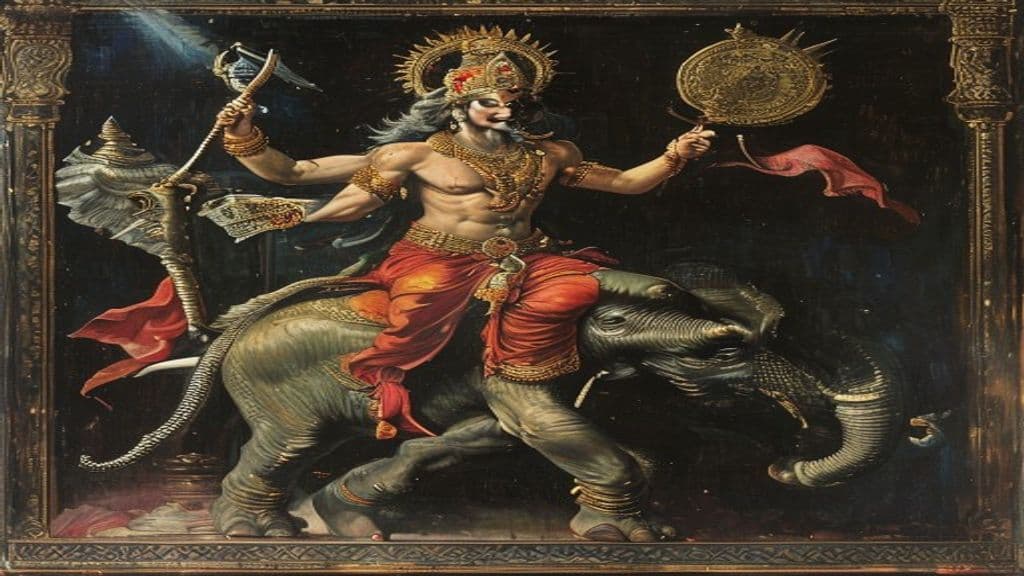
Indra
Indra is a major Vedic deity, king of the devas and lord of Svarga (heaven), associated primarily with the sky, storms, lightning, rain, rivers and martial heroism; he is central in the Rigveda and later appears across Hindu, Buddhist and Jain cosmologies with varying status.

Thor (Þórr)
Thor (Old Norse Þórr) is a central god in the pre-Christian Germanic/Norse religious framework, primarily associated with thunder, storms, strength, protection, fertility, and the welfare of farmers. He is a hammer-wielding warrior who fights monstrous enemies (notably Jörmungandr) and is widely attested from Roman-era Germania through the Viking Age, with ongoing cultural presence in personal and place-names and weekday nomenclature (Thursday).
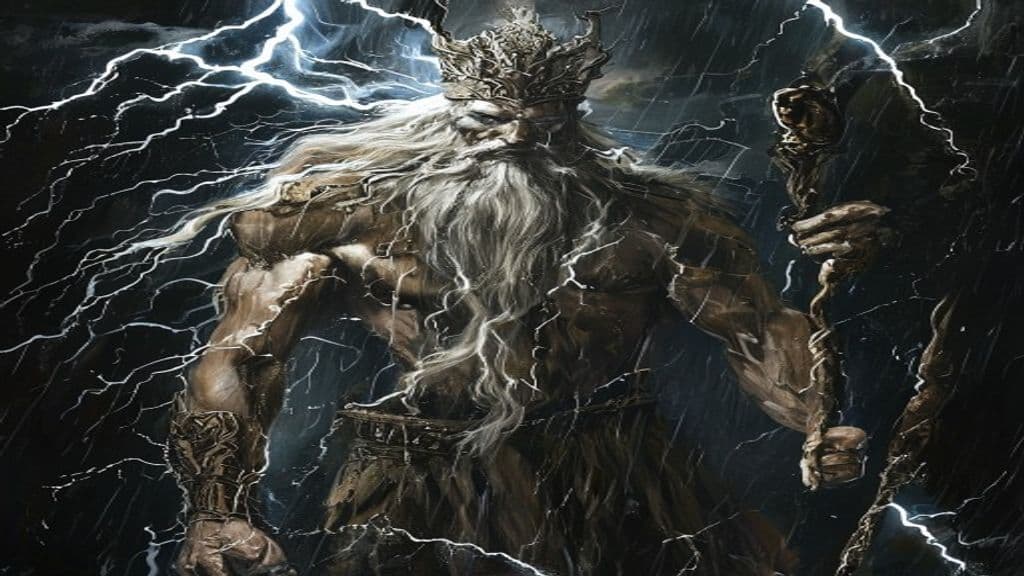
Perun
The highest god in the Slavic pantheon, associated with law, war, thunderstorms, and fertility. (Note: - Power tier should be Ancient -> Primordial (as he is described as the "highest god" and his attributes are cosmic in scale) - Abilities should include control over mountains, as mentioned in the sou)

Zeus
Zeus (Ancient Greek: Ζεύς) is the supreme deity of the classical Greek pantheon, a sky-and-thunder god who rules as king of the gods on Mount Olympus and functions as a sky‑father who assigns roles among the immortals.

Baal
Baal (bāʿal) is a Northwest Semitic title meaning 'owner' or 'lord' that served as a theonym in the ancient Levant; in Ugaritic and Canaanite texts it appears as the name/title of a prominent storm and fertility god (often rendered Baʿal Haddu) who features centrally in the Baal Cycle and in regional cults tied to rain, fertility, and kingship. In later monotheistic literatures the term becomes a polemical label for rival or foreign deities and is reinterpreted in various receptions.
Community Record
- [1]Weather god. Wikipedia, 'Weather god'wiki
- [2]Wikidata: weather deity. Wikidata entry for weather deitywiki
- [3]Weather god of Nerik. Wikipedia, 'Weather god of Nerik'wiki