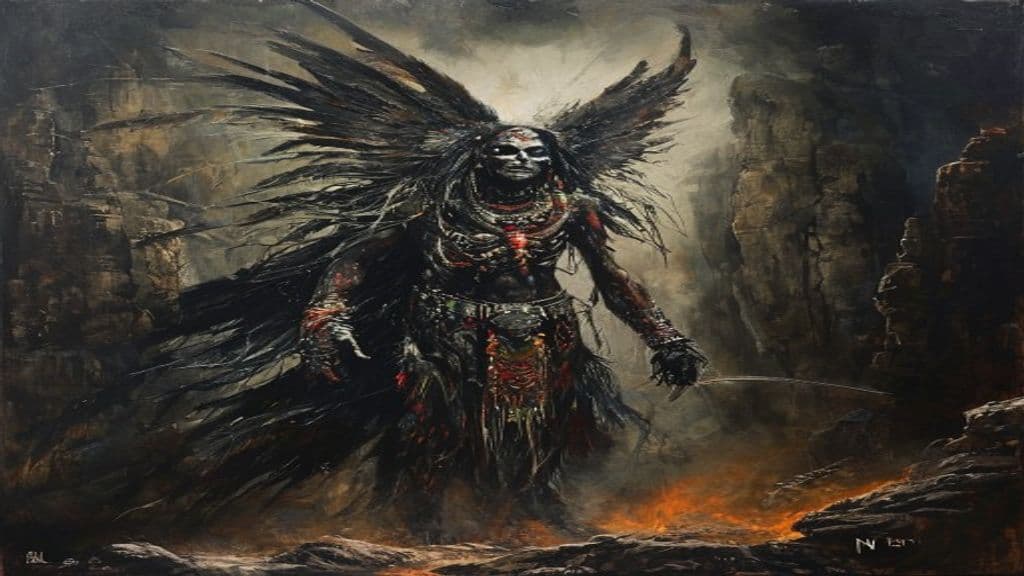
According to the Diné Bahaneʼ, Yei Tso is one of the Anaye, a group of powerful beings associated with chaos and disorder. He nearly drove early humans to extinction during the time of the Fifth World.
Yei Tso has immense power and destructive capabilities, but the exact nature of these abilities is not specified.
Weaknesses
- heroHero Twins
Wards
- geological formationspecific rock formations identified as Yei Tso's remains
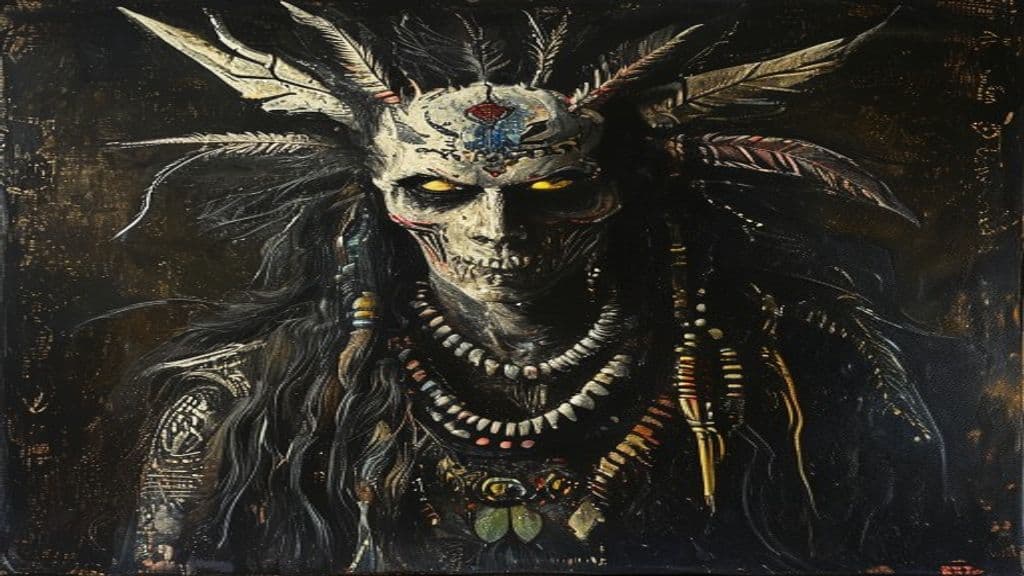
Ghost Sickness (Navajo Tradition)
A cultural and psychological concept describing a state of being consumed by grief or preoccupation with the deceased. (Note: - Power tier: Primordial (Ghost Sickness is not an entity with concrete abilities, but rather a psychological state that affects individuals) - Appearance: No description needed, as it's a psychologic)
Monster Slayer (Nayenezgani)
Within the limited sources supplied, 'Monster Slayer' is used as an English label on a Wikipedia disambiguation page to refer to Nayenezgani, identified there only as "a character from the Navajo creation myth." The provided materials contain no narrative, descriptive, or ritual information about this figure beyond that single listing.
Navajo Ghosts (Yéʼiitsoh-related spirits)
Spirits of the deceased in Navajo contexts that are invoked in accounts of 'ghost sickness' and in folktales; they are experienced as agents or influences tied to pathological grief and may be discussed alongside concerns about witchcraft and skinwalkers in contemporary sources.
Naʼashjéʼii Asdzą́ą́ (Naashjeii Asdzaa) — "Spider Woman / Spider Grandmother"
Naʼashjéʼii Asdzą́ą́, commonly rendered in English as Spider Woman or Spider Grandmother, is a Navajo ancestral/feminine figure entrusted by the Holy People to weave the pattern of the universe. She functions in Navajo narrative as a teacher and guide encountered by culture heroes and embodies an instructional, creative, and guardian role rather than a malicious spirit in the provided sources.
The Fifth World (Navajo tradition)
A concept representing the current era of human existence within a cyclical creation myth, as part of Navajo traditions. (Note: - Power tier should be Ancient (deity-level), as it's a concept within a cultural tradition, not a Primordial power. - Abilities need to reflect that it doesn't possess active powers or behaviors; per)
Tó Neinilii
Navajo rain god, trickster figure associated with precipitation and weather. (Note: 1. Power tier: Primordial (as Tó Neinilii has abilities related to weather control and creation) 2. Origin story: Add a sentence about Tó Neinilii saving the first Navajo people from the sea monster T)
Yato-no-kami
Yato-no-kami (夜刀の神) are local snake deities attested in the Hitachi no Kuni Fudoki tradition, described as araburu-kami (rough, aggressive kami) who lived in fields near the government office of Namegata county and who were both dangerous to households and could be driven off or enshrined by human agents.
Yazata
In Zoroastrian/Avestan religion, a yazata (Avestan: yazata) is a class of divine or holy beings 'worthy of worship or veneration.' The term covers a range of referents—divinities with distinct functions, certain sacred objects or plants, protective fravashis, and even prayers—and denotes the roster of beneficent powers aligned with Ahura Mazda.
Yee Naaldlooshii (Skinwalker)
In Navajo (Diné) tradition, yee naaldlooshii (commonly rendered in English as "skinwalker") denotes a human who has perverted sacred knowledge to become a harmful shapeshifting witch. The figure is portrayed as a traitor within the community whose practices are taboo and who is associated in popular accounts with animal forms such as coyotes, wolves, and owls.
Yeii (Navajo Spirit Deity)
Minor deities associated with natural forces and localities in the Navajo pantheon. (Note: - Power tier: The draft article states that yeii are Minor deities, but according to the source material, they are "deities of minor importance", implying a Lesser or Greater power tier is more accura)
Yel İyesi
Yel İyesi is the Turkic iye (guardian spirit) of wind and air, a culturally ambivalent spirit or deity-form—often called Yel Ana (Wind Mother) or Yel Ata (Wind Father)—responsible for winds, weather phenomena, and related misfortune or aid in Turkic folk cosmology.
Yelbeghen
A multi‑headed monstrous being from Turkic (notably Altai) traditions, originally depicted as a serpentine or draconic creature that in later tellings appears as an ogre‑like behemoth; associated with cosmic predation (eclipses), guarded treasures, great strength, magic, and occasionally sexual relations with humans.
Community Record
- [1]