Zababa does not have an extensive independent mythic cycle preserved in the surviving record; instead his identity is reconstructed from administrative, liturgical and astronomical sources. He is attested as Kish’s tutelary war god from the Early Dynastic period, with continued references in the Old Babylonian period and revival into the first millennium BCE. In god lists and royal ideology Zababa is placed within divine family frameworks: some traditions list him as a son of Enlil, while Assyrian royal reconfiguration under rulers like Sennacherib sometimes styles him as a son of Ashur. His historical presence is therefore primarily cultic and institutional—appearing in oath lists, kudurru inscriptions, temple dedications and astronomical mappings—rather than as the protagonist of preserved narrative myths.
Consistent, detailed anthropomorphic iconography for Zababa is sparse in the surviving record. Emblematic attributes known from cultic and administrative artifacts include a vulture‑headed staff on Kassite‑period boundary stones (kudurru) and later representations of a staff topped with an eagle image; the eagle was considered his symbolic animal. Some scholarship notes an uncertain association with the lion, but this is not securely attested. Overall Zababa’s visual presence in the sources is primarily symbolic (emblems on kudurru and cult objects) rather than a richly described stand‑alone portrait in narrative art.
Zababa’s primary function is martial and protective: he is described repeatedly as a god of war and given epithets such as qarrādum rabium ('great hero'). He is invoked to legitimize rulers, secure treaties and boundary settlements (appearing on kudurru), and act as the civic guardian of Kish. Textual god lists situate a divine household around him (for example, Papsukkal serving as his sukkal/vizier in An = Anum), reflecting the Mesopotamian model of gods mirroring royal administration. He is also integrated into Mesopotamian astronomy as a constellation whose named stars correspond to parts of the deity's body or clothing, which ties his cult to celestial reckoning. While important, Zababa is part of a broader pantheon of warrior deities (e.g., Ninurta, Nergal) and in some contexts figures as secondary to those gods, though he could hold primary local prominence in Kish and in certain royal usages.

Bau
Bau is a deity attested in Sumerian and Akkadian ritual-literary texts. In the supplied hymnic excerpts she is addressed as 'child of holy An' and invoked as one who 'decide[s] the fate of all the countries' and 'renders verdicts and decrees judgments.'

Enlil
Enlil is a principal deity of ancient Mesopotamia, originally preeminent in the Sumerian pantheon as a supreme lord who orders the world by separating heaven (An) from earth (Ki). His principal cult center was the E-kur temple at Nippur, and his cult practices focused on daily offerings and priestly care of his cult statue; mythic traditions portray him as both benefactor and punisher in the administration of cosmic and social order.
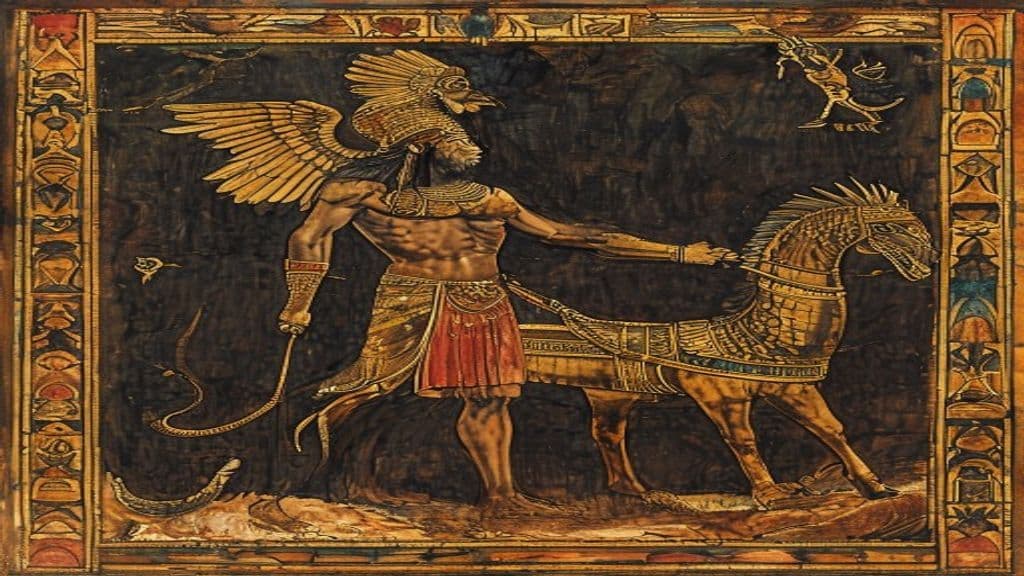
Ninurta
Ninurta is a major deity of ancient Mesopotamia (Sumerian–Akkadian–Assyrian–Babylonian) whose roles include agriculture, healing/exorcism, law and scribal authority, and martial champion of the gods. He is attested from the mid-third millennium BC onward and was venerated at city cult-centers such as Nippur (Eshumesha), Girsu/Lagash (as Ninĝirsu), and later in Assyrian Kalhu.
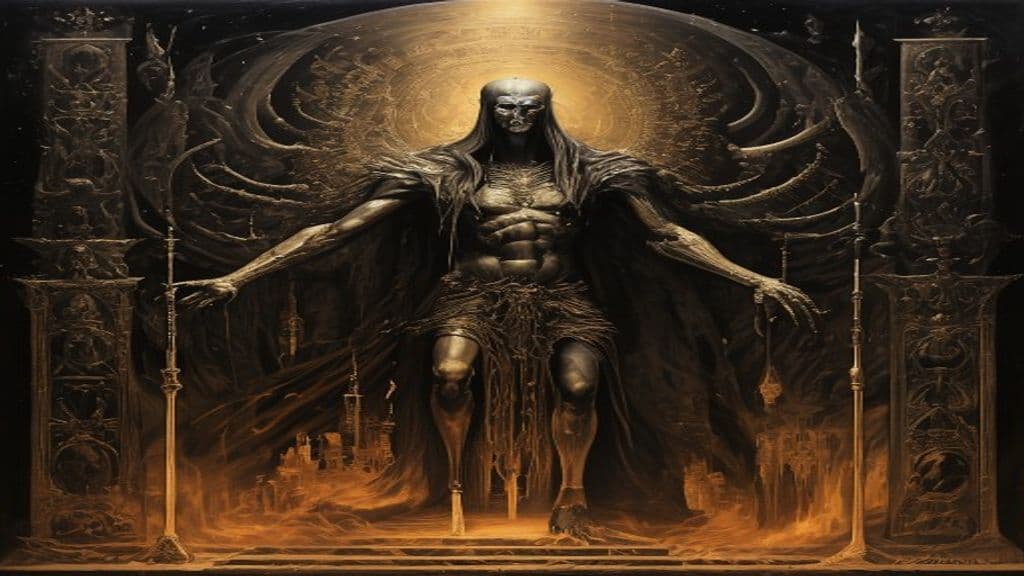
Nergal
Nergal is a major Mesopotamian deity associated with war, disease, inflicted death, and rulership of the underworld. Principal cult center at Kutha (temple E‑Meslam), he appears in hymns and myths (e.g., the Epic of Erra, "Nergal and Ereshkigal") and is sometimes equated with or called Erra or Meslamtaea.
Community Record
- [1]Zababa. Wikipedia, 'Zababa' articlewiki
- [2]The Electronic Text Corpus of Sumerian Literature: fragment (T.2.1.4). ETCSL: Sumerian literary fragment(s) referencing Zababaacademic
- [3]Legends of the Kings of Akkade: the texts. Archive edition of legends of Akkade (references to Zababa in king‑legends)literary
- [4]33 THE STANDARDS ON THE VICTORY STELE OF NARAM‑SIN Renate Marian van Dijk. scholarly article discussing iconographic evidence and standards (notes paucity of Zababa iconography in earlier periods and kudurru emblems)academic