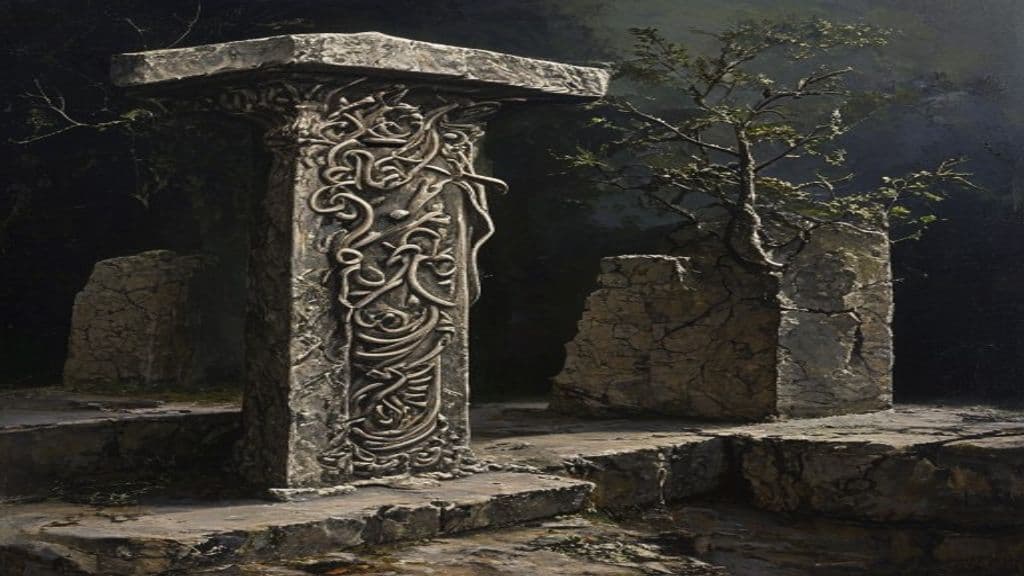
The Zbruch Idol is believed to have originated in the 9th century as a representation of pre-Christian Slavic cosmology. Its exact creation and significance are unclear.
A limestone sculpture pillar, but specific details about its appearance are not provided.
As an artifact representing a Slavic deity or concept, it does not possess abilities or behaviors. Instead, it is a focus of cultural significance and understanding of pre-Christian Slavic beliefs.
Božić (Slavic mythology)
A symbolic figure associated with the themes of New Year, spring, and youth in Slavic paganism. (Note: 1. Power tier: Incorrectly classified as Lesser Spirit; based on its association with renewal and spring, it should be at least Ancient. 2. Origin story: The source material does not mention an origin)
Slavic Water Spirits
Female tutelary beings associated with bodies of water in Slavic paganism, often dual-natured as benevolent or malevolent. (Note: - Power tier is unclear based on the source material; no indication that they are limited to a "Lesser" power tier. - Appearance is not described in the source material, so this section should be remo)
Sledovik
A sacred stone in Slavic and Finnic pagan practices, imbued with spiritual significance. (Note: - Power tier should be Primordial (due to their widespread presence and spiritual significance in Slavic and Finnic cultures). - Abilities description is incomplete and inaccurate (the text only menti)
Unclean Force
A collective term for malevolent entities from Slavic paganism, associated with evil or negative forces. (Note: 1. Power tier should be Ancient (deity-level) instead of Primordial (cosmic), as the Unclean Force is associated with malevolent mythological forces and creatures. 2. Appearance: Add that there is no )
Zhrets (Slavic Tradition)
A zhrets is a priest in the Slavic religion, responsible for mediating between humans and gods. (Note: 1. Power tier should be Primordial, as zhrets are described as possessing cosmological knowledge and playing a significant role in resisting Christianity, indicating a level of power that aligns with )
Zarqa al-Yamama
A pre-Islamic Arabian figure with exceptional intuition, sharp eyesight, and prophetic abilities. (Note: 1. Power tier: Lower the power tier to Ancient (deity-level) since her abilities are described as prophetic but not on a cosmic level. 2. Abilities: Add that her prophecies were often linked to omens )
Zartai-Zartanai
Zartai-Zartanai is a demonous denizen of the World of Darkness in Mandaean cosmology, encountered during Hibil Ziwa's descent in the Right Ginza. The entity is named in Classical Mandaic and is reported in secondary reference sources as an underworld adversary whose spouse is given as Amamit (an epithet of Libat/Venus).
Zasa Mergen Baatar
Zasa Mergen Baatar is a figure in Buryat mythology described in sources as the 'tornado-god' and as the eldest son of the sky-deity Han Hormasta; he is attested riding a brown hawk-horse and is described in a marriage episode in which he wrestled the three sons of Atai Ulaan and thereby obtained Sesegen Nogoon as his bride.
Zashiki-warashi
A class of domestic yōkai from Tōhoku folk belief described as childlike house spirits that inhabit parlors or inner rooms; their presence is traditionally linked to household prosperity and they are known for playful mischief. Scholarly accounts also connect some origin theories to historical practices such as infanticide and craft-related grudges.
Zduhać (Zduhac)
Zduhać (also spelled Zduhac) appears in a modern compiled list of flying mythological creatures; the supplied sources provide no ethnographic description, rituals, or origin accounts. Aside from its listing among flying and weather-affecting beings, available excerpts contain only general material on shamanism that does not mention Zduhać specifically.
Zenki and Goki
A paired duo in Japanese legend frequently described as oni- or tengu-like figures who appear in tales of En no Ozuno (En no Gyōja) and Shugendō; in many secondary summaries some legends say they were violent bandit Onis subdued in the age of Emperor Tenmu and thereafter attached as attendants to En no Ozuno. The names were later reused in modern manga and anime.
Zepar
Zepar is a named spirit appearing in Western grimoire compilations, notably listed among the goetic spirits of the Ars Goetia. The available sources for this entry are limited to its presence in goetic lists and a small set of modern cultural reuses (a makers' amulet upload and a music track title).
Community Record
- [1]Wikipedia. Source material for the Zbruch Idol's information.wiki