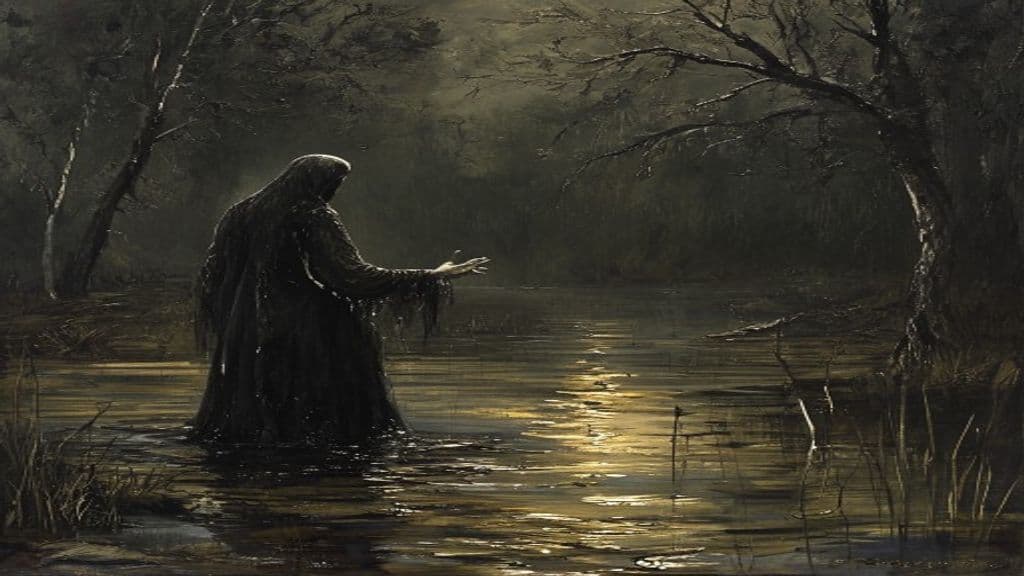
These spirits are associated with bodies of water, reflecting a deep connection between the natural world and the spiritual realm within Slavic culture.
No description of their physical appearance is provided in the source material.
Their behaviors and abilities are not explicitly stated, but it is implied that they may have powers related to water.
Božić (Slavic mythology)
A symbolic figure associated with the themes of New Year, spring, and youth in Slavic paganism. (Note: 1. Power tier: Incorrectly classified as Lesser Spirit; based on its association with renewal and spring, it should be at least Ancient. 2. Origin story: The source material does not mention an origin)
Sledovik
A sacred stone in Slavic and Finnic pagan practices, imbued with spiritual significance. (Note: - Power tier should be Primordial (due to their widespread presence and spiritual significance in Slavic and Finnic cultures). - Abilities description is incomplete and inaccurate (the text only menti)
Unclean Force
A collective term for malevolent entities from Slavic paganism, associated with evil or negative forces. (Note: 1. Power tier should be Ancient (deity-level) instead of Primordial (cosmic), as the Unclean Force is associated with malevolent mythological forces and creatures. 2. Appearance: Add that there is no )
Zbruch Idol (Sviatovid)
A limestone sculpture idol representing a pre-Christian Slavic belief system. (Note: - Power tier: Lowered to Ancient (deity-level), as it's a representation of a deity/concept rather than an actual cosmic being. - Abilities: Removed, as stated in the source material. - Sensory cues: )
Zhrets (Slavic Tradition)
A zhrets is a priest in the Slavic religion, responsible for mediating between humans and gods. (Note: 1. Power tier should be Primordial, as zhrets are described as possessing cosmological knowledge and playing a significant role in resisting Christianity, indicating a level of power that aligns with )
Sky Father
A comparative-mythological archetype denoting a principal sky-being addressed as a paternal figure, often occupying the role of ancestral progenitor or former/senior ruler within a pantheon and frequently paired with an 'earth mother' as a complementary cosmic principle.
Sky Woman (Anpetu Wakpa)
Sky Woman is referenced in Dakota/Lakota cultural landscape material as a mythic/ancestral figure tied to place-identity and origin narratives. The available source links such figures to Dakota sites (for example the Cannonball–Missouri confluence) but provides no detailed mythology, appearance, or rituals for Sky Woman itself.
Sky deity
A class of deities associated with the sky, heavens, or celestial phenomena; commonly high‑ranking divine figures who occupy an 'upper world,' often serving as sovereigns, creators, or luminaries within diverse polytheistic cosmologies.
Slattenpatte
Slattenpatte (also slattenlangpat) is a female supernatural figure in Danish folklore, classified among elle-figures as an ellekone (elf-woman). Named for her extremely long, pendulous breasts, she is associated in sources with fertility, nursing, haunting behaviour, and — in some interpretations — water or water-goddess imagery in parts of Denmark.
Slavic dragon
A class of serpent‑like supernatural beings in Slavic oral tradition and epic literature, often associated with snakes, water, weather, and liminal places. Regional vernaculars (e.g., Russian zmei, Polish smok/żmij, Romanian zmeu) describe variants that range from multi‑headed, regenerating monsters to humanoid or ambivalent figures who may help or court humans.
Sleep Temple (Greek/Egyptian)
A mystical site in ancient Greek tradition associated with inducing sleep, influenced by Imhotep and Egyptian mysticism. (Note: 1. Power tier should be Lesser (local spirit) instead of Minor Spirit. 2. Add sensory cues and wards based on possible connection to hypnosis (e.g., drowsy atmosphere, trance-inducing melodies). 3. Cl)
Sleeping Beauty (folktale motif)
A widespread fairy-tale narrative figure (Aarne–Thompson Type 410): a royal young woman who falls into a prolonged enchanted sleep caused by a curse or a magical/physical agent and is later awakened by reversal of that causation. The story functions as a folkloric motif across Italian, French, and German literary traditions and many later adaptations.
Community Record
- [1]