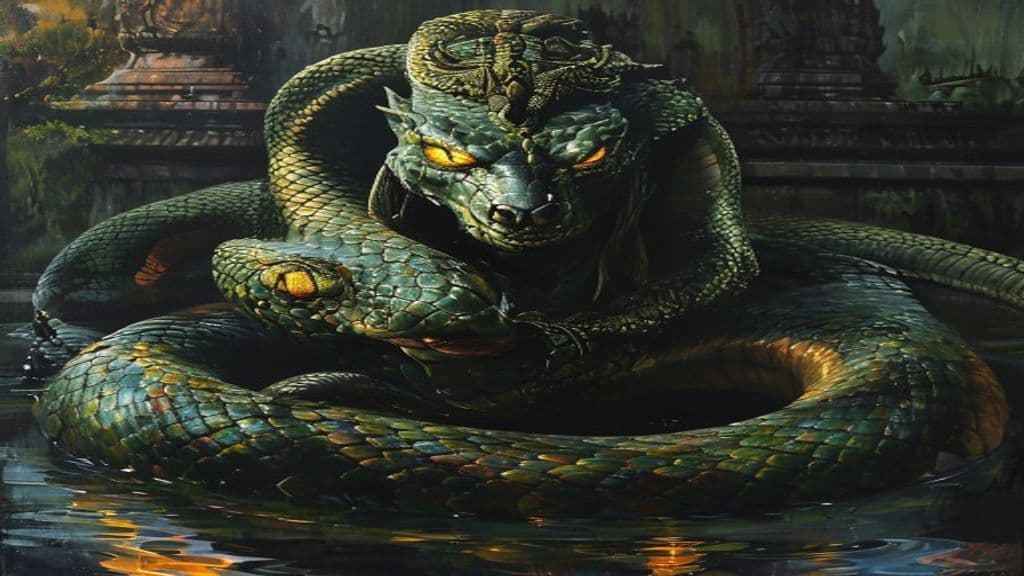
Multiple, sometimes contradictory foundation legends place a great snake or dragon on the hill chosen for Kazan (Zilantaw Hill) or in nearby waters (Qaban lakes). In variants the hill was infested with snakes led by a giant serpent; inhabitants burned emerging snakes in a straw‑and‑wood pile in spring, or a hero aided by a wizard killed the monster. Other tellings describe a two‑headed snake, a serpent that escaped to the lake, or a variant in which the giant snake became Diü, an underwater spirit who founded an aquatic kingdom. Sources emphasize that these elements occur across different versions rather than forming a single canonical origin tale.
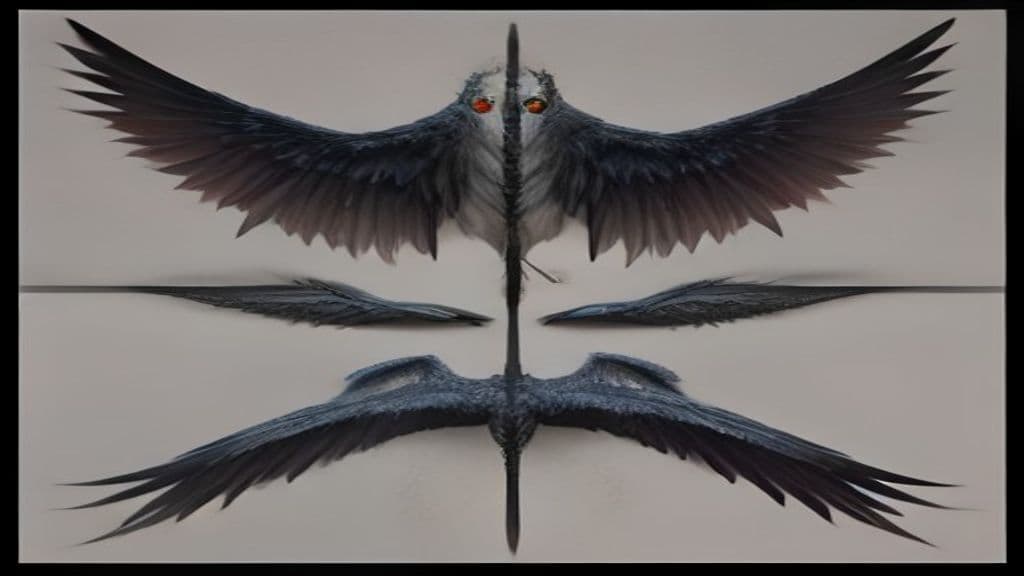
Descriptions vary widely: common elements include a winged snake or dragon‑snake hybrid. One composite description records a dragon's head, a birdlike body, chicken legs, a snake tail, red wings (bat‑ or birdlike), black feathers and scaly black skin. Other accounts emphasize very large serpents (two‑headed or as large as a fallen tree). Modern popular images sometimes render Zilant in Western wyvern/dragon style, a reinterpretation noted in post‑16th‑century and contemporary sources.
In legends Zilant is credited with great size and physical danger: flying (winged forms are recorded), dwelling in lakes or caves (Qaban lakes and caves near Zilantaw Hill are named), predation on people (accounts of swallowing virgins and youths), demanding tribute, and causing lethal harm (stories include post‑mortem effects described as killing 'with their stink'). Idel‑Ural belief contexts note that ordinary snakes surviving long lives (e.g., a century) may become ajdaha (dragon), indicating a theme of transformation and accumulated potency; specific supernatural powers beyond size, flight, venom/noxiousness, and territorial menace are not systematically detailed in the provided sources.
Weaknesses
- conditionvulnerability to being killed by warriors when found (narrative motif)
- substancepoison (a poisoned pike is mentioned in a tale used to kill the creature)
- conditionsusceptibility to mass burning of snakes when they emerge in spring (story element)
Wards
- ritualrelocate settlement (preventive measure in a legend)
- ritualmass burning of straw-and-wood pile (spring extermination)
- otherwizard counsel
Aq Bars
Aq Bars (Tatar: Ак Барс, 'White Leopard') is an ancient Bulgar tribal totem and heraldic emblem historically used in Volga Bulgaria and the Khanate of Kazan and adopted in the modern era as the official symbol of the Republic of Tatarstan (formally since 7 February 1992). It functions as a dynastic/tribal mark of identity (derived from the Barsil tribe) and as a political-state emblem rather than a personal supernatural being.
Yer iyesi
Yer iyesi is the familiar spirit or guardian of the earth and specific territory in Turkic/Tatar and related Tengrism traditions. Conceived as a land-attached iye, it appears in male and female forms (Yer Ata and Yer Ana) and is associated with protection of land and, in the female aspect, fertility and primordial presence at cosmogony.
Zeuxippe
Zeuxippe (Greek: Ζευξίππη) is a feminine personal name borne by multiple figures in ancient Greek genealogies. In Athenian traditions one Zeuxippe functions as a naiad (a freshwater nymph, often cited as a daughter of the river-god Eridanos) and as mother of important ancestral figures; other occurrences of the name appear as mortal or royal women in regional genealogies (Sicyon, Troy, daughters of Hippocoon or Athamas). The name is thus a recurrent mythic personal-name type rather than a single coherent supernatural persona.
Zeuxo
Zeuxo is recorded in modern reference works as the name of a nymph in Greek mythology but no ancient narratives, genealogy, cult, or iconography are preserved in the cited sources. The name also appears in scientific nomenclature as an asteroid (438 Zeuxo) and as a crustacean genus in family Tanaididae.
Zhong Kui
Zhong Kui (鍾馗) is a Chinese Taoist protective figure and vanquisher of ghosts and evil beings, invoked and depicted in court ritual and popular practice to repel, seize, and punish harmful spirits. Originating in Tang-era dream narratives and later literary and ritual accretions, his image and invocation function as official and household protective measures, especially at New-Year liminal moments.
Zhongli (disambiguation)
Zhongli is a romanized proper name used for multiple unrelated referents in Chinese-language contexts and modern media, including geographic places (Zhongli District, Zhongli Township), an ancient polity (Zhongli state), historical/legendary persons (e.g., Zhongli Quan, Zhongli Mo), and a modern fictional character (Zhongli in the 2020 video game Genshin Impact). The available sources present these as distinct uses of the same romanization rather than as a single folkloric supernatural entity.
Zhrets (Slavic Tradition)
A zhrets is a priest in the Slavic religion, responsible for mediating between humans and gods. (Note: 1. Power tier should be Primordial, as zhrets are described as possessing cosmological knowledge and playing a significant role in resisting Christianity, indicating a level of power that aligns with )
Zimwi
A monstrous figure from Swahili-language East African folktale materials, attested in children's anthologies and tale collections. In the supplied sources the Zimwi functions narratively as an antagonist who abducts a girl and compels her to become the voice of a singing drum; beyond this tale-specific role no sustained indigenous cosmology, etymology, or ritual corpus is recorded in the provided material.
Zin (Water Spirits)
Mythical water spirits in West African Songhai mythology. (Note: * Power tier should be Lesser or Minor Spirit, as there is no mention of their powers or abilities. * Appearance description is missing; however, since it's not provided in the source material, it can)
Zinariya (Jinayana)
No verifiable information about an entity called Zinariya or Jinayana is present in the provided source materials. The available sources do not mention this name, nor do they contain Central African folklore data relevant to the entity.
Ziz
A giant, bird-like creature with griffin characteristics in Jewish tradition. (Note: * Power tier: Primordial is too high; based on the source material, it's more accurate to place the Ziz as Greater (powerful regional) given its ability to block out the sun. * Abilities: Add a note s)
Zmey Gorynych
Zmei (masculine) / zmeya (feminine), commonly called Zmey Gorynych in Russian usage, is a legendary serpent/dragon figure in Russian folktales and epic poetry, variously depicted as a monstrous serpent/dragon or as a human-like character with dragon traits. It functions in narratives as a principal adversary confronted by culture-hero protagonists and persists as a cultural symbol in modern Russian discourse.
Community Record
- [1]Zilant — Wikipedia. Wikipedia contributors, 'Zilant,' Wikipedia, https://en.wikipedia.org/wiki/Zilantwiki
- [2]Zilant — Wikidata. Wikidata Q2084326, 'Zilant,' http://www.wikidata.org/entity/Q2084326wiki
- [3]Zilant Studios Wiki (archive). Archive snapshot of Zilant Studios Wiki, https://archive.org/details/wiki-zilantstudios.fandom.com-20250705other
- [4]Зилант: Сборник искусства (archive). Archive: 'Зилант: Сборник искусства,' https://archive.org/details/zilant-sbornik-iskusstvaother
- [5]Zilant (archive). Archive: 'Zilant,' https://archive.org/details/zilantother