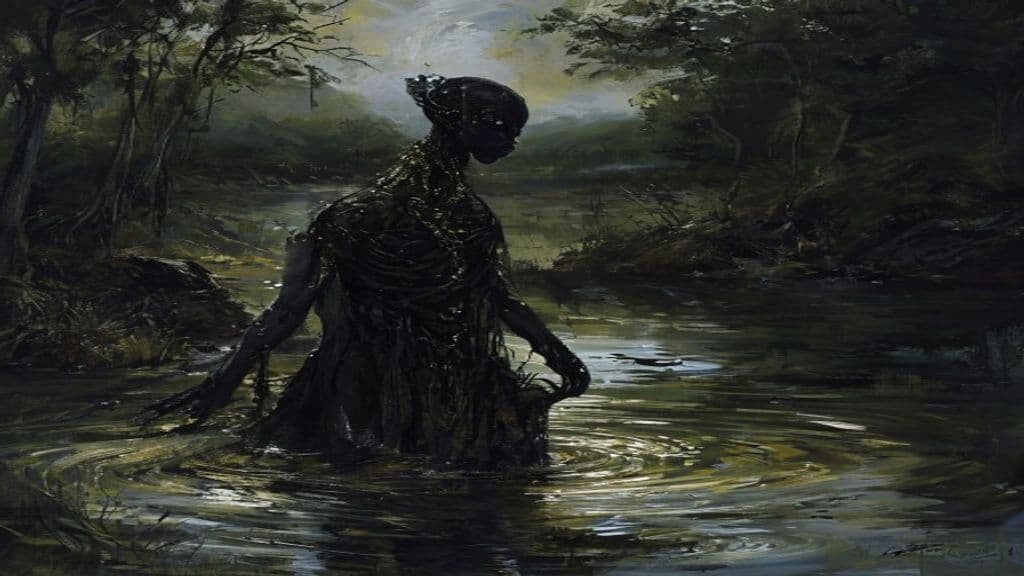
The Zin are part of the Songhai mythology, reflecting the worldview of this West African culture. They are likely connected to the cultural significance of rivers and lakes in the region.
No physical description is provided in the source material.
The text does not provide any information about their powers or behaviors.
Zeuxo
Zeuxo is recorded in modern reference works as the name of a nymph in Greek mythology but no ancient narratives, genealogy, cult, or iconography are preserved in the cited sources. The name also appears in scientific nomenclature as an asteroid (438 Zeuxo) and as a crustacean genus in family Tanaididae.
Zhong Kui
Zhong Kui (鍾馗) is a Chinese Taoist protective figure and vanquisher of ghosts and evil beings, invoked and depicted in court ritual and popular practice to repel, seize, and punish harmful spirits. Originating in Tang-era dream narratives and later literary and ritual accretions, his image and invocation function as official and household protective measures, especially at New-Year liminal moments.
Zhongli (disambiguation)
Zhongli is a romanized proper name used for multiple unrelated referents in Chinese-language contexts and modern media, including geographic places (Zhongli District, Zhongli Township), an ancient polity (Zhongli state), historical/legendary persons (e.g., Zhongli Quan, Zhongli Mo), and a modern fictional character (Zhongli in the 2020 video game Genshin Impact). The available sources present these as distinct uses of the same romanization rather than as a single folkloric supernatural entity.
Zhrets (Slavic Tradition)
A zhrets is a priest in the Slavic religion, responsible for mediating between humans and gods. (Note: 1. Power tier should be Primordial, as zhrets are described as possessing cosmological knowledge and playing a significant role in resisting Christianity, indicating a level of power that aligns with )
Zilant
A legendary Tatar/Idel‑Ural snake‑dragon figure associated with foundation legends (notably Kazan). Descriptions range from enormous serpents to winged dragon‑like hybrids; in tales it threatens settlements, takes tribute, or is overcome by heroes often with magical counsel.
Zimwi
A monstrous figure from Swahili-language East African folktale materials, attested in children's anthologies and tale collections. In the supplied sources the Zimwi functions narratively as an antagonist who abducts a girl and compels her to become the voice of a singing drum; beyond this tale-specific role no sustained indigenous cosmology, etymology, or ritual corpus is recorded in the provided material.
Zinariya (Jinayana)
No verifiable information about an entity called Zinariya or Jinayana is present in the provided source materials. The available sources do not mention this name, nor do they contain Central African folklore data relevant to the entity.
Ziz
A giant, bird-like creature with griffin characteristics in Jewish tradition. (Note: * Power tier: Primordial is too high; based on the source material, it's more accurate to place the Ziz as Greater (powerful regional) given its ability to block out the sun. * Abilities: Add a note s)
Zmey Gorynych
Zmei (masculine) / zmeya (feminine), commonly called Zmey Gorynych in Russian usage, is a legendary serpent/dragon figure in Russian folktales and epic poetry, variously depicted as a monstrous serpent/dragon or as a human-like character with dragon traits. It functions in narratives as a principal adversary confronted by culture-hero protagonists and persists as a cultural symbol in modern Russian discourse.
Zois (Slavic)
Martyr figure in Wendish mythology, possibly referencing historical king Stois or Stoigar. (Note: * Power tier should be Primordial, as it's described as a martyr figure with possible historical roots. * Appearance and Abilities sections are missing information. * Sensory cues, Weaknesses, and War)
Zār
Zār (also zar) names a class of possessing spirit and the associated ritual system found across the Horn of Africa and adjacent Middle Eastern communities. Governed socially and ritually, Zār possession is treated as an ongoing relationship to be managed through communal rites (the zār ritual or zār cult) that reconcile spirit and person rather than forcibly expelling the spirit.
Zār (possession spirit, regional/Armenian context)
Zār is presented in the supplied materials as an instance of spirit-possession phenomena: nonhuman agents purported to control a human body and produce altered states of consciousness. The supplied corpus does not contain Armenia-specific ethnographic detail for Zār; statements below are drawn from the general description of spirit possession in the provided source material.
Community Record
- [1]