The provided sources do not record any mythological origin story for an entity called Abath. Instances of the string occur as personal names (e.g., Edwin Abath, Marian Abath) in Aruban archival material; no supernatural genealogy or cosmogonic account is supplied.
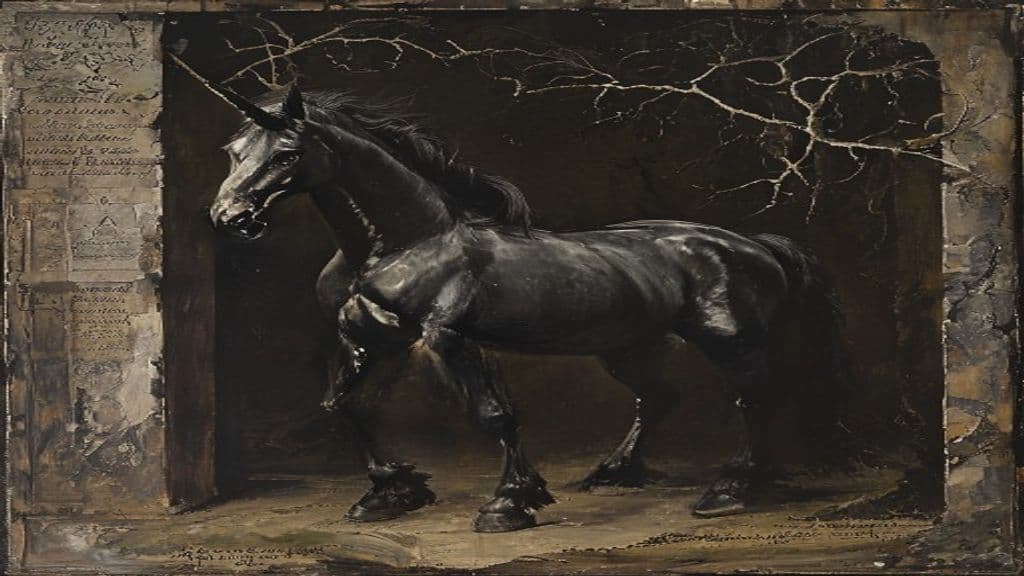
No source describes an appearance for a supernatural being called Abath. The only creature description present in the collected sources is from a separate unicorn article and is not linked to the name Abath.
The sources contain no documentation of powers, behaviors, interactions with humans, or other abilities for an entity named Abath.
Abanoub
Abanoub is a 4th‑century Egyptian Christian child martyr venerated in the Coptic tradition. Remembered for his public confession of Christ, miraculous healings associated with his passion, and the translation and veneration of his relics, his feast is observed on July 31 (Epip 24) and his cult centers include Nehisa and Samanoud.
Abarbarea
Abarbarea is a name attested in classical Greek and Roman sources for freshwater nymphs (naiads). The name appears for at least two individual mythic figures — a naiad wife of Bucolion and a naiad counted among ancestors of the Tyrians — and Hesychius records plural forms that may indicate the name was also used as a class-name (Abarbareai / Abarbalaiai).
Abarta (Ábartach)
Abarta (also Ábartach) is a figure of Irish myth who, in surviving accounts, tricks Fionn mac Cumhaill's warriors by giving them a supernatural grey horse that bears them into the Otherworld. Sources variably identify him as a member of the Tuatha Dé Danann or as a Fomorian; after the incident he is compelled to release the captured warriors and is refused entry to the Fianna.
Abas
Abas (Ancient Greek: Ἄβας, gen.: Ἄβαντος) is not a single mythic being but a recurring personal name borne by multiple mortals and minor mythic figures in Greek epic and genealogical traditions — kings, founders, seers, warriors, attendants, a centaur, and a youth transformed by a goddess. The name is glossed in the sources as 'guileless' or 'good-hearted' and appears across Argive, Theban, Trojan, Euboean, and other local cycles.
Abaset
Abaset is a localized ancient Egyptian goddess attested in tomb decoration at El‑Bawiti in the Bahariya Oasis during the 26th Dynasty. She is depicted anthropomorphically with a hedgehog motif incorporated into her headdress and appears on the walls of Qarat Qasr Salim, including twice in the Tomb of Bannentiu. No cult texts, myth narratives, or ritual prescriptions for her are recorded in the cited corpus.
Abaskhiron the Soldier
A Coptic Orthodox martyr venerated for refusing imperial idolatry during the Diocletian persecution; reputedly healed by the Archangel Michael, preserved in monastery relics, and commemorated on 14 June (7 Paoni).
Abatur
Abatur is an uthra (celestial emanation) in Mandaeism described as the 'father of the Uthras' and called the Ancient (ʿattīqā). He resides on the boundary between the World of Light and lower regions, functions as a judge who weighs souls (Abatur Muzania), and supplies instructions and materials to the demiurgic uthra Ptahil in accounts from the Diwan (Scroll) of Abatur.
Abatwa (Twa / Batwa)
Abatwa (also recorded as Twa, Batwa, Mutwa; singular forms Barhwa or Murhwa in some transcriptions) are indigenous hunter‑gatherer peoples of the Great Lakes region of Central Africa, historically identified as some of the earliest inhabitants of the area. The available sources treat them as human ethnic groups whose livelihoods, lands, and populations have been severely affected by conservation policies and modern violence.
Abcán (Abhcán)
Abcán (modern spelling Abhcán) is a named dwarf poet and musician of the Tuatha Dé Danann in Irish myth. He appears in a small number of narratives as a musician whose art has soporific power and as the ferryman who brings the goddess Ruad from the Otherworld to the human world.
Abdel Messih El-Makari
Abdel Messih El-Makari (1892–1963) was a Coptic Orthodox monk and priest venerated as a 20th‑century Coptic saint. Associated with the Monastery of Saint Samuel the Confessor and the Monastery of Saint Macarius (Scetes/Wadi El‑Natrun), he is remembered for humility, asceticism, charity, and reported spiritual gifts such as prescience, discerning of spirits, and healing.
Abderus
Abderus (Ancient Greek: Ἄβδηρος, romanized Ábdēros) is a mortal heroic figure in Greek myth closely associated with Heracles, remembered as the youth left in charge of the Mares of Diomedes who was killed by them. He functions as an eponymous local/divine-hero ancestor for the city of Abdera and received funerary commemoration and athletic agones at his tomb.
Abdiel
Abdiel (Hebrew עֲבְדִּיאֵל) is primarily a theophoric Hebrew personal name meaning "servant of El/servant of God," attested once in the Hebrew Bible (1 Chronicles 5:15). In later literature—most notably John Milton's Paradise Lost—Abdiel is reimagined as a faithful seraph who opposes Satan's revolt. The provided sources do not treat Abdiel as an autonomous folkloric spirit type or record rituals or wards associated with the name.
Community Record
- [1]Unicorn. Wikipedia: Unicorn (excerpt noting description of a unicorn).wiki
- [2]Abathymermis (Wikidata). Wikidata entry for Abathymermis (taxonomic name).other
- [3]Arubaanse zangers naar zangfestival (12 november 1977) - Documentacion Arubiana-Caribiana. Archive item listing 'Abath, Edwin (cantante, politico)' in a Biblioteca Nacional Aruba record (Amigoe, 1977-11-12).other
- [4]Marian Abath glass beads, 28 juli - 1 augustus 2009, portret #91. Archive photographic caption referencing 'Marian Abath'.other
- [5]Marian Abath glass beads, 28 juli - 1 augustus 2009, portret #99. Archive photographic caption referencing 'Marian Abath'.other