
Within Arcadian genealogical tradition (as preserved in the cited modern summaries of ancient sources), Acacus is listed as one of the sons of King Lycaon and is named as the founder and king of the town Acacesium in Arcadia. In the Arcadian variant of Hermes' early life, the infant god was reared by king Acacus, an association that produced the surname/epithet Acacesius for Mercury. The account is attested in mythographic summaries and encyclopedic entries that cite classical local traditions (e.g., the Pausanian tradition as echoed in modern references).
No ancient physical description or iconography for Acacus is attested in the provided sources. He is described in genealogical and toponymic terms (son of Lycaon; founder-king of Acacesium) rather than by bodily features.
The sources record social and civic roles rather than supernatural powers: Acacus is a king and city-founder and is said to have reared the infant Hermes in the Arcadian account. The name Acacesius appears as a surname of Mercury deriving from Acacus. The provided materials do not attribute magical abilities, harmful behavior, or other supernatural capacities to Acacus.
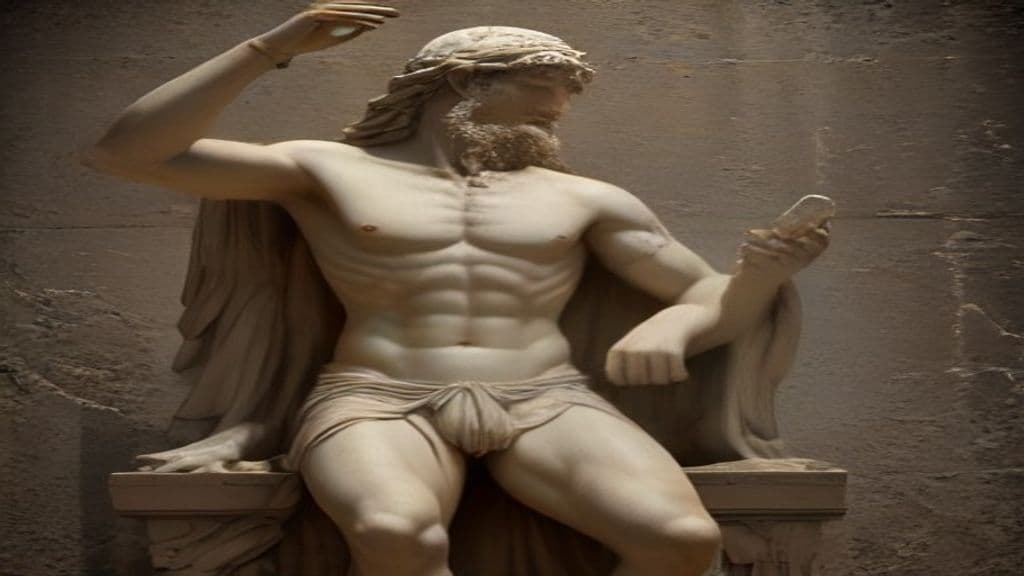
Abzar İyesi
A Turkic iyesi (possessive/guardian spirit) of the courtyard, outbuildings, and farmstead grounds; ambivalent in nature, it protects its domain but may harm livestock and cause mischief, often appearing in animal forms.
Abzû
Abzû (Sumerian abzû; Akkadian Apsû) is the primordial freshwater abyss in Sumerian–Akkadian cosmology: the deep fresh waters that underlie and surround the earth, source of springs, rivers and ritual holy waters, and a creative principle whose mingling with the salt sea (Tiamat) figures in Mesopotamian cosmogony.
Abāmūn of Tarnūt
A fourth‑century Coptic Christian presented in later hagiography as a martyr from the city of Tarnūt (Therenuti). Known primarily from a single late medieval Synaxarion notice, he is commemorated liturgically for his voluntary confession and violent martyrdom.
Abī-simtī
Abī-simtī (also rendered Abi-simti, Abisimti) is a named woman attested in third-millennium BCE Mesopotamian documentary and literary texts. She appears in administrative account records as a provider of animals and donor to temple cults and in Sumerian love-song literature as the named beloved/consort addressed by a royal speaker.
Abū Lahab
Abū Lahab (ʿAbd al-ʿUzzā ibn ʿAbd al-Muṭṭalib) is a historical Meccan figure — a paternal uncle of the Prophet Muḥammad and a Quraysh leader who opposed the Prophet; he is singled out and condemned in Qurʾān 111 (Sūrat al-Masad) and functions in Islamic textual memory as an exemplar of divine punishment for opposition.
Acacallis
Acacallis (Ancient Greek: Ἀκακαλλίς; also Acalle) is a mythological princess of Crete in Greek tradition, daughter of King Minos and Pasiphae. She functions primarily as a dynastic and etiological figure: in varying accounts she is mother, by gods such as Hermes (Mercury) or Apollo, of eponymous or founder-figures like Cydon (founder of Cydonia), Miletus, or Lydon/ Lydus.
Academus
Academus (Greek: Akádemos / Hekádemos) is an Attic hero-eponym tied to a sacred grove (Akademeia) on the Cephissus near Athens. In myth he revealed where Helen was hidden to the Dioskouroi, an act said to have saved the city, and the place bearing his name became a long-lived sacred precinct, later the site of Plato's Academy.
Acala
Acala (Sanskrit: अचल, 'The Immovable') is a wrathful protective deity (dharmapala) in Vajrayāna and East Asian esoteric Buddhism, classed among the Wisdom Kings (Vidyārāja). He functions as a ritual focus for visualization and mantra practice intended to remove obstacles and bind or destroy hostile forces.
Acalanātha (Acala / Achala)
Acalanātha (also Acala or Achala) is a wrathful deity and dharmapāla — a protector of the Dharma — prominent in Vajrayana and East Asian Mahayana Buddhist contexts. Presented as a fierce, non‑human or semi‑divine protector-figure, Acalanātha functions to defend the teaching and practitioners by removing obstacles and confronting threats to the transmission and practice of Buddhism.
Acamas
Acamas (Ancient Greek: Ἀκάμας) is a personal name recurrent in ancient Greek narrative traditions applied to multiple human characters (warriors, princes, suitors), once to a Cyclops, and once as a hound's name. Rather than a single supernatural entity, bearers of the name appear episodically across the Trojan War, Theseid, and Theban cycles as mortal actors whose deeds intersect with gods and fate.
Acantha
Acantha (Ancient Greek: Ἀκάνθα, 'thorn') is a late or secondary mythological figure known from modern retellings as a nymph transformed into the acanthus plant. The tale that she scratched Apollo and was changed into a spiny-leaved plant is not attested in surviving classical corpora and appears to be a modern compilation or invention rather than a firmly documented ancient myth.
Acanthis
Acanthis is a young woman in Greek myth, daughter of Autonous and Hippodamia, who is transformed into a thistle finch by the gods as an etiological explanation for the bird's name. The story is preserved chiefly in Antoninus Liberalis' Metamorphoses and summarized in modern reference works.
Community Record
- [1]Acacus (mythology) - Wikipedia. Wikipedia, 'Acacus (mythology)'wiki
- [2]Acacus | Facts, Information, and Mythology. Pantheon.org entry 'Acacus'other
- [3]Acacesius - Biblical Cyclopedia. Biblical Cyclopedia entry 'Acacesius'other
- [4]Lycaon 2 - Greek Mythology Link (Maicar). Maicar 'Lycaon 2' genealogical listingother
- [5]Wikidata: Acacus. Wikidata entry Q481652wiki
- [6]Tadrart Acacus (archive references; homonym noted). Archive.org 'تادرارت اكاكوس: الفن الصخري و ثقافات الصحراء قبل التاريخ' (noting homonymic geographic usage of the name Acacus)other
- [7]Central Sahara: A Wet Past (archive image/context; homonymic reference). Archive.org 'Central Sahara: A Wet Past' (contextual material referencing the Tadrart Acacus massif as a homonym)other
- [8]Paranormal Sites In Libya: Supernatural, Bizarre & Alien Sahara. Temehu site referencing modern uses of the name 'Acacus' for the Libyan mountain range (homonymic, not the Greek figure)other