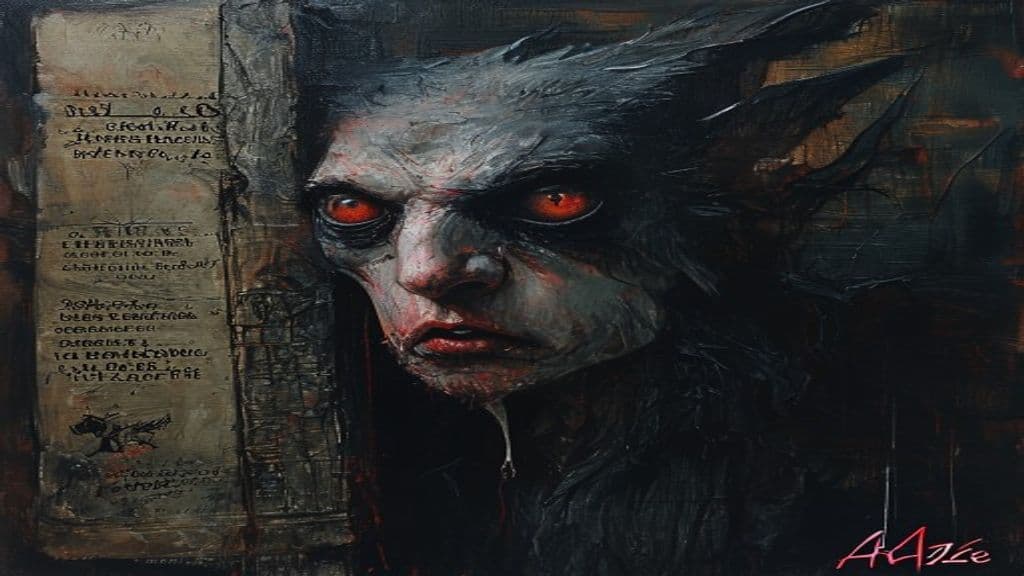
No mythological origin for a supernatural entity named 'Adže' is present in the supplied materials. The available sources instead show the string used as a place name (Wikipedia: a village called Adže in the municipality of Žepče, Bosnia and Herzegovina), as the English common noun 'adze/adz' for a woodworking tool (Wikidata), as a performer's pen name (Allen Sutterfield aka ADZE in an archival recording), and as an isolated word fragment in a CIA document. None of these provide an origin narrative, creation myth, or cosmological placement for a spirit or other supernatural being called 'Adže'.
There are no descriptions of physical appearance for a supernatural 'Adže' in the provided sources. The only potentially relevant occurrence is a single modern podcast episode listing that names 'the Adze' alongside various vampire-like creatures; however, the excerpted listing contains no descriptive material. The other documentary occurrences (Bosnian village name, woodworking tool, performer name, CIA fragment) are non-folkloric and do not describe a being's form, anatomy, or visage.
The supplied materials do not document any powers, abilities, behaviors, or ecological role for an entity called 'Adže'. The podcast listing that groups 'the Adze' with vampire-like creatures is a secondary popular-culture mention and does not provide primary-source information about traits or behaviors; therefore no authoritative statement about abilities or behavioral patterns can be drawn from the available documents.
Adsullata
Adsullata is attested as a Continental Celtic river goddess associated with the River Savus (modern Sava) in the Roman province of Noricum. Later traditions record her presence in Brittany as a goddess of hot springs and present her as an antecedent or origin-form of the Anglo‑Celtic sun goddess Sul.
Adur Burzen-Mihr
Adur Burzen-Mihr is a consecrated Atash Behram — one of the three Great Fires of late antique Sasanian Zoroastrianism — historically associated with the farmer social estate and with a cultic location in northeastern Iran. Medieval texts (e.g., the Bundahishn) and later summaries record it as a major pilgrimage fire with legendary associations of protection and miraculous efficacy; its documentary history after the early Islamic period is unclear.
Adur Farnbag
Adur Farnbag is one of the three Great or Royal fires in the Zoroastrian ritual/topographical system of pre‑Islamic Iran. Presented in the sources as a continuously tended sacred fire housed in a temple, it is attested in secondary accounts as a focus of cultic activity, miracle stories, and association with elite ritual geography in the Parthian–Sasanian eras.
Adur Gushnasp
Adur Gushnasp (Middle Persian: Ādur ī Gušnasp; New Persian: Āzargušnasp) is a pre-Islamic Zoroastrian Great Fire — one of the three highest grade sacred temple fires (Atash Behram) of Sasanian-era Iran. Housed at the temple-site historically called Shiz (modern Takht-e Soleymān, Adurbadagan), it functioned as a continuously tended cultic fire, a pilgrimage destination, and a focal point of royal patronage and warrior-class identity.
Adze
A vampiric firefly of the Ewe people of West Africa — a spirit that takes the form of a firefly by night and a malicious possessing being by day, drinking the blood of sleeping children and spreading disease.
Adze (Folklore)
Vampiric being in Ewe folklore, transforming into human shape upon capture. (Note: 1. Power tier should be Greater, as "deity-level" powers are implied by the ability to possess humans. 2. Add sensory cues (e.g., glowing lights) based on its firefly form. 3. Add weaknesses and wards)
Aea
No evidence in the provided sources supports Aea as a supernatural being. The corpus shows Aea/AEA used as modern acronyms, product names, file extensions, conference labels, and certifications rather than a folkloric or cosmological entity.
Aeacidae
The Aeacidae are a dynastic lineage in Greek myth and historiography descended from the hero Aeacus, son of Zeus and the nymph Aegina. The name functions as a patronymic designation for those 'of Aeacus' and is used to claim genealogical legitimacy and political prestige in regions such as Aegina and Molossian Epirus.
Aeacus
Aeacus is a mythic king of the island of Aegina in Greek tradition, famed for his justice and piety. After death he is accorded a permanent office in Hades as one of the three judges of the dead alongside Minos and Rhadamanthus, and he is the eponymous ancestor of the Aeacidae.
Aeanes
Aeanes is attested in classical sources as an ancient personal name preserved in epic indices and as a local toponym (a sacred precinct, Aeaneium, and a spring, Aeanis) said to be named after a man slain by Patroclus. The name also appears in modern contexts as a taxonomic genus and in placename continuity, but the provided sources do not support a coherent supernatural identity for Aeanes.
Aed (Aodh)
Aed (Old Irish Aodh) is a named supernatural figure in Irish myth attested in variant genealogies: in some traditions he is one of the Children of Lir, while in others he appears as a son of the Dagda. His name derives from the Old Irish word for 'fire' and he appears in narratives that place him among the aristocratic households of the Tuatha Dé Danann/Daoine Sidhe.
Aedesia
Aedesia is a proper name attested in the supplied sources with three distinct referents: a fifth‑century Neoplatonic woman philosopher of Alexandria, a modern botanical genus (Aedesia O.Hoffm.) native to parts of West and Central Tropical Africa, and a reused toponym/moon name in a speculative fiction setting. None of the provided materials portray Aedesia as a supernatural being or attribute spiritlike powers to the name.
Community Record
- [1]Adže (Wikipedia). Wikipedia, 'Adže' entry: 'Adže is a village in the municipality of Žepče, Bosnia and Herzegovina.'wiki
- [2]Wikidata entry: adz (woodworking tool). Wikidata: 'edged, handled woodworking tool' (adze/adz).other
- [3]Archive Episode 25: The Vampire Part 2 (You Dang Dip Get Out Of My House). Episode listing includes: '... the Adze ...' alongside other vampire-like beings (Yara-Ma-Yha-Who, Pennangalan, Vrykolakas, Jiangshi, Vetala, Loogaroo).other
- [4]Allen Sutterfield reads It Is Night (performer name ADZE). Archival recording: performer uses the name 'ADZE' as a personal/pen name.other
- [5]CIA Reading Room document fragment. CIA document fragment contains the word fragment 'adze' in unrelated text; no folkloric content.other