
Agetor is an epithet (a descriptive title) from ancient Greek religious language rather than a separate mythic origin figure. The term Ἀγήτωρ (alternatively spelled Hγήτωρ / Hegetor) glosses as 'leader, ruler' and is attached to major deities in particular locales or cultic contexts to highlight a functional aspect—for example, Zeus Agetor in Lacedaemon emphasizing sovereignty, or Hermes Agetor emphasizing his role as conductor of souls. There is no independent birth or narrative origin for Agetor in the provided sources; it operates as a modifier of established gods.
No distinct physical form for Agetor is attested because it is an epithet of existing gods. Visual representation, where present, would follow the customary iconography of the underlying deity (e.g., Zeus, Apollo, Hermes). One attested cult image is a statue of Hermes under the name Agetor at Megalopolis, but the provided material gives no description of that statue's appearance.
As an epithet, Agetor does not grant independent powers; its 'abilities' are the specific roles of the deity it qualifies. Sources indicate: Zeus Agetor denotes Zeus' rulership over gods, humankind, and the cosmos (sovereignty and governance); Hermes Agetor is explicitly connected to the psychopomp function of conducting souls to the lower world; Apollo is also recorded with the epithet though the sources do not elaborate the particular behavioral nuance in the provided material.
Weaknesses
- otherNot applicable — Agetor is an epithet rather than an independent hostile entity; no independent weaknesses are recorded in the provided sources.
Wards
- otherNot applicable — because Agetor is a title of gods rather than a wardable spirit, the sources do not record wards directed at it.

Zeus
Zeus (Ancient Greek: Ζεύς) is the supreme deity of the classical Greek pantheon, a sky-and-thunder god who rules as king of the gods on Mount Olympus and functions as a sky‑father who assigns roles among the immortals.
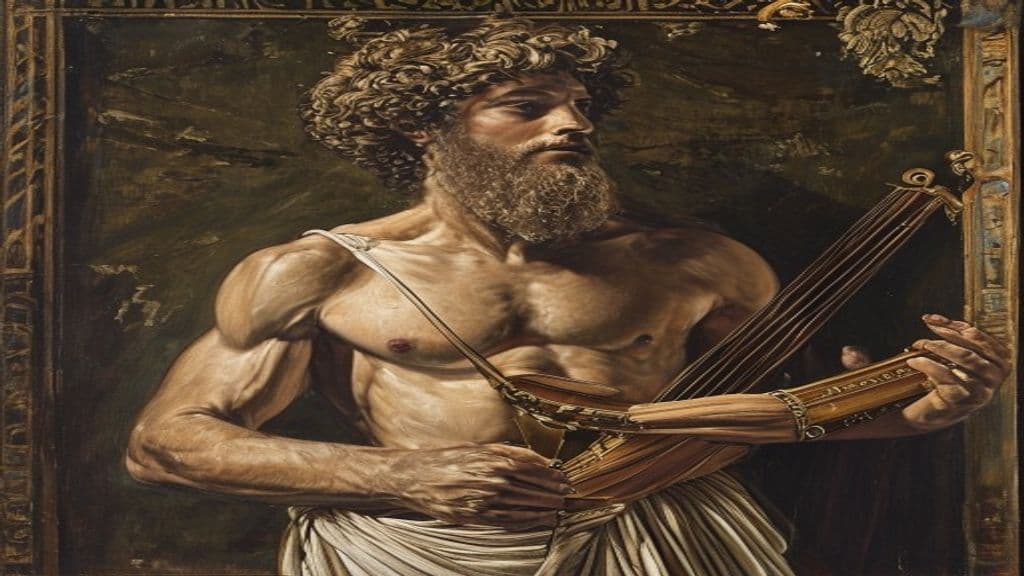
Apollo
Olympian deity of ancient Greek religion associated with prophecy, healing, music, archery, purification, and civic order. Principal patron of the Delphic oracle, protector of youth and flocks, and ambivalently both healer and bringer of plague.
Aceso
Aceso (Ancient Greek: Ἀκεσώ, Akesó) is an ancient Greek goddess who personifies the process of healing and convalescence. She is attested as a daughter of Asclepius and Epione and was worshipped in healing centers such as Athens and Epidauros, appearing in sculptural reliefs alongside her family.
Achelous
Achelous is the personified river-divinity of the Achelous River in ancient Greek religion and mythology. Regarded among the potamoi (river-gods), he is portrayed as a shape-changing elemental deity associated with springs, naiads, and the production of abundance (the horn/cornucopia motif); he appears in myths chiefly as suitor to Deianeira and as Heracles' opponent.
Actia
Actia (Ancient Greek: Ἄκτια) is attested in the supplied sources not as a supernatural being but as (a) the ancient festival and epithet of Apollo Actius associated with Actium and Nicopolis, and (b) a modern taxonomic and commercial name (genus of flies; company and product names). No folkloric or mythic entity named Actia is documented in the provided materials.
Adikia
Adikia (Ancient Greek: Ἀδικία) is the personification and embodiment of injustice and wrongdoing in ancient Greek religious and visual culture, typically portrayed as the opposite and vanquished counterpart of the goddess Dike (Justice). She appears chiefly in archaic vase-paintings and emblematic visual programs where Justice punishes or restrains her.
Adonis
Adonis is a mythic mortal youth in ancient Greek tradition, beloved by goddesses (notably Aphrodite and Persephone) whose death and seasonal return are the focus of the women’s midsummer festival Adonia. The cultic practices—planting short-lived 'gardens of Adonis' on rooftops, ritual lamentation, and casting an effigy and withered plants into the sea—symbolically link him to vegetation cycles and Near Eastern dying-and-regenerating god traditions.
Adrasteia
Adrasteia is an ancient Anatolian/Greek goddess associated with mountain-mother cults and later identified with the Greek notion of inescapable fate and retributive necessity. She appears in Phrygian contexts as a mountain goddess connected to Cybele, in Cretan myth as a nurse of the infant Zeus, and by the fifth century BC is often equated or associated with Nemesis and other personifications of necessity.
Adrestia (Adrasteia)
Adrasteia (also Adrestia and multiple orthographic variants) is a figure in classical Greek tradition whose roles shift from a Phrygian mountain/mother-goddess probably associated with Cybele, to a Cretan nymph entrusted with nursing the infant Zeus, and by the fifth century BC identified with Nemesis as a deity/personification of divine retribution and balance.
Aeacus
Aeacus is a mythic king of the island of Aegina in Greek tradition, famed for his justice and piety. After death he is accorded a permanent office in Hades as one of the three judges of the dead alongside Minos and Rhadamanthus, and he is the eponymous ancestor of the Aeacidae.
Aegina
Aegina is an eponymous nymph of Greek mythology who personifies the island of Aegina in the Saronic Gulf. She is remembered primarily as the mother of the hero-king Aeacus and as the island’s mythical ancestress, anchoring local civic identity and cultic landscape.
Aesculapius (Asclepius)
Aesculapius (Greek Asclepius) is the classical divine-hero of medicine and healing in ancient Greek religion and later Roman cult. He functioned as the patron and legitimating divine figure for temples, attendants (therapeutae), and organized healing practices; his emblem, the rod of Asclepius (a snake-entwined staff), endures as a symbol of medicine.
Agathos Daimon (Agathodaemon)
A beneficent household and civic daemon attested in classical Greek and Graeco‑Egyptian religion. In domestic Greece it is a household spirit honored with post‑meal libations; in Ptolemaic Alexandria it appears prominently in serpentine civic and household forms and is syncretised with various Egyptian protective and fate deities in late antiquity.
Agoraeus / Agoraea
Agoraeus (masculine) and Agoraea (feminine) are adjectival epithets used in ancient Greek religion to mark a deity's protective or patronal relation to the agora (public square/marketplace). The term is not an independent supernatural being but a role-name attached to different gods (notably Hermes, Zeus, Athena, Artemis) indicating their guardianship of assemblies and commercial/civic activity in particular poleis.
Community Record
- [1]Agetor (Wikipedia). Wikipedia, 'Agetor' entry; summarizes attestations of Ἀγήτωρ as an epithet of Zeus, Apollo, and Hermes and notes Hermes' statue at Megalopolis.wiki
- [2]Agetor (Wikidata). Wikidata item Q393088: brief entry identifying the term as a divine epithet of Zeus, Hermes, Apollo.wiki
- [3]Vitruvius, On Architecture 10.15.2 (reference). Vitruvius, On Architecture 10.15.2 — included among provided references cited in research notes (antiquarian/literary context).literary
- [4]ISV - AGETOR (Institute Project page). ISV project page 'AGETOR' listed among provided materials.other
- [5]ToposText entry (people/8727). ToposText listing included in provided research notes referencing classical person/place sources.other