
Sources do not record a single unified mythic origin for the class called alusi; rather, alusi are presented as a category of specialized spirit-forces that form part of Igbo cosmology alongside the living, the ancestors (Ndichie), and the unborn. Individual alusi have their own cults and local histories tied to towns, natural places (rivers, the ocean, the land), and social functions (justice, health, agriculture), but the surveyed source does not provide a pan-Igbo creation narrative for the alusi as a group.
The available sources do not provide specific or consistent physical descriptions for alusi as a class. Alusi are treated primarily as functional spirit-divinities with portfolios and cults rather than as described anthropomorphic or zoomorphic beings in the cited material.
Alusi exercise authority over discrete domains and are engaged by humans through worship, priesthood, offerings, and cult service. Examples recorded in the source include Agwu (associated with health, divination, and medicine), Osimmiri (a deity of the primordial ocean), Nne Mmiri / Nmụọ Mmiri (a sea goddess associated with wealth, protection, and healing), Idemmili (a river goddess), Njoku Ji / Ahiajioku (god of agriculture and production), and Ibini Ukpabi (Arochukwu oracle associated with justice and truth). Major alusi are served in towns by a priest assisted by acolytes and devotees, indicating ritual mediation of their influence over fertility, health, prosperity, and social order.
Weaknesses
None recorded.
Wards
- ritualregular cult observance and priestly service
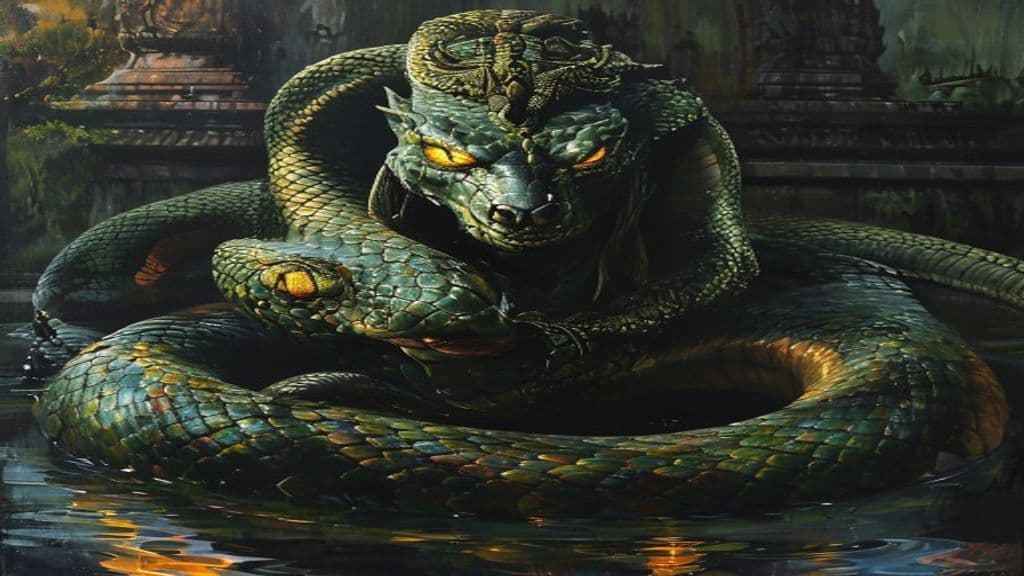
Naga
Divine serpent beings of Hindu, Buddhist, and Jain cosmology — powerful guardians of water, earth, and underground treasures. Revered as deities in South and Southeast Asia.
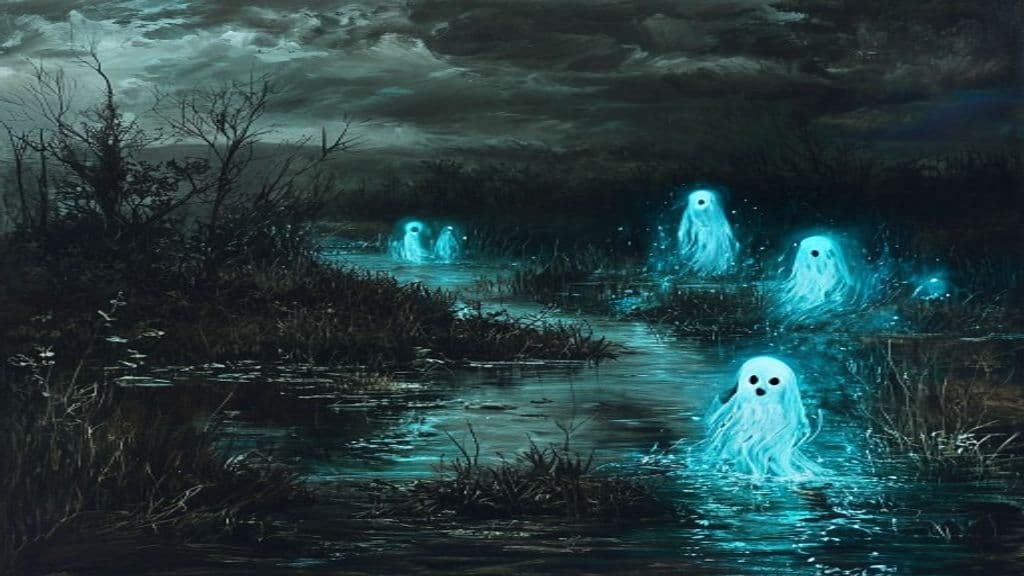
Will-o'-the-Wisp
A wandering light seen over marshy ground at night, leading travellers astray into bogs and fens. Possibly a spirit, possibly the soul of the unbaptised dead, possibly the devil himself.

Lwa (Loa)
Lwa, also spelled loa, are spirit beings venerated within the African diasporic religion of Haitian Vodou and incorporated into some revivalist forms of Louisiana Voodoo. Many lwa identities derive in part from deities of West African traditions, especially Fon and Yoruba.
Althaea
Althaea is attested in the provided sources as (1) the Latinized form of the Greek name Ἀλθαία (Althaia), a mythological human figure recorded as daughter of Thestius and mother of Meleager, and (2) a botanical genus (Malvaceae) of perennial herbs including the marshmallow plant; the name may be etymologically linked to Greek ἀλθος (althos) 'healing'. The supplied material contains no evidence that Althaea is a supernatural being.
Althaemenes
Althaemenes is a mythic Cretan prince in Greek tradition, son of King Catreus, whose story centers on an oracle foretelling that he would kill his father. He fled Crete for Rhodes to avoid the fate, established an altar at Mount Atabyrus, accidentally killed his father in a case of mistaken identity, died tragically, and was later honored locally as a hero.
Alticonodon
Alticonodon is a genus of extinct eutriconodont mammal known from the Early Campanian (Late Cretaceous) Milk River Formation of Alberta, Canada; it is represented by dental remains and interpreted as a late-surviving, hypercarnivorous member of a relic triconodont-grade lineage.
Alucard (Castlevania)
Alucard is a recurring fictional character in the Castlevania franchise whose name is the anadrome of 'Dracula'. Across games and adaptations he appears variably as a playable protagonist, an adversary/boss, or an ally to human protagonists, reflecting a liminal relation to Dracula and themes of inversion and familial ambivalence.
Alukah
In Jewish tradition, Alukah is a blood-lusting monster or vampire described in the Hebrew Bible's Proverbs 30:15. (Note: 1. Power tier should be Minor Spirit (or possibly Lesser) since it feeds on animals and doesn't match the Primordial description. 2. Abilities don't accurately reflect "blood-lusting monster" or vampi)
Alulim
Alulim is the legendary antediluvian 'first king' of Eridu in Mesopotamian tradition, presented in king lists and mythic compositions as the initial ruler appointed by the gods. He functions etiologically to explain the origin of kingship and, in late ritual texts, is invoked in agricultural incantations associated with driving off field pests.
Alux (aluxoʼob)
The alux (plural aluxoʼob or aluxob) is a small, place-bound sprite or spirit in Maya tradition of the Yucatán Peninsula, Belize, and Guatemala, conceived as knee-high, miniature, traditionally dressed Maya-like beings created by ancient gods and normally unseen but able to assume physical form to communicate or frighten humans.
Alvaldi
Alvaldi (Old Norse: Alvaldi / Ölvaldi) is a jötunn in Norse mythic genealogies, attested chiefly as the father of the notable jötunn Þjazi and described in one source as exceedingly rich in gold. He survives in the record mainly as a familial antecedent and an etiological figure rather than as an active participant in preserved narratives.
Alvíss
Alvíss (Old Norse: 'All‑Wise') is a dwarf in Norse mythology who appears in the Poetic Edda poem Alvíssmál as a prospective husband for Thor's daughter Þrúðr. In the surviving narrative Thor tests Alvíss's wisdom through a lengthy question-and-answer session that lasts until sunrise, whereupon the dwarf is petrified by exposure to sunlight.
Alyosha Popovich
Alyosha Popovich (Алёша Попович / Олешко Попович) is a named human hero (bogatyr) of the East Slavic byliny tradition, remembered as the youngest member of the canonical trio of Kievan Rus' warriors. He is chiefly characterized by slyness, mockery, and trickery, and defeats foes by craft often aided by pious petition rather than mere brute strength.
Alyoshenka
Alyoshenka (Russian: Алёшенька) is the local name given to a small mummified body found in mid-1996 near Kyshtym, Chelyabinsk Oblast, Russia. Sources treat the find ambiguously — medical investigators concluded preserved tissue samples indicated a severely malformed premature human infant, while other observers and popular commentators proposed animal, non‑human, or extraterrestrial explanations. The original corpse disappeared after passing through local custody, and subsequent DNA testing (2004) was performed on preserved tissue samples rather than the lost original.
Alû (Alu)
A named lemma attested in modern reference lists as 'ALU / Alu', but for which the supplied research corpus contains no substantive primary- or secondary-source information about nature, appearance, powers, or rituals in Mesopotamian tradition.
Community Record
- [1]Alusi. Wikipedia contributors. "Alusi." Wikipedia, The Free Encyclopedia. https://en.wikipedia.org/wiki/Alusiwiki