
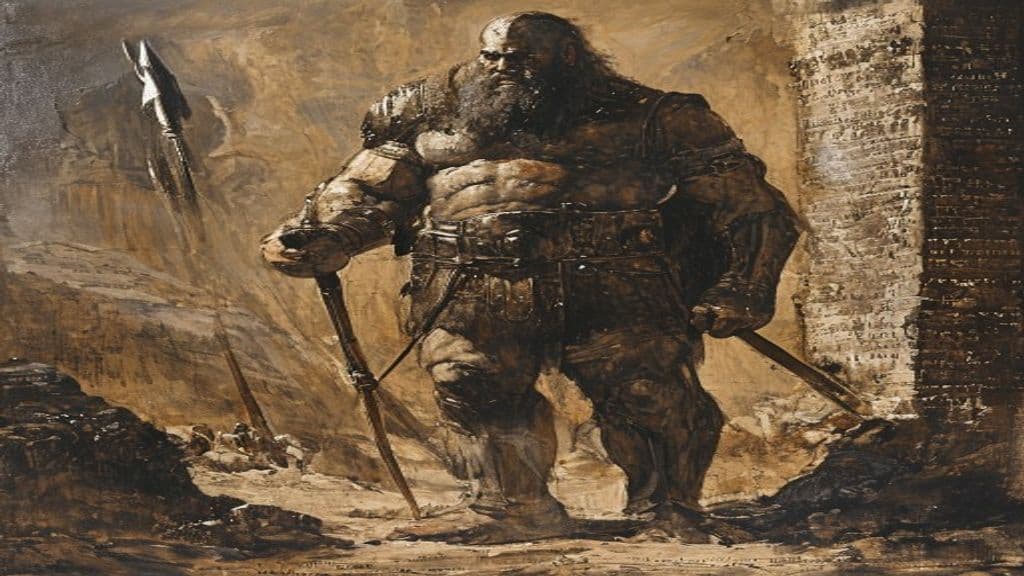
The Anakim are described in the biblical text as descendants of an eponymous ancestor named Anak (עֲנָק). In Israelite narrative memory they appear across several time frames — patriarchal memory (Genesis), the wilderness/spying episode (Numbers 13), and the conquest period (Joshua 11) — functioning as a pre‑Israelite, large-bodied people whose presence marks Canaan as occupied by formidable inhabitants. Outside the Bible, Egyptian Middle Kingdom Execration lists name a group called ly Anaq ('people of Anaq'), which some modern scholars cite as a possible external echo of the same ethnonym; this identification is reported in secondary summaries.
Biblical sources and reference works emphasize the Anakim's extraordinary size and formidable appearance: the Israelite spies report that the Anakim resembled the Nephilim and that the spies felt 'like grasshoppers' beside them (Numbers 13:33 as cited in summaries). The Hebrew term itself functions as a lineage label ('sons of Anak') rather than a purely monster category; later textual traditions (Septuagint/Vulgate forms Enacim/Enac) and encyclopedic treatments have rendered them in English as a 'race of giants.'
The supplied sources do not ascribe supernatural powers to the Anakim. Their primary traits in the narratives are martial and territorial: they are inhabitants and warriors of parts of Canaan who posed a military and psychological obstacle to Israelite settlement (Numbers 13; Deuteronomy 2:11; Joshua 11:21–22). Their effect upon Israelite actors is chiefly reputational and strategic — their formidable stature and reputation filled the spies with terror — and later traditions sometimes link later Philistine giant figures (e.g., Goliath) genealogically to Anakim survivors.
Weaknesses
- conditionvulnerable to military defeat/expulsion
- otherpsychological vulnerability exploited by Israelite faith and leadership (contrast between fearful spies and faithful leaders like Caleb and Joshua)
Wards
- ritualmilitary expulsion (conquest under Joshua, narrative remedy)
Ahab
Ahab (Hebrew: אַחְאָב, ʾAḥʾāḇ) is principally the historical/biblical seventh king of the northern Kingdom of Israel, son and successor of Omri, remembered in Hebrew scripture and later rabbinic literature for political activity, promotion of Baal worship, and confrontation with prophets. The name is also reused in later literature (notably Herman Melville's Captain Ahab), but the supplied sources treat these as distinct human figures rather than supernatural beings.
Amalek
Amalek (Heb. עֲמָלֵק, ʿĂmālēq) is presented in the supplied sources as an eponymous ancestor and the nation/tribe of the Amalekites in the Hebrew Bible — a recurring human enemy of Israel whose ambushes and raids become the paradigm for a legal-theological injunction to eradicate their memory.
Amalekites
The Amalekites are a people-group in the Hebrew Bible and later tradition portrayed as Israel's archetypal hostile enemy. Presented as a tribal/national antagonist descended from Amalek (a grandson of Esau), they appear in narratives of raids and battles and later as a theological symbol of implacable enmity that some texts treat as warranting eradication.
Ataroth
Ataroth is a toponym attested in Iron Age Levantine sources (Hebrew Bible and the Mesha Stele). The name labels several distinct towns east and west of the Jordan and functions in those texts as a marker of tribal allotment, territorial boundary, settlement, and cultic-political action.
Azariah IV
Azariah IV is presented in the supplied materials as a label applied to a biblical/historical person bearing the theophoric name Azariah (Hebrew Azaryah/Azari'ah). The sources do not treat Azariah IV as a supernatural being; rather, Azariah is one of several individuals named in Israelite genealogies, priestly lists, and prophetic narratives (e.g., 1 Chronicles 6; prophetic episode with King Asa).
Eliphaz
Eliphaz is a personal name in Hebrew scripture borne by at least two distinct human figures: Eliphaz son of Esau, a genealogical progenitor whose descendants include Amalek; and Eliphaz the Temanite, one of Job's three friends and a principal speaker in the Book of Job. Both figures function in narrative, genealogical, and wisdom-theological roles rather than as supernatural beings.
Anahita (Arədvī Sūrā Anāhita / Ardwisur Anāhīd)
Anahita is a worship-worthy divine figure (yazata) in Iranian religious tradition, attested in the Avesta and later Middle Persian texts, who personifies the waters and the mythical heavenly river and is associated with fertility, procreation, wisdom, and (in later syncretic forms) martial success and the planet Venus.
Anaideia
Anaideia is the ancient Greek personification of shamelessness, described in sources as a companion of Hybris and opposed to Eleos (mercy). She functions as an abstract moral force within Greek mythopoetic thought rather than as a deity with an attested cult or narrative cycle.
Anak
Anak is a Hebrew Biblical eponymic ancestor associated with the Anakim, a clan or group remembered in Israelite tradition as unusually large and formidable inhabitants of the hill country around Hebron. In biblical narratives the Anakim are rhetorically linked to older mythic categories (Nephilim, Rephaim) but function primarily as remembered pre-Israelite people rather than a ritualized supernatural species.
Ananelus (Hanameel)
Ananelus, also attested in Hebrew as Hanameel, was a historical kohen who served as High Priest of the Jerusalem Temple in the late 1st century BCE. Appointed by Herod the Great in 37 BCE to fill the vacancy created by the execution of Antigonus II Mattathias, he was removed in favour of Aristobulus III and later restored; later succession events place his tenure before the appointment of Simon son of Boethus after 29 BCE. He is credited in rabbinic tradition (Mishnah, Parah 3:5) with preparing the penultimate of seven red heifers used in the post‑Exilic/Second Temple period.
Ananias son of Nedebeus
Ananias son of Nedebeus (Hebrew: חנניה בן נדבאי, Ḥananyá ben Nadváy) is presented in Jewish and early Christian sources as the historical high priest of Jerusalem who served c. 47–58 CE. He appears in the Acts of the Apostles as the presiding official at parts of the legal proceedings against Paul and is discussed in later historical commentary (including Josephus under the variant 'Ananias ben Nebedeus').
Ananiel
Ananiel (Heb. עננאל; Greek Ανανιας) is a named angelic figure attested in the Book of Enoch tradition as one of the 20 leaders of the 200 Watchers, entrusted with aspects of vegetation and atmospheric phenomena; in later reception (notably a Coptic Orthodox tradition) he appears alternatively as one of seven holy archangels.
Community Record
- [1]Anakim — Wikipedia. Wikipedia entry 'Anakim' (summarizes biblical passages Numbers 13, Genesis, Joshua 11 and notes on Egyptian Execration texts and etymology).wiki
- [2]Anakim — Wikidata Q4750971. Wikidata item summarizing Anakim as 'race of giants, descended from Anak' per Hebrew Bible.wiki
- [3]Anakim — International Standard Bible Encyclopedia. ISBE article 'Anakim' (reference‑encyclopedic treatment linking the term to 'giants' and to biblical passages).academic
- [4]Anakim — Biblical Cyclopedia. Biblical Cyclopedia entry 'Anakim' (encyclopaedic summary of biblical references and tradition).academic
- [5]Joshua 11 (discussion of Anakim). Online discussion and summary of Joshua 11 account noting expulsion and survivors taking refuge in Philistine cities (Joshua 11:21–22).other
- [6]Giants in the Old Testament (VanAnne summary). Comparative summary of biblical giant traditions noting connections between Anakim, Nephilim, and Rephaim; used as a secondary synthesis in supplied materials.other
- [7]Egyptian Execration texts and ly Anaq (summary in secondary sources). Summaries in Wikipedia and other secondary sources note that Egyptian Middle Kingdom Execration lists include a group called 'ly Anaq' (people of Anaq) and list three rulers Erum, Abiyamimu, and Akirum; treated in supplied materials as a possible external echo of the ethnonym.other