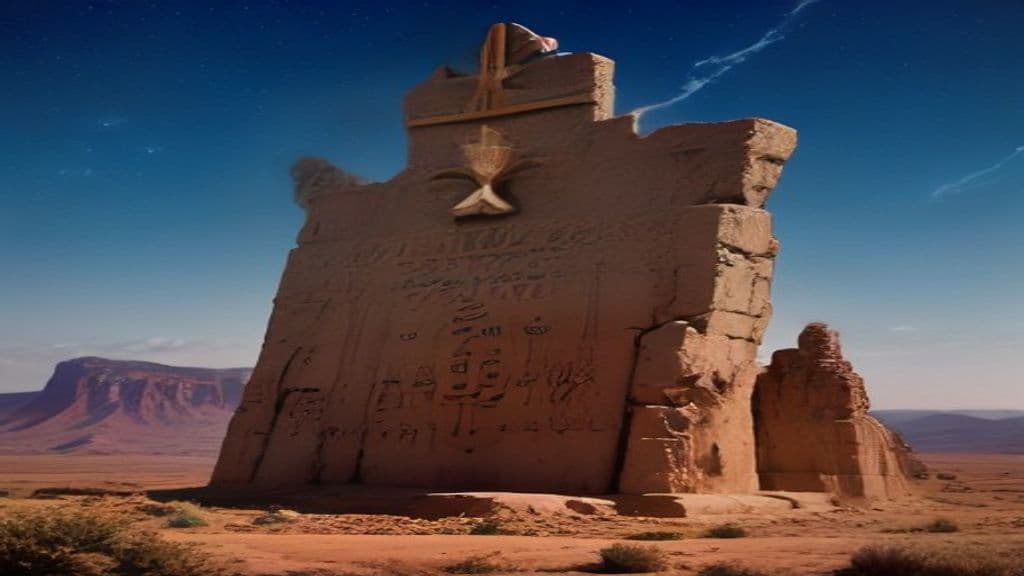
Ataroth is not a mythic progenitor but a historical toponym preserved in Iron Age texts. In the Hebrew Bible the name appears in tribal-allotment and border lists (e.g., Numbers and Joshua), where it serves as part of the narrative matrix of settlement and territorial definition. In Moabite inscriptional tradition (the Mesha Stele) Ataroth is the scene of a royal cultic-political act by King Mesha. The name therefore originates in the lived geography and political memory of the ancient Levant rather than in a mythic birth tale.
As a place-name, Ataroth has no anthropomorphic form. The textual record points to multiple physical settlements: an eastern-Jordanian Ataroth in Gilead—often identified with Khirbat Ataruz north of Wadi Heidan—and one or more western-Jordan Ataroths listed in Joshua’s border descriptions, possibly corresponding to modern 'Atara (south of al-Bireh) or Khirbet ed-Darieh near Lower Beth-Horon. Descriptions in modern references place the eastern site in a fertile grazing district near Dibon, Jazer, and Aroer; archaeological popular reports suggest cultic installations at Khirbat ‘Ataroz, but such claims are secondary in the supplied notes.
Ataroth itself possesses no supernatural powers; its ‘‘behaviors’’ are the roles attributed to it in narratives and inscriptions. In biblical lists it functions as a point of settlement construction, tribal allotment, and territorial boundary. In the Mesha Stele it functions as the locus of Mesha’s reported massacre and dedication—framed as satisfying the deity Chemosh—so the toponym operates as the stage for ritualized political violence and cultic dedication in inscriptional rhetoric. Thus the name’s agency is discursive and political rather than personal or magical.
Ahab
Ahab (Hebrew: אַחְאָב, ʾAḥʾāḇ) is principally the historical/biblical seventh king of the northern Kingdom of Israel, son and successor of Omri, remembered in Hebrew scripture and later rabbinic literature for political activity, promotion of Baal worship, and confrontation with prophets. The name is also reused in later literature (notably Herman Melville's Captain Ahab), but the supplied sources treat these as distinct human figures rather than supernatural beings.
Amalek
Amalek (Heb. עֲמָלֵק, ʿĂmālēq) is presented in the supplied sources as an eponymous ancestor and the nation/tribe of the Amalekites in the Hebrew Bible — a recurring human enemy of Israel whose ambushes and raids become the paradigm for a legal-theological injunction to eradicate their memory.
Amalekites
The Amalekites are a people-group in the Hebrew Bible and later tradition portrayed as Israel's archetypal hostile enemy. Presented as a tribal/national antagonist descended from Amalek (a grandson of Esau), they appear in narratives of raids and battles and later as a theological symbol of implacable enmity that some texts treat as warranting eradication.
Anakim
In Hebrew Bible tradition the Anakim (עֲנָקִים, 'sons/descendants of Anak') are an ancestral people remembered for extraordinary size and a fearsome appearance. Presented as inhabitants of the southern hill country of Canaan who opposed Israelite settlement, they are narrated as a martial/territorial population rather than as supernatural beings; biblical and later sources compare or associate them with other ancient 'giant' categories (Nephilim, Rephaim) and note possible non‑biblical echoes (Egyptian Execration texts' ly Anaq).
Azariah IV
Azariah IV is presented in the supplied materials as a label applied to a biblical/historical person bearing the theophoric name Azariah (Hebrew Azaryah/Azari'ah). The sources do not treat Azariah IV as a supernatural being; rather, Azariah is one of several individuals named in Israelite genealogies, priestly lists, and prophetic narratives (e.g., 1 Chronicles 6; prophetic episode with King Asa).
Eliphaz
Eliphaz is a personal name in Hebrew scripture borne by at least two distinct human figures: Eliphaz son of Esau, a genealogical progenitor whose descendants include Amalek; and Eliphaz the Temanite, one of Job's three friends and a principal speaker in the Book of Job. Both figures function in narrative, genealogical, and wisdom-theological roles rather than as supernatural beings.
Atanua
Atanua is the Marquesan (Polynesian) goddess of the dawn who, in local cosmogony, is the consort of Atea and mother of the first man; she is also credited in the surviving summary accounts with creating the seas as the result of a miscarriage.
Atargatis
Atargatis (Greek Atargatis / Derceto) is the chief goddess of northern Syria in classical antiquity, worshipped as a civic mistress (baalat) and fertility deity who protects the city and people and functions as an ancestor/founder figure for ruling houses. Her cult shows continuity with Bronze‑ and Iron‑Age Levantine goddesses and appears in variable iconography ranging from fully anthropomorphic to ichthyomorphic (fish‑tailed) forms.
Atari Force
Atari Force is a fictional multinational exploration team created as a media tie‑in between Atari, Inc. and DC Comics in the early 1980s. Presented across pack‑in minicomics, a 1983 graphic novel tie‑in, and a 1984–1985 ongoing series, the property functions as a branded ensemble science‑fiction adventure rather than a folkloric supernatural being.
Ate
Ate (Ancient Greek: Ἄτη, Átē) is the personified force of delusion, reckless folly, and ruin in ancient Greek poetic and mythic tradition. She functions both as an abstract condition—an aition for misguided action—and as an active agent who can blind the minds of gods and men and be sent, notably by Zeus, as a form of retribution.
Atea
Atea is a primordial creator-associated being in multiple Polynesian traditions (Marquesas, Tuamotu, and Māori) closely associated with light and the ordering of the cosmos. Variants depict Atea as a self-originating giver of light, a progenitor who fathers gods and humans, or as the cosmic universe that is sex-differentiated into Heaven and Earth in one reported account.
Atef Crown
Egyptian feathered white crown associated with Osiris, symbolizing his status and power. (Note: * Power tier should be Ancient, not Greater, since it's associated with a deity. * Abilities statement is accurate based on source material, but can be rephrased for clarity: "As an inanimate object, )
Community Record
- [1]Ataroth - Wikipedia. Wikipedia, Atarothwiki
- [2]Ataroth - Biblical Cyclopedia. Biblical Cyclopedia, entry 'Ataroth'other
- [3]Ataroth (Abarim Publications). Abarim Publications, 'Ataroth: meaning and etymology'other
- [4]Mesha Stele / Mesha inscription summaries (via Wikipedia). Wikipedia, Mesha Stele (summary references to Ataroth)wiki
- [5]'Atara - Wikipedia (possible western Ataroth identification). Wikipedia, 'Atara' (place identification discussion)wiki
- [6]CIA Reading Room: Fighters for Freedom of Israel (uses Atareth in modern political rhetoric). CIA Reading Room document citing modern political use of the toponym 'Atareth'other
- [7]Moabite Temple Found | With Meagre Powers (popular report on Khirbat ‘Ataroz excavation). With Meagre Powers blog, 'Moabite Temple Found' (popular secondary report)other
- [8]Ataroth-Addar - Biblical Cyclopedia. Biblical Cyclopedia, entry 'Ataroth-Addar'other