
In the versions represented in the cited materials, Sleeping Beauty originates in the literary fairy-tale tradition exemplified by Charles Perrault (1697) and was popularized in modern culture by Disney's 1959 animated film. In the Disney narrative Aurora is born to King Stefan and Queen Leah; at her birth supernatural fairies attend and one malevolent fairy (named variably across adaptations as Maleficent or Carabosse) issues a curse that shapes the central crisis of the tale. Later stage and ballet programs reiterate this arc and frame the Lilac Fairy or the three good fairies as intervening forces who alter or mitigate the original curse.
The cited materials portray Aurora according to conventional Western fairy-tale princess iconography as a young royal woman often depicted with long flowing hair, court dress and a crown in modern visual adaptations (notably the 1959 Disney film and related cosplay/photography). The provided sources do not supply a canonical, detailed physical description from older tale texts; the visual traits come primarily from film, stage and photographic representations.
Aurora herself is not described in the provided sources as possessing supernatural powers. Across the cited adaptations she is a mortal princess who is the passive recipient of fairy bestowals and the target of an antagonist's curse; her narrative function is to be protected, hidden, enchanted, and ultimately awakened by an external agent (the prince) or mitigated by beneficent fairies (the Lilac Fairy or the three good fairies).
Weaknesses
- conditionvulnerability to the antagonist fairy's curse (death or long enchanted sleep)
Wards
- ritualConcealment and protective rearing by beneficent fairies
- ritualAlteration of the curse by a benevolent fairy (Lilac Fairy)
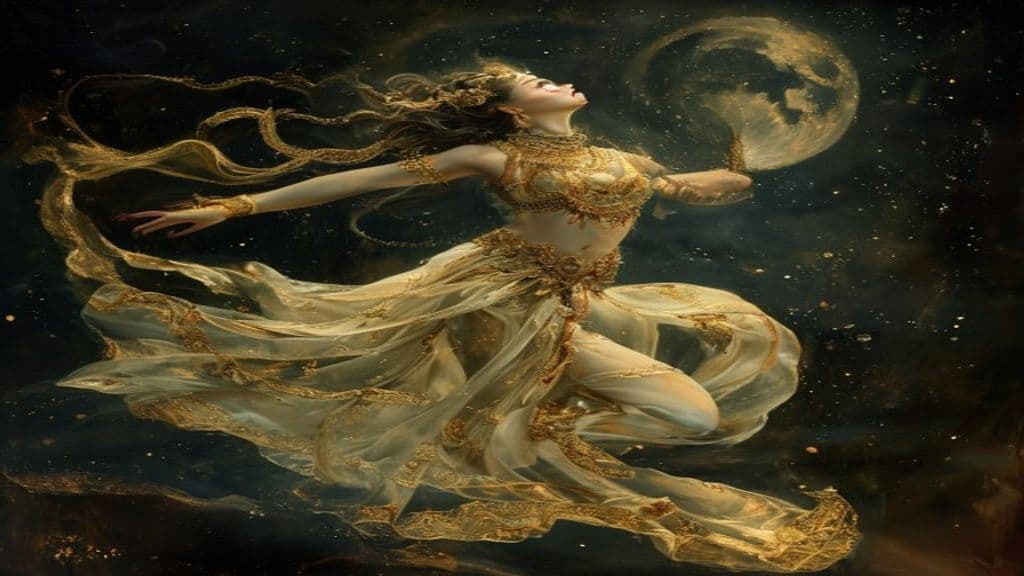
Apsara
Celestial dancers and water nymphs of Hindu cosmology — beautiful semi-divine beings who dance at the court of Indra and, by his command, descend to earth to distract sages from excessive asceticism.
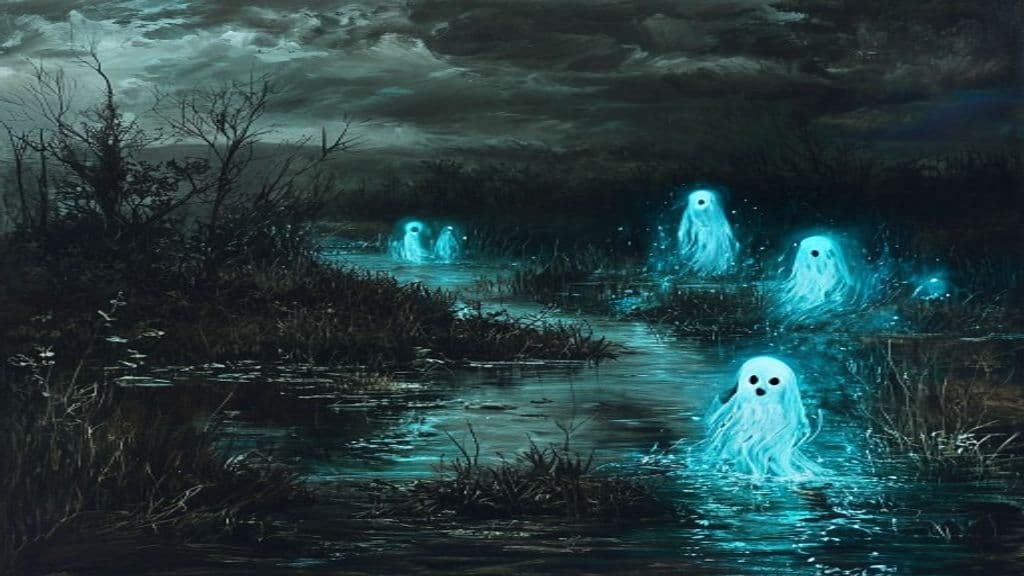
Will-o'-the-Wisp
A wandering light seen over marshy ground at night, leading travellers astray into bogs and fens. Possibly a spirit, possibly the soul of the unbaptised dead, possibly the devil himself.
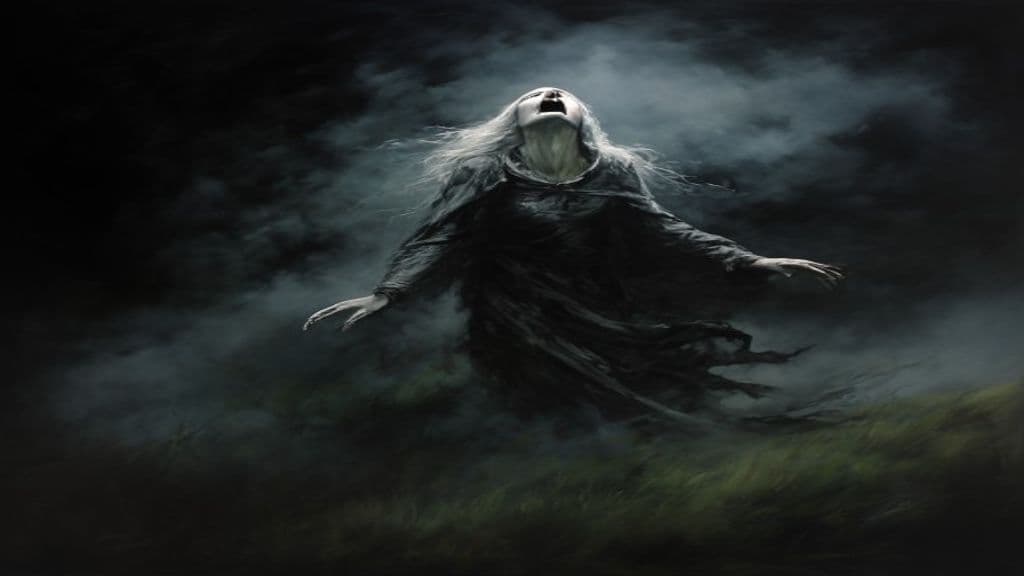
Banshee
A female spirit of Irish and Scottish folklore whose wail heralds an impending death in a family of Gaelic descent. Not a cause of death — a witness to it.
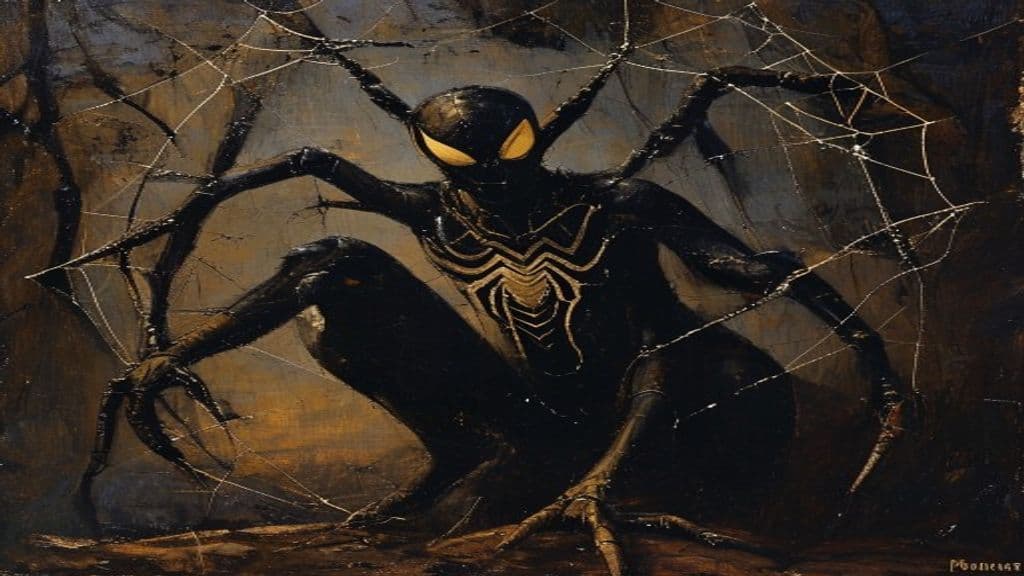
Anansi
The spider trickster god of Akan folklore — cunning, mischievous, and wise. Keeper of stories and teacher of human beings, brought through the slave trade into Caribbean and African-American tradition.
Aunt Em (Emily Gale)
Aunt Em (Emily "Em" Gale) is a fictional human character in L. Frank Baum’s Oz series, the married partner of Uncle Henry and the guardian/aunt of Dorothy Gale. Presented as an ordinary Kansas farmwife whose life is altered by Dorothy’s voyage to Oz, she later relocates to the Emerald City and is given a ceremonial civic occupation there.
Aura
Aura (Ancient Greek Αὔρα, plural Αὔραι) is a minor Greek and Roman divine figure personifying a cool breeze. She appears both as an individual breeze-nymph in literary accounts (most fully in Nonnus) and as a class of breeze-spirits (Aurae) in other sources and lexica.
Aura (paranormal)
Auras are described in modern esoteric and New Age sources as subtle, nonmaterial emanations or energy fields that surround living beings and objects, presented as part of a 'subtle body' and used diagnostically to indicate health, personality, or moral/spiritual state. The concept was popularized in late-19th/early-20th-century Western occultism (notably Theosophy) and later adapted by New Age and holistic-health practitioners; scientific investigation finds no reproducible evidence for literal aural perception and offers physical explanations for photographic effects often labeled as 'auras.'
Aurboða
Aurboða is a jötunn (giantess) in Norse mythology attested as the wife of the jötunn Gymir and mother of the jötunn Gerðr; the name also appears separately as one of the nine maidens in the poem Fjölsvinnsmál. Her name is debated etymologically as either 'gravel-bidder' (aurr + boða) or, in an alternative reading, 'gold-bidder' (aur + boða).
Aureily
No evidence in the provided sources supports treating 'Aureily' as a folkloric or supernatural entity. The string appears in the sources either as part of Latin-derived numismatic terminology ('aureus' / 'aurei' — a Roman gold coin) or as a contemporary image-credit/creator name in commercial media; neither source presents origin, appearance, powers, or ritual material for an entity called 'Aureily'.
Aurnavabha
Aurnavabha (also attested as Aurṇavābha) is a name occurring in Vedic hymnic material (Rigveda) and later cited in bibliographic/theosophical indexes as a Vedic commentator. The sources present the name as textual/authorial rather than as an independently attested supernatural being.
Aurvandill
Aurvandill is a figure attested in medieval Germanic onomastics and Norse narrative, most famously remembered in an Old Norse tale where Thor carries him across icy rivers and his frozen toe is cast into the sky as the star called Aurvandils-tá. Comparative linguistic study reconstructs a Common Germanic name associated with dawn or the morning star.
Auseklis
Auseklis is a named youthful celestial being in Latvian folk-song tradition (dainas), associated with the dawn and a particular eight-pointed star emblem. He appears among the Dieva dēli (sons of Dievs) as an attendant of the Sun (Saule), a suitor in the mythic 'celestial wedding', and a participant in household-like sky rituals.
Austri, Vestri, Norðri and Suðri
A quartet of named dwarfs in Old Norse cosmology positioned at the four cardinal points who are described in medieval sources as holding up the sky after the gods made heaven from Ymir’s skull. They function as structural/cosmogonic supports and are attested in the Prose Edda and the Dvergatal of Völuspá, with echoes in skaldic kennings and in later scholarly interpretation linking their role to roof-beam terminology.
Autochthe
Autochthe (Ancient Greek: Αὐτόχθη) is a minor mythological princess of the Perseid line, named in classical genealogies as a daughter of Perseus and Andromeda. In some traditions she is said to have married Aegeus of Athens and borne daughters but no sons, and her chief narrative role is as a dynastic connector between ruling houses (Argos/Mycenae and Athens).
Autochthon (ancient Greece)
In ancient Greek myth and civic ideology, an autochthon is an 'earth-born' person or people—literally generated by the soil of a place—to claim the deepest form of indigenous origin and thereby political legitimacy. The term functions as a social-mythic category grounding territorial belonging and priority rather than as an independently acting supernatural creature.
Autolycus
Autolycus is a mythic Greek trickster-thief, son most commonly of Hermes, famed for cunning, theft, and the ability to alter the appearance of stolen goods; he is a legendary ancestor and occasional tutor within the heroic age rather than an impersonal spirit or cult deity.
Community Record
- [1]Aurora (Sleeping Beauty) - Wikipedia. "Aurora, also known as Sleeping Beauty or Briar Rose, is a fictional character who appears in Disney Animation's 1959 film Sleeping Beauty."wiki
- [2]Sleeping Beauty (1959 film) - Wikipedia. Disney's 1959 animated film adaptation of Perrault's fairy tale; film and script materials referenced in the notes.wiki
- [3]Walt Disney's Sleeping Beauty (film script excerpt). Film script begins: "Once upon a time, in a kingdom far away, a beautiful princess was born..."literary
- [4]The Sleeping Beauty - English National Ballet (program note). Program note: "Her godmother the Lilac Fairy alters the spell so Aurora will not die, but sleep for 100 years."other
- [5]Sleeping Beauty comparison and adaptations (online compendium). Comparative notes on variant names and adaptation differences (e.g., antagonist named Maleficent or Carabosse; Perrault origin).other
- [6]Princess Aurora, Sleeping Beauty (cosplay/photography examples). Photographic depictions used in the provided materials illustrate modern visual portrayals (long hair, royal dress, crown).other