
In tafsīr, ḥadīth, and Qisas al-Anbiya traditions Azazil is presented as the privileged celestial being who occupied a high station in heaven prior to his fall. Some accounts (notably those attributed to ibn Abbas and followed by later exegetes such as Ṭabarī and al-Suyūṭī) identify him as an inhabitant of paradise and leader of other angels, entrusted with authority over the lower heavens and sent to punish corrupt djinn. After his success he became arrogant and refused God's command to prostrate before the newly created human, claiming superiority; this act of pride led to his condemnation and subsequent identification as Iblis. Other exegetical strands (associated with al-Hasan al-Baṣrī and those who emphasize angelic infallibility) reject that Satan was ever an angel and read Qur'anic references to Iblis as indicating a jinn by nature. Scholarly commentary notes the name's resemblance to the Jewish figure Azazel and records competing etymologies—some proposing a borrowing from Jewish sources, others deriving the name from Arabic roots (e.g., ‘azala or azīz + il)—so the figure functions as a polyvalent explanatory persona for the origin of rebellion and pride in Islamic discourse.
The surveyed sources do not supply a consistent anthropomorphic description. Exegetical and hadith material cited in the summaries emphasize elemental origin rather than visual detail: many accounts state that most angels are created from light (nūr), while Azazil and those with him are said in some traditions to be created from a 'poisonous fire' (nār as-samūm). This contrast—light for angels, fire for Azazil and his companions—is used interpretively to account for his capacity for rebellion and his ultimate destiny in fire, but the sources do not provide standardized corporeal features or a detailed physical likeness.
Before the fall, certain traditions describe Azazil as the master or chief among the heavenly beings, 'the strongest and most knowledgeable' of them, entrusted with ruling the lower heavens and authorized to lead an angelic force against corrupt djinn. He is credited with commanding angels to drive away errant djinn and administering punishment in the lower heavens. His defining behaviour that leads to downfall is prideful disobedience: when God commands prostration before the newly created human, Azazil refuses, asserting his superiority and thereby incurring divine condemnation. After his expulsion he is equated with Iblis and functions in Islamic theology and mysticism as the archetype of rebellion, temptation, and the consequences of pride; Sufi writers cite his example for moral and metaphysical lessons. The sources, however, also record contested views on his ontological status—angelic leader versus jinn—so accounts of his capacities and office vary with interpretive tradition.
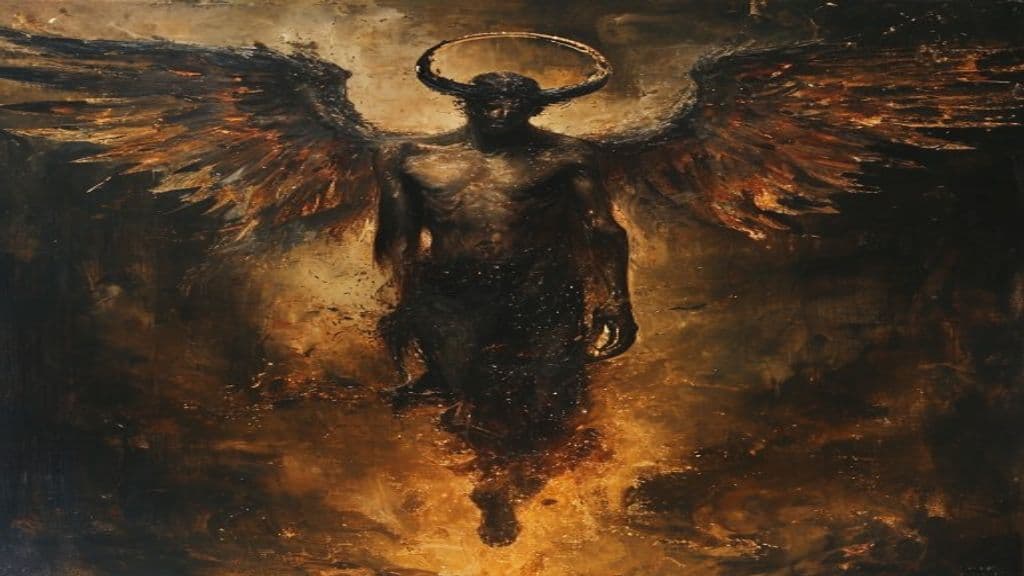
Iblis
The primordial deceiver in Islamic theology; a jinn who refused God's command to bow before Adam and was expelled from heaven. The source of all temptation and whispered suggestion.
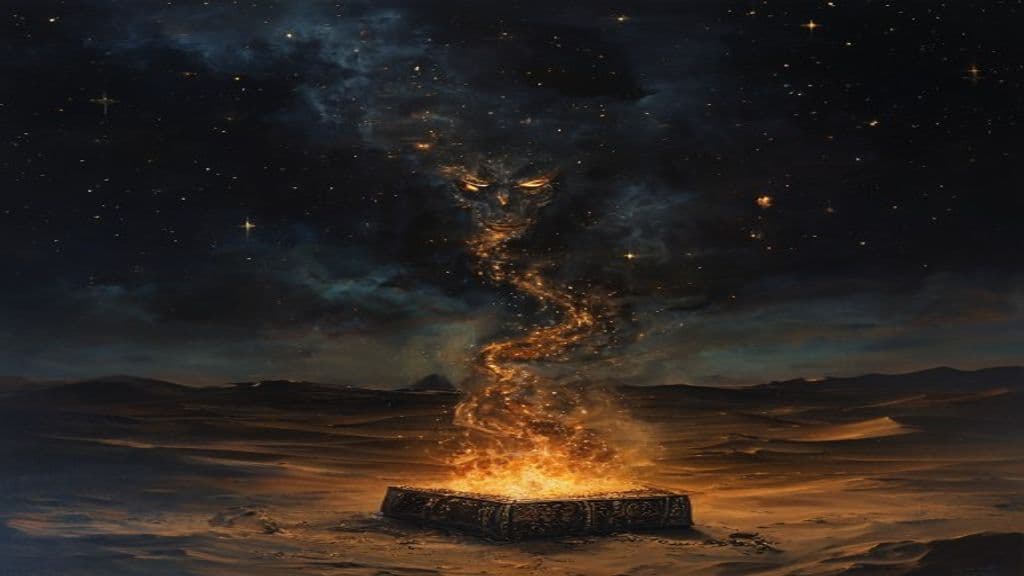
Djinn
The class of supernatural beings created from smokeless fire in Islamic cosmology — a parallel civilization to humanity, capable of belief or unbelief, with their own prophets, society, and judgment before God.
Azadeh
Azadeh (Persian: آزاده) is a Persian female given name meaning broadly 'free' or 'free-minded'; some sources also gloss it as 'someone noble'. The name appears in modern Iranian usage (borne by several contemporary public figures) and as the name of a character in Ferdowsi's Shahnameh. It is a personal name rather than a supernatural being in the provided sources.
Azan
No mythological or folkloric information about an entity named 'Azan' is present in the supplied sources. The string 'Azan' appears in the provided materials primarily as an alternate spelling of the Islamic Adhan (call to prayer) and in modern media titles; there is no documented mythic persona, attributes, or traditions available in these sources.
Azariah
Azariah (Hebrew: עֲזַרְיָה ‘Ǎzaryāh, 'Yah has helped') is principally a theophoric Hebrew personal name borne by multiple figures in biblical, apocryphal, and modern contexts. In the provided sources it appears as the name of a prophet in 2 Chronicles 15:1–8, as an alias used by the archangel Raphael in the Book of Tobit, as a guardian-angel name in modern private revelation, and as the name of various priests, kings, and later individuals.
Azariah IV
Azariah IV is presented in the supplied materials as a label applied to a biblical/historical person bearing the theophoric name Azariah (Hebrew Azaryah/Azari'ah). The sources do not treat Azariah IV as a supernatural being; rather, Azariah is one of several individuals named in Israelite genealogies, priestly lists, and prophetic narratives (e.g., 1 Chronicles 6; prophetic episode with King Asa).
Azatiwada
Azatiwada was a historical late-Hittite (Neo-Hittite) dynast — a local ruler of the Karatepe (Karatepe-Aslantas) fortress in Cilicia whose bilingual Phoenician–Luwian inscription (the Karatepe or Azatiwada inscription) records building works, dedications, and administrative/ritual formulae.
Azazel
In earliest biblical usage Azazel is a ritual locus or destination in the Yom Kippur scapegoat rite to which communal sins are sent; in later Second Temple and subsequent Christian and Islamic receptions Azazel becomes personified as a fallen angel associated with rebellion and the transmission of forbidden knowledge to humans.
Azeus
Azeus (Ancient Greek: Ἀζεύς; also Aezeius Ἀζειός) is a mortal figure in Greek mythic genealogies, identified as a Minyan prince of Orchomenus. He is recorded as the youngest son of King Clymenus and as a participant in a vengeance expedition against Thebes; through his descendants he is an ancestor of leaders who fought at Troy.
Azhdaha (Aždahā)
Azhdaha (also Aždahā) is a serpentine/draconic monster in Persian literary and folkloric tradition, depicted as a gigantic, often dangerous creature that may inhabit air, sea, or land and appears in epic and cosmological texts.
Azhdahak
Azhdahak (Old Armenian Աժդահակ, also spelled Ashdahak) is the Armenian form of the Avestan figure Azhi Dahaka. In Armenian reception the name refers to the same mythic adversary of Iranian tradition — an imprisoned serpent/dragon-type antagonist who, in Iranian accounts cited by Armenian sources, is bound (on Mount Damavand) and destined to break out at the end of time before being finally defeated.
Azimua
Azimua (earlier Ninazimua) is a Mesopotamian goddess attested from the Ur III period onward, primarily known as the wife/consort of the god Ningishzida and in some traditions functioning as an underworld-associated figure or scribe. She was worshiped in southern Mesopotamia (notably Ur and Umma) and appears in a fragmentary myth, Ningishzida and Ninazimua, which concerns an exchange of messages with her temporarily deceased husband.
Aziza
In West African traditional belief the Aziza are a beneficent class of small, forest-dwelling supernatural beings who aid people—especially hunters—by providing 'good magic' and practical and spiritual knowledge. They are associated with anthills and silk‑cotton (kapok) trees and are portrayed as helpful rather than hostile.
Azovka (Azov Girl)
Azovka, often called the Azov Girl in English summaries, is a female supernatural figure named in Pavel Bazhov’s Ural skaz tale "Beloved Name." The supplied sources identify her as a character from Ural-region folklore as represented in Bazhov’s miners’ tales but provide no detailed description or independent folkloric tradition beyond that tale reference.
Community Record
- [1]Azazil — Wikipedia. Wikipedia contributors, 'Azazil', Wikipedia, The Free Encyclopedia.wiki
- [2]Azazil — Wikidata. Wikidata entry Q3460708: Azazil.wiki
- [3]Sembunyi: Amukan Azazil — Wikipedia (film listing). Wikipedia contributors, 'Sembunyi: Amukan Azazil', film listing.wiki
- [4]Archive: Conspiracies of the Stars Part 3 (podcast listing). Archive.org listing referencing a podcast episode linked in research notes.other
- [5]'AZAZİL' Diye Cin Varmış ! Yalanı ⧸ Ebu Hanzala (Halis Hoca) — Archive. Archive.org upload referenced in research notes.other
- [6]Naqshbandi creation myth (Encyc entry). Encyc.org entry referenced in research notes (creation narratives related to Islamic mystical currents).other
- [7]The Sources of Islam — Tisdall (excerpts linked). Excerpts from Tisdall's compilation noted in research material.other