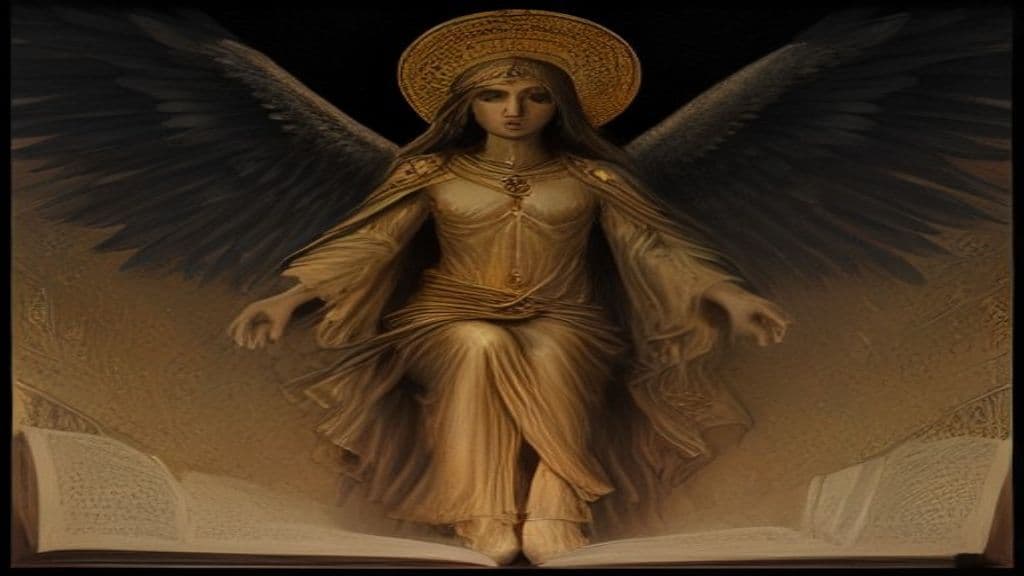
In Second Temple literature (notably the Book of Enoch) a group of heavenly court members called the Watchers (bənē hāʾĔlōhīm) descend from heaven, become enamoured of human women, and engage in illicit unions that produce the Nephilim; leaders such as Samyaza and Azazel are named, and Azazel in particular is accused of teaching forbidden arts. Hebrew poetic passages (read later in tradition) about a celestial figure Hêlêl ben Šāḥar thrown down from the heights are part of the broader pool of motifs about divine beings expelled from the assembly. Christian theology later frames these expulsions as a way to account for the origin of evil among created, rational spiritual beings. Islamic reception contains similar motifs (stories of Iblīs and of Harut and Marut) but exegetical opinion varies on whether these figures are to be classed as angels, jinn, or another category.
Source texts do not offer a single consistent bodily description. Later Christian theology commonly treats angels as immaterial, rational intelligences without bodily limitations; by contrast the Book of Enoch narrates Watchers descending to earth and taking on relations with human women, an account that implies a capacity for physical interaction. Hebrew poetic imagery also associates these beings with celestial objects such as stars (the Isaiah/Hêlêl tradition), so descriptions often shift between non-corporeal intelligences and figures depicted with cosmic or star-like imagery rather than detailed anthropomorphic features.
In Enochic accounts the Watchers descend to earth, engage sexually with human women and beget the Nephilim, and they transmit forbidden knowledge and skills to humanity (Azazel is credited with teaching sorcery and illicit arts). The fall functions in later Christian thought as a metaphysical explanation for how originally good, rational spiritual beings could become sources of evil. Some Second Temple texts portray the offspring or the persisting spirits of these events as continuing to afflict the world (for example as hostile spirits), while later rabbinic and Christian authors often rejected particular Enochian details; Islamic texts contain comparable motifs (Iblīs; Harut and Marut) but interpretive positions differ.
Weaknesses
- otherdivine judgment / purgation (e.g., Flood)
- othercasting down or imprisonment by divine authority
Wards
- otherdivine judgment or authoritative divine action
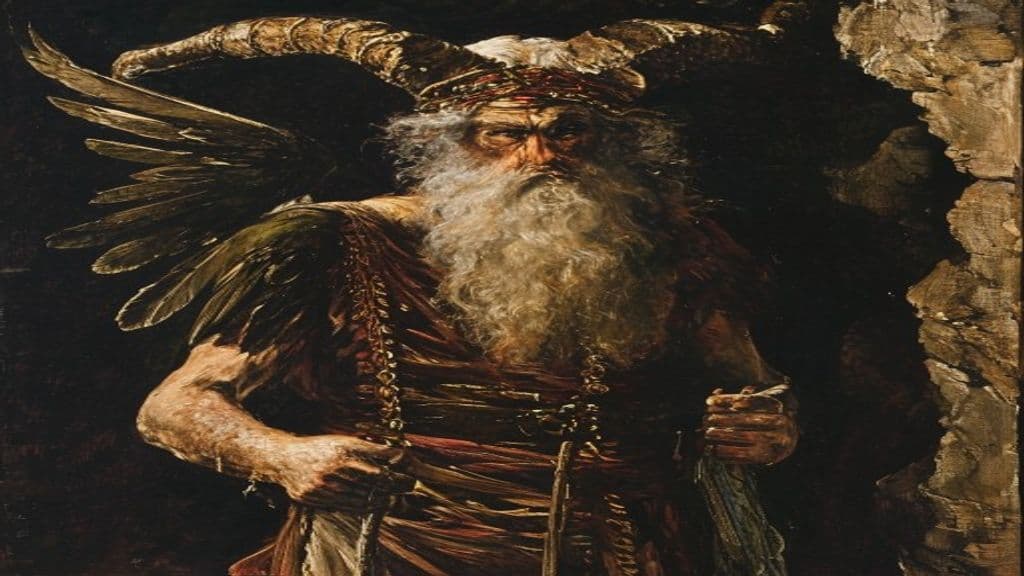
Azazel
In earliest biblical usage Azazel is a ritual locus or destination in the Yom Kippur scapegoat rite to which communal sins are sent; in later Second Temple and subsequent Christian and Islamic receptions Azazel becomes personified as a fallen angel associated with rebellion and the transmission of forbidden knowledge to humans.
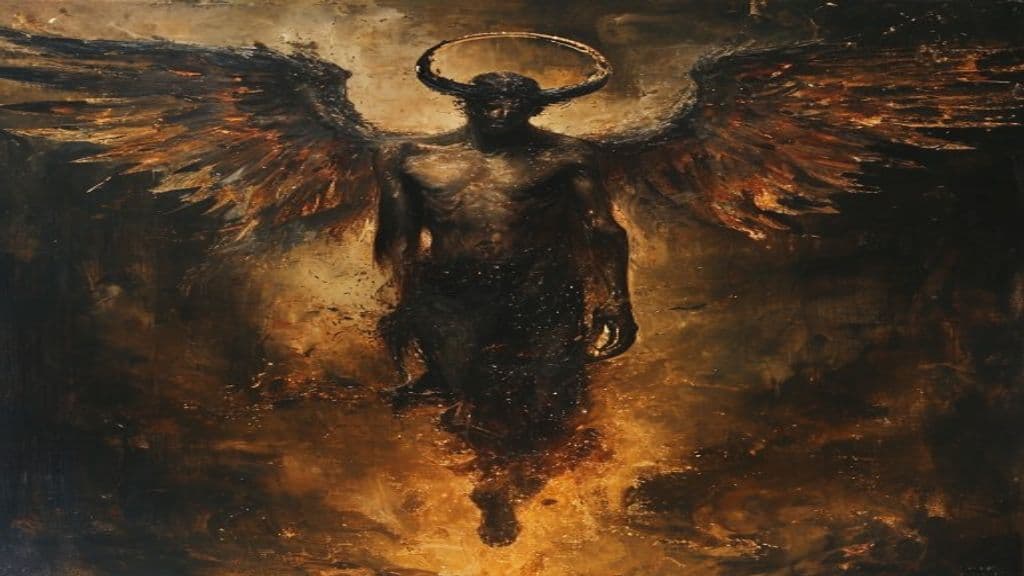
Iblis
The primordial deceiver in Islamic theology; a jinn who refused God's command to bow before Adam and was expelled from heaven. The source of all temptation and whispered suggestion.
Abel
Abel is the second son of Adam and Eve in the Genesis narrative, a shepherd whose accepted offering and subsequent murder by his brother Cain form the biblical account of the first death. Later interpretive traditions expand his role, treating him as an archetypal righteous victim, a postmortem avenging or adjudicating figure, and in some systems (notably Mandaean) identifying him with an angelic lightbeing.
Abraham
Abraham (originally Abram) is the foundational patriarchal ancestor in the Hebrew Bible whose life establishes a covenantal relationship between his family/people and God. He functions as an exemplar of faith, the progenitor of promised descendants, and a narrative anchor for claims of land, blessing, and communal identity in later religious traditions.
Adam and Eve
Adam and Eve are the primordial human pair in the Abrahamic creation narratives who function as the first man and woman, placed in the Garden of Eden to steward creation. Their eating of the forbidden fruit produces a changed human condition—knowledge of good and evil, shame, pain, labor, mortality—and their story underpins later doctrines such as the Christian doctrine of original sin while being read differently across Jewish and Islamic traditions.
Alpha and Omega
A titulary formula and visual symbol formed from the first and last letters of the Greek alphabet (Α/α and Ω/ω), used in Christian scripture and art to denote God's or Christ's totality — 'the beginning and the end.' It functions as a theological appellation rather than an independent supernatural being.
Al‑Yasa (Elisha)
Al‑Yasa (Elisha) is a prophetic figure attested in Abrahamic scriptural traditions. In the Hebrew Bible he is described as an Israelite prophet and 'wonder‑worker'; later traditions in Christianity and Islam also recognize him among the line of prophets.
Ananelus (Hanameel)
Ananelus, also attested in Hebrew as Hanameel, was a historical kohen who served as High Priest of the Jerusalem Temple in the late 1st century BCE. Appointed by Herod the Great in 37 BCE to fill the vacancy created by the execution of Antigonus II Mattathias, he was removed in favour of Aristobulus III and later restored; later succession events place his tenure before the appointment of Simon son of Boethus after 29 BCE. He is credited in rabbinic tradition (Mishnah, Parah 3:5) with preparing the penultimate of seven red heifers used in the post‑Exilic/Second Temple period.
Angel
A spiritual or heavenly being functioning primarily as a messenger and intermediary between a transcendent deity and humanity; angels also act as protectors, guides, and executors of divine will across several Abrahamic and adjacent traditions.
Angel of the Lord
A recurring divine messenger in the Hebrew Bible and New Testament who appears on behalf of the God of Israel, acting as God's representative in speech and deed. The figure—Hebrew מַלְאַךְ יְהוָה (mal’ākh YHWH)—functions as intermediary, guide, protector, judge, and announcer at decisive narrative moments.
Annas (Ananus)
Annas (Hebrew Ḥānān; Greek Ἅννας) was a first-century CE Jewish high priest of Judaea (AD 6–15) whose familial network and continued influence made him a central figure in priestly leadership in Jerusalem and in New Testament narratives of the Passion and early Christian episodes.
Aram (Nahapet)
Legendary leader and patriarch in Armenian tradition who united Armenians into one state. (Note: - Power tier: Primordial (given cosmic/unifying abilities) - Summary: Expand to include "unification of Armenians" as a key aspect of his leadership - Abilities: More specific and detailed description)
Arevakhach’
The Armenian eternity sign is an ancient national symbol representing the Armenians' spiritual and celestial connection. It appears as a geometric figure on khachkars and church walls, embodying the significance of faith and symbolism in Armenian tradition. (Note: - Power tier: Primordial (as it's described as an "ancient" national symbol, but there's no indication that it's deity-level) - Appearance: Not enough detail is provided; the source material only ment)
Azazel
In earliest biblical usage Azazel is a ritual locus or destination in the Yom Kippur scapegoat rite to which communal sins are sent; in later Second Temple and subsequent Christian and Islamic receptions Azazel becomes personified as a fallen angel associated with rebellion and the transmission of forbidden knowledge to humans.
Community Record
- [1]Fallen angel — Wikipedia. Wikipedia, 'Fallen angel' article (summary of Enoch, Isaiah, Christian and Islamic receptions)wiki
- [2]Wikidata: Fallen Angel. Wikidata entry for Fallen Angelother