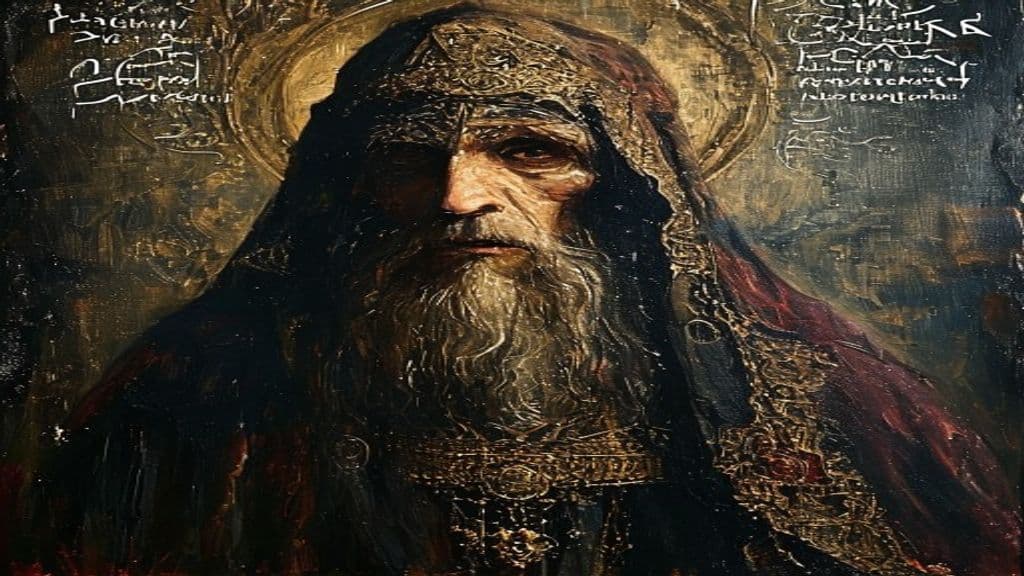
The lexeme derives from the Proto-Slavic root běsъ and belonged to the pre-Christian Slavic supernatural vocabulary as a named class of harmful spirits. With the acceptance of Christianity across Slavic lands the bies concept was syncretized into Christian demonology: the term came to be used interchangeably with chort/čort in some contexts and was used to translate New Testament terms for malign spirits (for example, Russian biesy is used in translations of Mark 5:12 to render the devils entering the swine). Literary authors in later centuries—Pushkin, Dostoevsky, Sologub and others—continued to employ the term, sometimes metaphorically, so that bies retained both its older spirit-entity identity and a role as a cultural symbol of inner disorder or social evil.
The provided sources do not record a consistent traditional physical description for the bies; ethnographic or canonical folk texts giving standard corporeal features are absent from the cited materials. Instead, the term appears mainly in lexical, scriptural-translation, and literary contexts. Modern popular culture has produced corporeal images—e.g., the video game The Witcher 3 uses the word bies for a fictional monstrous, horned predator with special powers—but such portrayals are explicitly modern fictional adaptations and are not attested as traditional Slavic descriptions in the sources provided. Literary references (for example, Pushkin's 'Old Bies' or Dostoevsky's Besy) use the name in narrative and symbolic registers rather than as ethnographic portraiture.
In traditional and linguistic evidence bies functions as an evil or malign spirit whose identity was mapped onto the Christian devil and demonic beings; through this association it carries the same broad attributes found in scriptural contexts—causing affliction, spirit-possession, and moral or mental disturbance. The use of biesy in Russian translations of Mark 5:12 links the term to the New Testament motif of demons entering animals, while Slavic lexical reflexes (Polish zbiesić się, Ukrainian bisy/bisytysia, Slovenian/Croatian/Serbian bes/bijes meaning 'rage' or 'fury') show a semantic range that includes inducing madness, frenzy, or overwhelming violent affect. Specific supernatural powers or a detailed catalogue of abilities (e.g., hypnotism, self-healing) are not recorded for the traditional bies in the supplied sources and where such attributes appear (as in The Witcher 3) they are modern fictional inventions.

Chort
A chort is an anthropomorphic malign spirit figure in Slavic folk tradition that occupies a liminal space between older Slavic demonology and Christian notions of the devil. Depending on region and narrative function it appears as numerous lesser malignant spirits, a trickster antagonist who tempts or is tricked by humans, or as a cover-term for 'unclean forces' credited with various negative creations in the world.
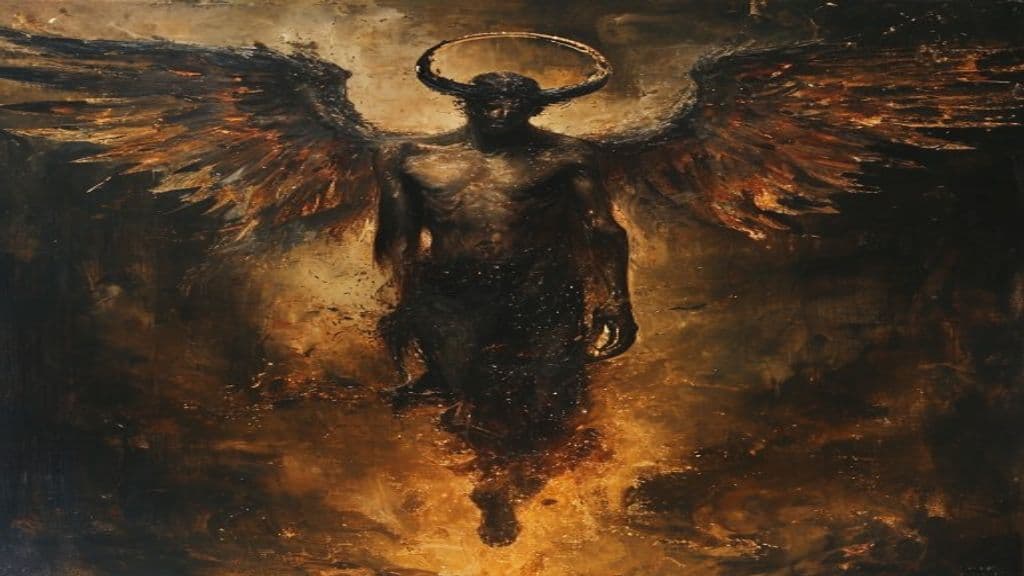
Iblis
The primordial deceiver in Islamic theology; a jinn who refused God's command to bow before Adam and was expelled from heaven. The source of all temptation and whispered suggestion.
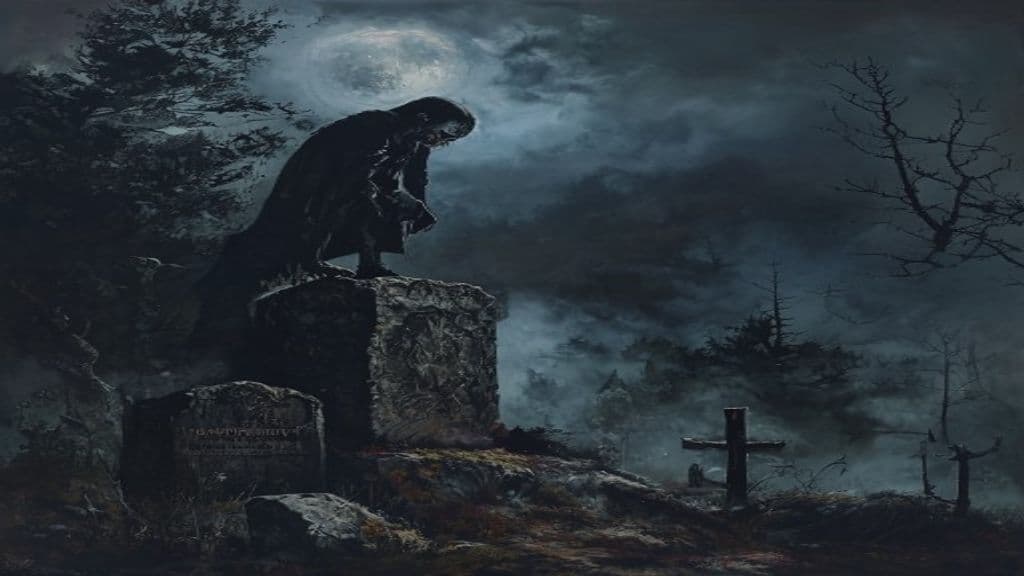
Strigoi
The vampire of Romanian folklore — either a living witch (strigoi viu) or an undead blood-drinker (strigoi mort). The source tradition from which the literary vampire emerged.
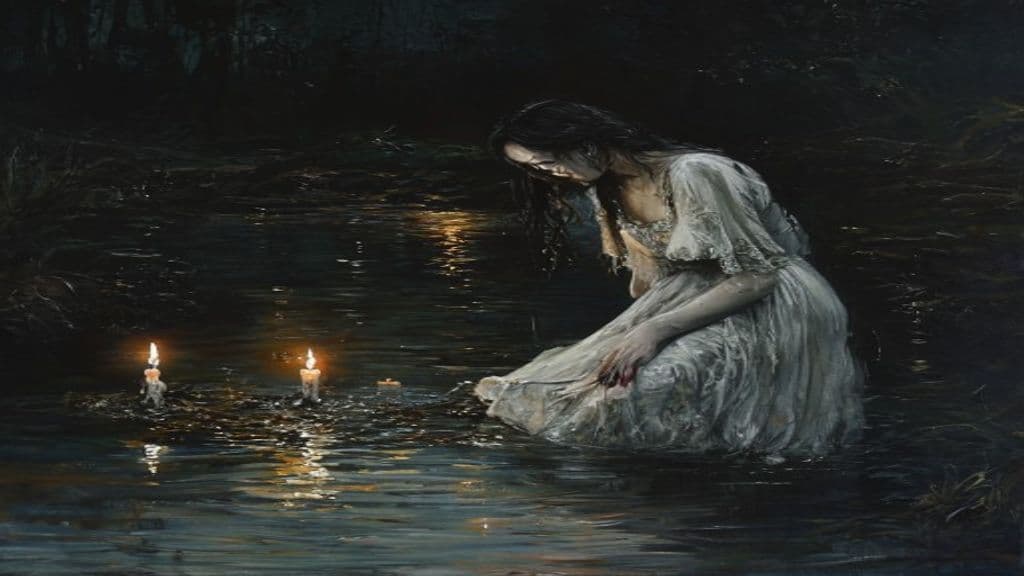
La Llorona
The Weeping Woman of Mexican folklore — the ghost of a mother who drowned her children and now wanders rivers and lakes, weeping for them and taking other children she finds at night.
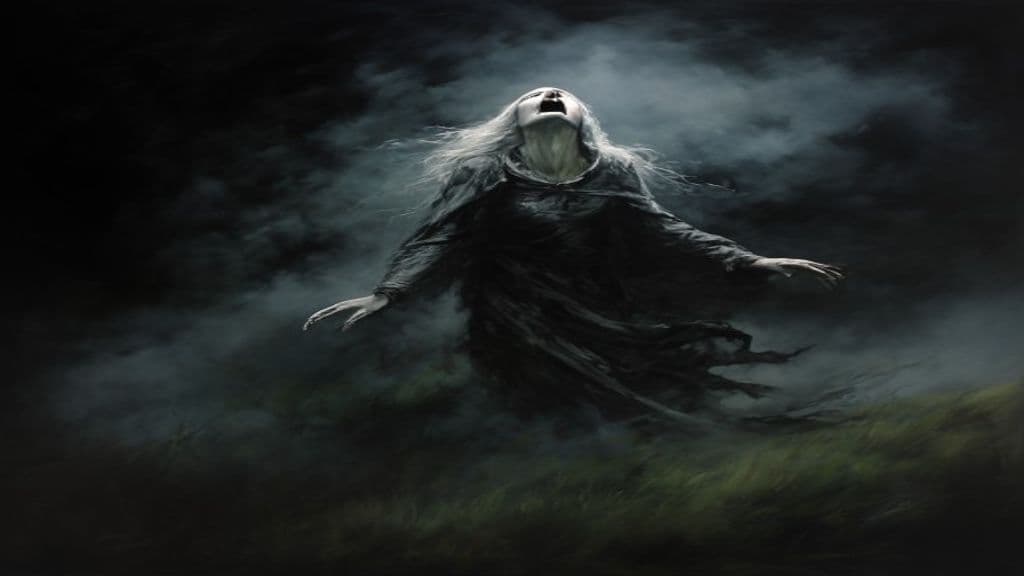
Banshee
A female spirit of Irish and Scottish folklore whose wail heralds an impending death in a family of Gaelic descent. Not a cause of death — a witness to it.

Churel (Chudail)
A South Asian female revenant or vengeful ghost associated with women who die cruelly or unpurified; often said to target male relatives and sometimes described as latching onto trees, producing a tree‑attached tree‑spirit variant in local tales.

Rakshasa (Himalayan variants)
A Himalayan reception of the pan-Indian rakshasa motif: hostile or disruptive non‑human beings known from Sanskrit epic and Puranic literature, here noted where Himalayan sources and discussions intersect with the broader epic tradition. The supplied sources do not document distinct, well‑attested Himalayan folklore variants; the entry therefore presents primarily the epic/legendary profile as transmitted into Himalayan contexts in general references.
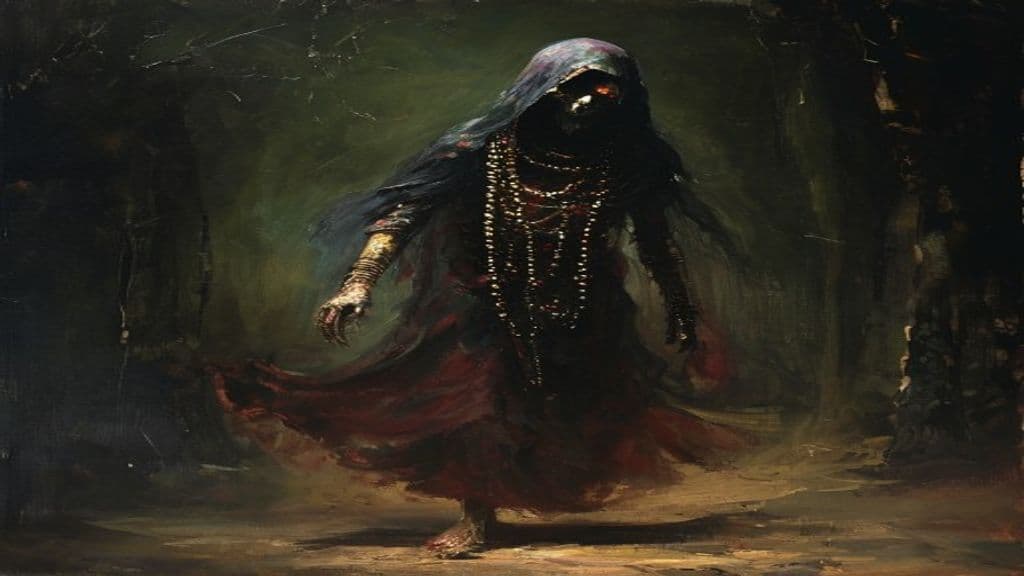
Bhoot (bhoota)
A bhoot (also bhoota, bhoot, bhut) is the culturally specific term across parts of the Indian subcontinent for a perturbed, restless spirit generally understood to be the ghost of a deceased person. Sources describe bhoots as arising when a person's death or post-death circumstances prevent them from moving on — for example violent death, unresolved affairs, or failures in funerary rites — and the term appears frequently in modern South Asian media and discussions.
Bauk (Slavic mythology)
A mythical creature from Serbian mythology that inhabits dark places, waiting to grab and devour its victims. (Note: 1. Power tier should be Lesser (local spirit), as it's described as hiding in dark places, not possessing deity-level powers. 2. The appearance description matches the source material, but note that ")
Chut
Household spirit in Belarusian mythology associated with domestic spaces and activities, responsible for bringing prosperity and success through offerings, but capable of cruel revenge if neglected. (Note: 1. Power tier: Lowered to Lesser, as it seems more consistent with "regional" or local influence rather than deity-level abilities. 2. Appearance: A note should be added that no physical description i)
Cooperating God and Devil (Slavic creation myth)
In Slavic creation myths, the God and Devil cooperate to create the world, exemplifying a dualistic motif where opposing forces work together for balance. (Note: 1. Power tier: Incorrect, the source material does not specify that the God and Devil have primordial power. 2. Origin story: Needs rewording to reflect that there are multiple versions of Slavic crea)
Ded Moroz (Grandfather Frost)
Benevolent gift-giving figure in Slavic mythology, similar to Father Christmas and Santa Claus. (Note: 1. Power tier: Should be Ancient (deity-level) given the description in Source 1 that Ded Moroz is a "legendary figure" with roots in Slavic mythology. 2. Summary: Inaccurate, as it compares Ded Moroz)
Dobrynya Nikitich
A Slavic bogatyr (heroic warrior) based on a historical warlord, reflecting medieval ideals of chivalry and nobility. (Note: - Power tier: Primordial (no supernatural abilities are mentioned, but he is a bogatyr, which implies a higher power tier) - Sensory cues: not present in source material - Weaknesses: not present in s)
Drioma
A Slavic spirit associated with the evening and night hours, known for interacting with children and adults. (Note: 1. Power tier should be Ancient, not Primordial, as Drioma's abilities are described as entering houses through cracks and fissures, but no cosmic or universal-level powers mentioned. 2. Add sensory c)
Dukljan
Adversary of God in Slavic mythology, embodying qualities and actions of Roman emperor Diocletian. (Note: 1. Power tier should be Lower (consistent with his role as an adversary, not a cosmic being). 2. Summary needs to include that Dukljan is in Serbian mythology, not Slavic. 3. Appearance, Abilities, Se)
Dziwożona
A malevolent supernatural entity associated with swamps in Slavic mythology. (Note: - The power tier should be Primordial because the Dziwożona is a powerful, malevolent entity associated with swamps and death. - The origin story summary should note that it's specifically female in S)
First Humans in Slavic Mythology
Central concept in the narrative of human creation, reflecting a worldview that values ancestry and tradition. (Note: 1. Power tier should be changed to Lesser or Minor Spirit (there's no indication that they have primordial power). 2. Summary is accurate but could be more specific about what makes them central to th)
Interpretatio Slavica
A cultural practice among Slavic peoples to identify and equate their deities with those of neighboring cultures and Christian saints. (Note: - Power tier should be Ancient (deity-level), as it's a cultural practice rather than a supernatural being. - Sensory cues, weaknesses, and wards are not applicable to this entity, as it's an abstract)
Kyi, Shchek and Khoryv
Semi-legendary brothers who allegedly founded the city of Kiev in Kievan Rus', their historical significance overshadowing any potential mythological importance. (Note: 1. The power tier should be Primordial, as they are considered the founders of the city of Kiev, a major cultural and historical hub. 2. Add "Their names likely represent real individuals or ancestral)
Leđan (Slavic tradition)
An ancient and magical city from Croatian mythology and folklore. (Note: 1. Power tier: downgrade to Greater (since Leđan is described as an "ancient" city, but its magical nature and lack of explicit abilities suggest it may be less powerful than Ancient). 2. Appearance: )
Community Record
- [1]Bies. Wikipedia contributors, 'Bies,' Wikipedia, The Free Encyclopedia.wiki
- [2]Bies (Wikidata). Wikidata entry Q9634173 for Bies.other