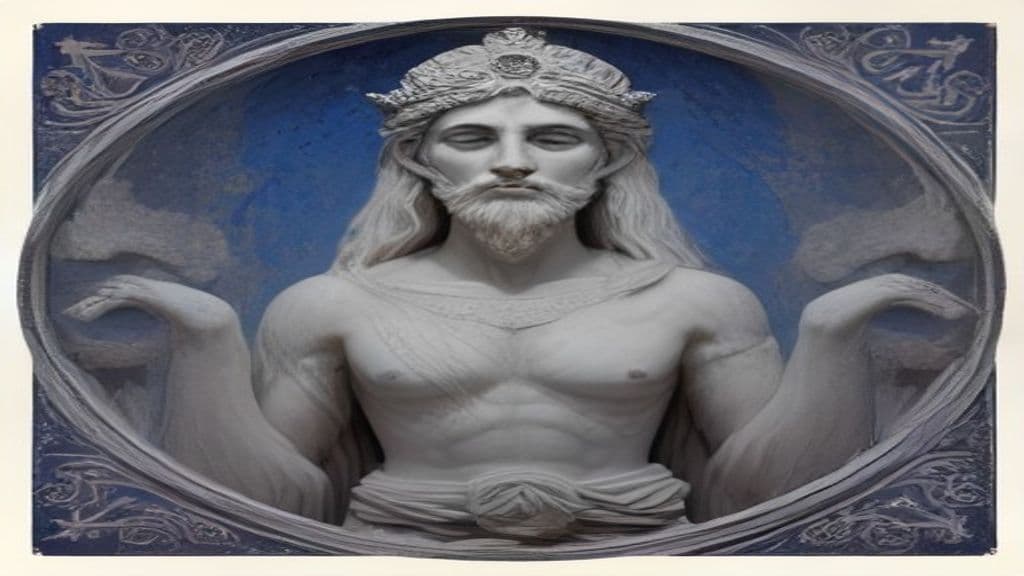
Sources identify Brizo as a local Delian deity; the name Brizo (Greek: Βριζώ) is reported in secondary summaries to derive from the verb βρίζω, 'to slumber', which connects her etymologically to sleep and dreaming (Wikipedia). The extant modern accounts are encyclopedic and do not preserve a full mythic narrative or extended origin myth for the goddess in primary ancient texts (Wikipedia; Biblical Cyclopedia).
No primary descriptions of Brizo's iconography or physical appearance are supplied in the cited summary sources. Available references note the absence of detailed anthropomorphic or cult-image descriptions in the consulted secondary materials (Wikipedia; Biblical Cyclopedia).
According to the cited summaries, Brizo acted as a protector of mariners, sailors and fishermen and was addressed in prayers 'to grant everything that was good, but especially to safeguard ships' (Wikipedia). She is also described as an oracular deity specialized in oneiromancy, i.e., she 'granted oracular dreams' to petitioners (Wikipedia; Biblical Cyclopedia). Hellenistic author Semus of Delos is cited in later summaries as reporting that women of Delos set out food offerings for her in small boats and that the goddess would accept anything but fish (Wikipedia; Biblical Cyclopedia). Modern scholars cited in the summaries (e.g., Philippe Bruneau) have suggested that petitioners may have slept in a dedicated oracular shrine to receive prophetic dreams, while other scholars propose dreams might have occurred at home; these are presented in the secondary literature as interpretive suggestions rather than attested ritual formulas (Wikipedia).
Brimir
In Old Norse mythic tradition the name Brimir appears in two closely related roles: as a name applied to a primordial jötunn (often equated with Ymir/Aurgelmir) whose body supplies the material of the world, and as the name of a beer‑hall or hall of plenty that Snorri interprets as an afterlife dwelling for virtuous survivors after Ragnarök.
Briseis
Briseis is a mortal woman in the Homeric epic tradition, captured at Lyrnessus and attached to Achilles as a war prize; her transfer between leaders (Achilles and Agamemnon) functions as a key social and moral symbol in the Iliad and later literary traditions.
Briseus
Briseus (Ancient Greek: Βρισεύς or Βρίσης) is a mortal figure in the Trojan War tradition, known primarily as the father of Briseis, a woman taken captive by the Greeks. He appears in Homeric tradition and later commentators, who variably place him in Pedasus or identify him as a priest of Lyrnessus; a later pseudo-historical source (Dictys Cretensis) reports that he hanged himself after losing his daughter.
British big cats
A modern folkloric and cryptozoological category in Britain referring to reported sightings of large non-native felines (panthers, pumas, lynx, 'black cats') across the United Kingdom; treated variously as escaped exotic animals, media-driven urban legend, and a continuation of older large-cat motifs in local tradition.
Britomartis
Britomartis is a female divine figure associated in the supplied material with the island of Crete, functioning as a mountain and hunting deity with linked associations to nets and fishermen. She is variously described as a goddess or nymph and was later conflated in Greek tradition with deities such as Artemis, Athena, and Aphaea.
Brittia
In Germanic tradition, Brittia is a mythological concept and physical location associated with the afterlife, where souls of the dead are transported. It exists as both an island and an Isle of the Blessed. (Note: 1. Power tier should be Primordial since Brittia is associated with the afterlife and its description implies a cosmic or transcendent level. 2. Add sensory cues: Brittia's association with death and )
Broichan
A 6th century Celtic wizard documented by Adomnán of Iona, with magical abilities and connections to spiritual or supernatural forces. (Note: 1. Power tier should be Ancient, as a wizard serving a king and having connections to a saint is more deity-level than primordial. 2. Add sensory cues based on the fact that Adomnán wrote about Broich)
Brokkr
Brokkr is a dwarf and master smith's assistant in Norse mythic tradition, famed for operating the bellows while his brother (Eitri/Sindri) performed magical forging in the contest that produced Mjölnir, Draupnir, and Gullinbursti. He is best known from the Skáldskaparmál episode in which Loki, as a gadfly, tries to disrupt his bellows work and Brokkr later sews Loki's lips shut when Loki evades a wager.
Bromius
Bromius (Ancient Greek: Βρόμιος) is an epithet and identity-state of the god Dionysus/Bacchus in ancient Greek religion, signifying 'noisy', 'roaring', or 'boisterous'. In some modern readings of fragmentary Orphic material (notably summaries of the Derveni papyrus), Bromius is discussed by scholarship as a name applied to a divine figure placed early in an alternative cosmogony.
Bronze Tiger
Bronze Tiger (Benjamin 'Ben' Turner) is a fictional DC Comics character: an African-American, world-class martial artist, operative, and recurring figure who has served as assassin, mercenary, instructor, and member/second-in-command of Amanda Waller's Suicide Squad. Created in the Bronze Age of comics, his history includes training under O-Sensei, capture and brainwashing by the League of Assassins, and later rehabilitation and multimedia adaptations.
Brook horse
No attested folkloric entity called 'Brook horse' appears in the supplied sources. The corpus contains a general note on Germanic water-spirits (nixie family) and several toponymic references to brooks and places named with 'Horse' or 'Brook'; any linking of these materials into a distinct 'Brook horse' folk-entity is not documented in the provided research notes.
Broteas
Broteas (Ancient Greek: Βροτέας, lit. 'mortal' or 'man') is a mythic human figure in Greek tradition, presented as a son of Tantalus and member of that cursed house. He is credited in local tradition with carving the ancient rock relief of the Great Mother (Cybele) on Mount Sipylus near Magnesia ad Sipylum and is also variously narrated as a hunter punished by Artemis or listed among the Lapiths slain in the Lapith–centaur battle.
Community Record
- [1]Brizo — Wikipedia. Brizo (Greek: Βριζώ) is a minor Greek goddess, venerated on the island of Delos as the protector of mariners, sailors and fishermen; Brizo was also known as an oracular deity specialized in oneiromancy. Her name derives from the verb βρίζω, signifying 'to slumber'. According to the Hellenistic author Semus of Delos, Brizo was worshipped by the women of Delos, who set out food offerings for her in small boats. The goddess would accept anything but fish. Prayers were addressed to her to grant everything that was good, but especially to safeguard ships. Brizo also granted oracular dreams.wiki
- [2]Brizo — Biblical Cyclopedia (summary). Brizo in Greek mythology, was a local deity of the island of Delos, the protectress of sailors. Only fruits and animals of the earth were offered to her as sacrifices. Her oracles were uttered in dreams.other