
No traditional origin story for a single entity named 'Bura-bura' is attested in the provided sources. The most concrete origin-like context in the supplied material is fictional: in Final Fantasy XIV the burabura chochin is presented as a kindred wandering lantern spirit encountered on (and described as content to wander) Mount Rokkon. Other appearances of 'bura'/'burabura' in the sources are titles of films, poems, and media that invoke the Japanese lexical meaning 'to wander' rather than a mythic genesis narrative.
The only descriptive material in the supplied sources calls the burabura chochin a 'lantern ghost' (a lantern-like spirit). No further traditional or consistent physical details (size, color, facial features, or exact form) are provided in the available excerpts; most other occurrences of 'bura/burabura' appear in titles and contain no physical description.
In the Final Fantasy XIV descriptions cited in the sources the burabura chochin behaves as a wandering, non-hostile spirit — 'did not care to haunt people, and was content to simply wander Mount Rokkon' — and functions in-game as a collectible mount/minion obtainable through gameplay systems. Beyond wandering/non-hostility and its in-game collectible function, the provided materials do not document additional supernatural powers, offensive abilities, or traditional magical effects.
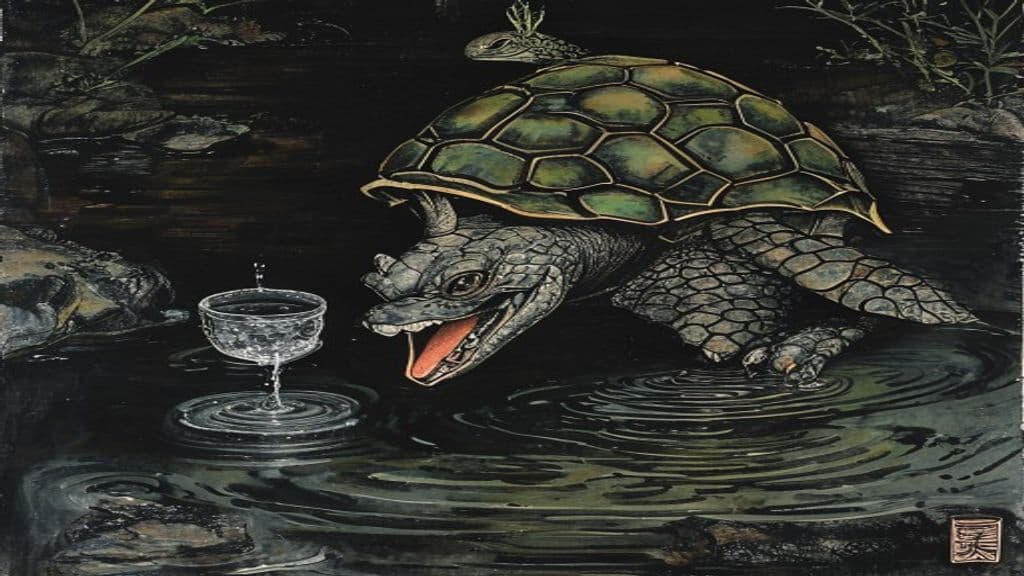
Kappa
A water-dwelling imp of Japanese folklore with a bowl of water on its head. Mischievous but bound by strict codes of politeness; dangerous near rivers.
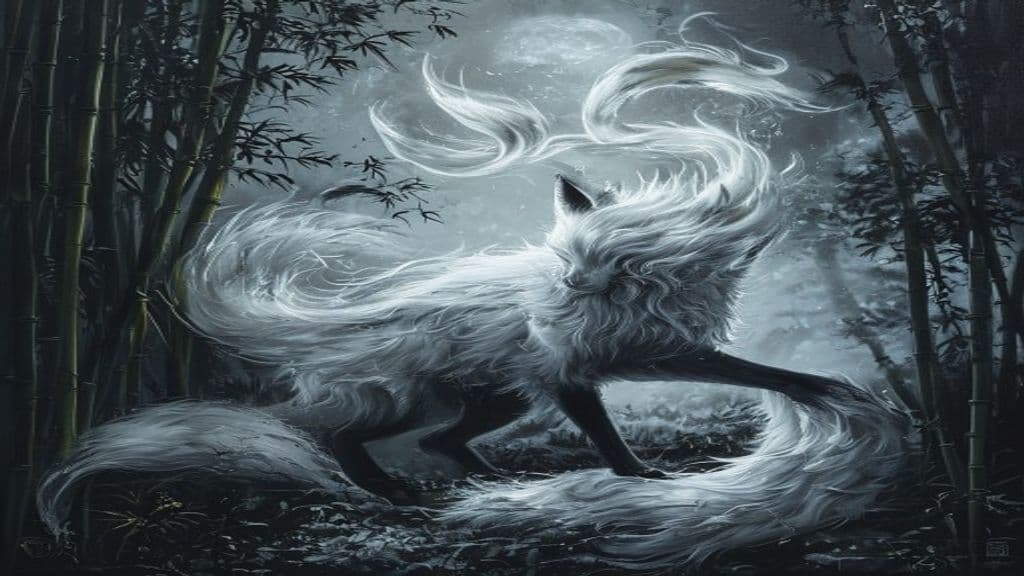
Kitsune
Fox spirits of Japanese mythology — intelligent, long-lived beings who gain additional tails (up to nine) as they age and grow in power. They serve as messengers of the god Inari and as powerful tricksters.
Bunbuku Chagama
A Japanese folktale figure—typically a tanuki (raccoon dog)—that uses shapeshifting to become an ordinary tea-kettle (chagama) or a hybrid half-animal/half-kettle; in the tale it performs acrobatics for a human owner and brings them good fortune. The story exists both as a mukashi-banashi fairy tale and as a local engi tied to Morin-ji temple in Gunma.
Bune
Bune is a ducal spirit in European grimoire tradition, listed in works such as the Lesser Key of Solomon, Pseudomonarchia Daemonum, Dictionnaire Infernal, and the Livre des Esperitz. Described as commanding many legions and able to move the dead, confer wealth, and grant eloquence and wisdom, Bune functions as a summonable operant office within early modern ceremonial magic.
Bunene
Bunene is an attendant deity (sukkal) of the Mesopotamian sun-god Šamaš (Utu), described as the charioteer who conveyed the sun from the eastern horizon to the western doorway of heaven and as a cultic intercessor included in offerings and temple inventories, especially at Sippar.
Bungisngis
The Bungisngis is a one-eyed giant from Philippine folklore, described as humanoid, always laughing, and possessing great strength but easily outwitted. Tales place it in specific Philippine localities and often portray it as a comic yet dangerous antagonist defeated by clever protagonists.
Bunny Man
The Bunny Man is an American urban-legend figure that grew out of two late-1970 criminal incidents in Fairfax County, Virginia (October 19 and October 31, 1970). Reported as a man associated with a rabbit costume who threatened or attacked people with a hatchet/axe, the story expanded through newspapers, school rumor, folkloristic research, and the early internet into dozens of highly variant retellings, some supernaturalized.
Bunyip
A class of Aboriginal Australian water-being from southeastern Australia associated with swamps, billabongs, creeks, riverbeds and waterholes. Bunyip stories warn people away from dangerous waters and in some traditions enforce resource-use norms and child safety.
Burabura Chochin
Attested chiefly in Final Fantasy XIV game materials, the Burabura Chochin is presented as a benign 'lantern ghost' or wandering lantern spirit associated with Mount Rokkon; the label 'burabura' evokes wandering or dangling in contemporary Japanese usage. It functions in-game as a summonable minion/mount and as a narrative creature that befriends other wanderers rather than haunting them.
Burha dangoria
Burha dangoria is sparsely attested in available sources and is catalogued in Wikidata as a type of ghost or spirit associated with the Nagaon district region of Assam, India. Beyond a name and a tentative classification, no substantive descriptions, stories, or practices are provided in the supplied materials.
Burkan / Burkhan
No folkloric information about a Mongolian mountain or forest spirit called 'Burkan' / 'Burkhan' is present in the supplied sources. The available materials only show unrelated modern or toponymic occurrences of the string 'Burkan' and do not provide ethnographic, mythological, or ritual details.
Burkut
Burkut (also Bürküt, Merküt) is a sacred eagle figure in Turkic mythic cosmology associated with the sun, rulership, and protective authority. Treated as an emblematic or quasi-divine bird rather than a mundane animal, it appears in shamanic rites, world-tree iconography, folk performance, and modern heraldic motifs.
Burning Bush
A theophanic phenomenon in Judaeo‑Christian‑Islamic scriptural tradition in which a bramble (Hebrew seneh) appears aflame yet unconsumed and functions as the locus of divine speech that commissions Moses. Later devotional practice localizes and commemorates the site at Sinai/Horeb, especially at Saint Catherine's Monastery where a living bramble is venerated.
Burut
Burut (also attested as a clan name Burutia in some modern mentions) is documented in the supplied sources not as a supernatural being but as a social/lineage name attested in Central Asian ethnographic records (Kirghiz / Khakassian contexts). The provided corpus contains no evidence identifying Burut or 'Burutia' as an Assamese folk spirit, nor does it record myths, powers, or rituals for such an entity.
Community Record
- [1]Burabura Chochin - Final Fantasy XIV Online Wiki. Final Fantasy XIV Online Wiki, entry 'Burabura Chochin' (community wiki), describing the burabura chochin as a kindred wandering lantern ghost.wiki
- [2]How to Obtain The Burabura Chochin Mount - Final Fantasy XIV - Icy Veins. Icy Veins guide 'How to Get the Burabura Chochin Mount', noting release in Patch 6.45 and that the Burabura Chochin is an eerie lantern mount/minion from the Mount Rokkon variant dungeon.other
- [3]Burari Bura-bura Monogatari. Wikipedia entry for the media title 'Burari Bura-bura Monogatari' (used as an example of modern-media uses of 'bura/burabura').wiki
- [4]Nagasaki Bura Bura. Web page 'Nagasaki Bura Bura' (title use illustrating 'bura/burabura' in modern media contexts).other
- [5]Bura-bura (poem 'bura' entry). Online poem/page including romanized 'bura' as part of modern media/creative usage.other
- [6]Wikipedia / Wikidata entries referencing Bura-bura (index-level). Wikidata item linked from the provided source list (index-level reference to 'Bura Bura').wiki
- [7]Archive items / media references containing 'bura'/'burabura'. Archive listing among the provided source set showing media that use the string 'bura' or similar in titles or metadata (used as evidence of fragmentary modern-media occurrences).other