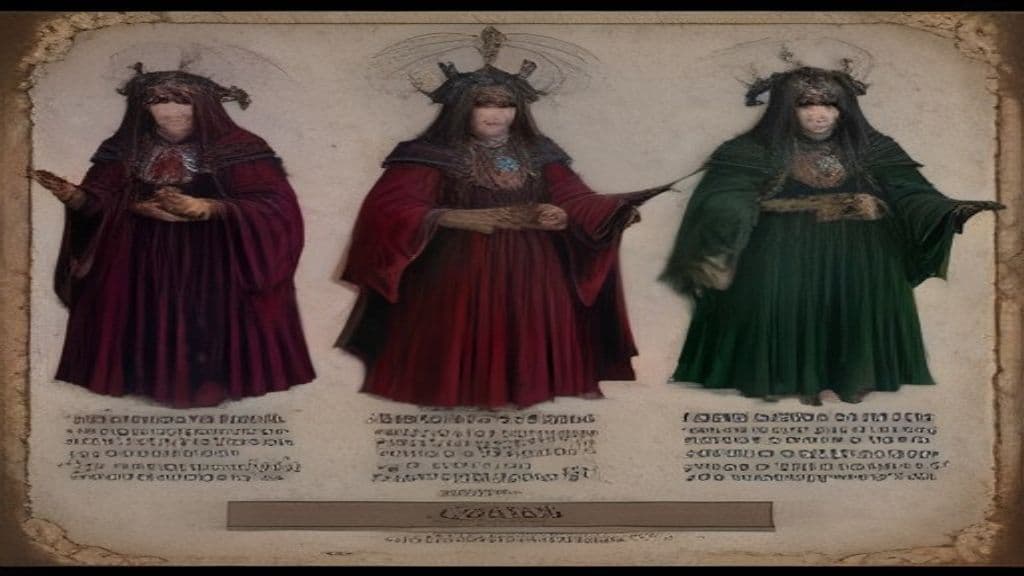
Bune does not have a narrative mythic origin in the supplied grimoire summaries; the figure appears as an entry in Renaissance and early modern demonological catalogs where spirits are named, ranked, and assigned offices. A modern occult commentator (Carroll "Poke" Runyon) has suggested a speculative etymological link to Buto (a title for the Egyptian goddess Isis), but this is presented in the sources as a hypothesis of comparative mythology rather than a claim found in the primary grimoire tradition.
In the cited grimoire summaries Bune is described as appearing as a three-headed dragon, one of whose heads is human. No further consistent details of color, clothing, or exact size are supplied in the provided materials.
Across the grimoire entries summarized in the sources, Bune is said to command many subordinate spirits (commonly 30 legions; the Livre des Esperitz gives 35), to 'change the place of the dead' and make devils gather about graves, to make a person rich, to make men eloquent and wise (conferring wisdom and charisma), and to answer a variety of questions. In Rudd's recension the spirit is placed within an oppositional schema of angelic names (see protections).
Weaknesses
- otheropposition by the Shemhamphorasch angel Haaiah (per Thomas Rudd's recension)
Wards
- ritualInvocation of the opposing Shemhamphorasch angel (Haaiah) as given in Rudd's system
Bael
Bael (also spelled Baal or Ba'al) is a named kingly spirit appearing in post‑medieval European demonological grimoires. He is listed as the opening or first spirit in some catalogs (notably the Pseudomonarchia Daemonum and The Lesser Key of Solomon) and is described in short summaries as a hoarsely voiced king; fuller ritual texts and attributes are not present in the supplied excerpts.
Botis
Botis is a named spirit from Renaissance and early modern ceremonial grimoires, variously ranked as a President, Earl, or Count. Appearing in sources such as the Ars Goetia (Lesser Key of Solomon), the Pseudomonarchia Daemonum, the Munich Manual of Demonic Magic (as Otius), and mentioned in the Grand Grimoire as subordinate to Agaliarept, he is summoned by ritual operators to answer questions, reveal knowledge, and reconcile allies and enemies.
Gemory (Gremory)
Gemory (also Gremory, Gamori, Gomory, and variants) is a named Goetic spirit catalogued in medieval and early modern European grimoires. Described as a crowned woman riding a camel, she is attributed powers over hidden treasures, knowledge of past/present/future, and procuring love; her rank and legion counts vary between sources.
Paimon
Paimon is a high-ranking spirit from early-modern and medieval European grimoire traditions (notably the Ars Goetia and related compilations). He is depicted as a king who rules other spirits, teaches sciences and secret knowledge, and can be summoned and compelled by ceremonial operators within the ritual corpus.
Bullaun
A natural feature in Celtic tradition, often imbued with spiritual significance. (Note: - Power tier should be Primordial=cosmic, given its association with natural features and spiritual significance. - Origin story missing entirely; add from source material (if available) or consult ex)
Bulleteer
Bulleteer is a fictional human-based superheroine from DC Comics (debut: Seven Soldiers: The Bulleteer #1, 2005). Alix (civilian name Alix Harrower; also appears as Rose Mendes in the Injustice continuity) is transformed when an experimental 'smartskin' bonds to her, rendering her tissues indestructibly hard and granting superhuman strength; she subsequently adopts the costumed identity Bulleteer and operates as a mid-tier hero within shared-universe team narratives.
Bulletman and Bulletgirl
Golden Age American comic-book heroes created for Fawcett Comics: Jim Barr (Bulletman), a ballistics expert/inventor who developed a chemical "crime cure" and a bullet-shaped Gravity Regulator Helmet, and Susan Kent (Bulletgirl), who received a second helmet and the same enhancements. Human inventors/experimenters rather than supernatural beings, they act as engineered, helmet-enabled crimefighters in wartime-era and later shared-universe stories.
Bunbuku Chagama
A Japanese folktale figure—typically a tanuki (raccoon dog)—that uses shapeshifting to become an ordinary tea-kettle (chagama) or a hybrid half-animal/half-kettle; in the tale it performs acrobatics for a human owner and brings them good fortune. The story exists both as a mukashi-banashi fairy tale and as a local engi tied to Morin-ji temple in Gunma.
Bunene
Bunene is an attendant deity (sukkal) of the Mesopotamian sun-god Šamaš (Utu), described as the charioteer who conveyed the sun from the eastern horizon to the western doorway of heaven and as a cultic intercessor included in offerings and temple inventories, especially at Sippar.
Bungisngis
The Bungisngis is a one-eyed giant from Philippine folklore, described as humanoid, always laughing, and possessing great strength but easily outwitted. Tales place it in specific Philippine localities and often portray it as a comic yet dangerous antagonist defeated by clever protagonists.
Bunny Man
The Bunny Man is an American urban-legend figure that grew out of two late-1970 criminal incidents in Fairfax County, Virginia (October 19 and October 31, 1970). Reported as a man associated with a rabbit costume who threatened or attacked people with a hatchet/axe, the story expanded through newspapers, school rumor, folkloristic research, and the early internet into dozens of highly variant retellings, some supernaturalized.
Bunyip
A class of Aboriginal Australian water-being from southeastern Australia associated with swamps, billabongs, creeks, riverbeds and waterholes. Bunyip stories warn people away from dangerous waters and in some traditions enforce resource-use norms and child safety.
Community Record
- [1]Bune — Wikipedia. Wikipedia entry summarizing appearances of Bune in the Lesser Key of Solomon, Pseudomonarchia Daemonum, Dictionnaire Infernal, and the Livre des Esperitz; cites Rudd's recension (as Bime), legion counts, powers, and angelic opposition.wiki
- [2]Bune — Thelemapedia. Thelemapedia brief entry summarizing traditional grimoire details: duke, thirty legions, changing place of the dead, making men eloquent and wise; corroborates Wikipedia summary.other
- [3]BlogNomic / Daemon Research: Bune, Great Duke of Hell (derivative summaries). Derivative web summary consulted among the provided materials that reproduces standard grimoire claims about Bune's rank and powers.other
- [4]Occult commentator Carroll 'Poke' Runyon — etymology suggestion. Modern occult commentator Carroll 'Poke' Runyon suggested a possible derivation of the name from Buto (a title for Isis); presented in the supplied summaries as a speculative hypothesis rather than a primary-source claim.other