
Calafia is a creation of Garci Rodríguez de Montalvo’s Las sergas de Esplandián (c. 1510). Within the romance’s frame, she reigns over a paradisiacal island called California, a women‑ruled polity populated with fantastic fauna. The character’s name is very likely an authorial formation evocative of the Arabic khalīfa / Spanish califa, a rhetorical choice that would have resonated for sixteenth‑century Spanish readers familiar with Christian–Muslim conflict; later readers and artists have treated Calafia as an origin‑figure for the place‑name California.
In Montalvo’s romance Calafia is described as “a regal black woman, courageous, strong of limb and large of person, full in the bloom of womanhood,” presented as the most beautiful of a long line of queens of the island. She and her women warriors are pictured wearing armor said in the text to be made of gold (the narrative claims there is no other metal on the island) and adorned with precious stones, and she is depicted riding and commanding fantastic beasts (griffins) into battle.
As rendered in the chivalric narrative, Calafia exercises formidable military and political abilities: she commands a fleet and naval forces, leads an army of women warriors on offensive campaigns, trains and controls griffins used as aerial combat animals, and displays prowess in single combat (throwing and enduring blows). Her role in the plot also includes political persuasion (convincing her people to take arms) and the capacity for ideological transformation when, after capture in battle, she converts to Christianity and marries, returning to her realm with a changed status within the romance’s moral order.
Weaknesses
- conditioncapture and judicial/religious subjugation (narrative vulnerability)
Wards
- othernone recorded in primary source (character is literary; no folkloric warding practices are documented in the supplied materials)

Griffin
The griffin (also griffon, gryphon) is a composite legendary creature combining the body, tail, and hind legs of a lion with the head, wings, and often taloned forelegs of an eagle. In classical and medieval Eurasian traditions it functions chiefly as a majestic guardian figure associated with rulership and the protection of treasure, and appears widely across artistic vocabularies rather than as a single codified religious being.
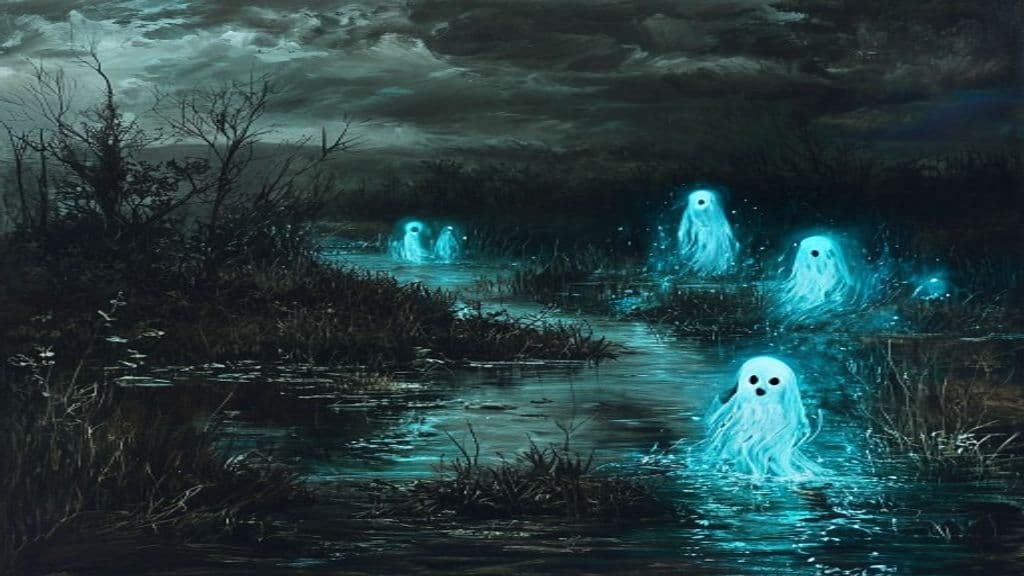
Will-o'-the-Wisp
A wandering light seen over marshy ground at night, leading travellers astray into bogs and fens. Possibly a spirit, possibly the soul of the unbaptised dead, possibly the devil himself.
Caim
Caim is a named infernal intelligence attested in modern compilations of Western grimoire-derived materials. In secondary occult summaries he is listed among Goetic/solomonic demons, variably called Caim, Camio, or Caym, and is described as a ranked officer associated with imparting knowledge about animals and nature.
Cain (Jewish Tradition)
Biblical figure and symbol of sin and violence, human being with no supernatural abilities. (Note: 1. Power tier: Change to "Human" is correct. 2. Abilities: Specify that the abilities mentioned are a result of Cain's actions and decisions, not supernatural powers. 3. Weaknesses: Mention God's curs)
Cain and Abel
Cain and Abel are the first two sons of Adam and Eve in the Hebrew Bible / Old Testament. The Genesis narrative presents them as the initial exemplars of human occupation (farmer vs. shepherd), sacrificial practice, and the first recorded instance of fratricide, followed by divine judgment and protection placed upon Cain.
Caipora
A Tupi-derived forest-dwelling being in Brazilian folklore depicted as a guardian or controller of wild animals and game; regionally variable in form and temperament, it misleads or punishes hunters who transgress forest norms and may be placated with offerings such as tobacco or alcohol.
Cairbre Lifechair
Cairbre Lifechair ('lover of the Liffey') is a figure of medieval Irish legend and historical tradition presented as a High King of Ireland. He appears in saga and chronicle material (notably Cath Gabhra and accounts of the Expulsion of the Déisi) as a political and military actor who exacts tribute, leads a coalition army against the fianna, and dies in single combat during the Battle of Gabhra.
Calabash Monster
The term "Calabash Monster" is not attested in the provided sources as a coherent traditional folkloric entity. The materials instead show modern uses of the word "Calabash" in commercial, place‑name, and creative contexts (e.g., Calabash, North Carolina seafood style, restaurant names, and a blog character named Calabash). No mythic origin, standardized description, powers, or ritual responses for a folkloric "Calabash Monster" are documented in the supplied sources.
Calcabrina
Calcabrina is one of the Malebranche — a named demon/jailer appearing in Dante Alighieri's Inferno who helps guard the fifth bolgia of the eighth circle of Hell. The name has been reused in modern fiction and games where adaptations portray Calcabrina as a guardian or combatant (gargoyle, construct, or voidsent), distinct from Dante's literary role.
Calchas
Calchas is a human Argive seer (mantis, oionopólos) of the Trojan War tradition, a member of a hereditary mantic family who interprets omens and entrails on behalf of Greek commanders and declares the will of Apollo to guide ritual and military decisions.
Calchus
Calchus (Ancient Greek: Κάλχος, Kalkhos) is a mortal king of the Daunians in a later Greek mythic episode preserved by Parthenius of Nicaea. He persistently courted the sorceress-goddess Circe at her island Aeaea, was transformed into a pig by her enchantments, and later restored after his people intervened.
Calcu (Kalku)
In Mapuche tradition, the calcu (also spelled kalku) is a sorcerer or witch who works with black magic and negative powers, presented in sources as the oppositional counterpart to the culturally sanctioned, benevolent shaman (machi).
Calendar Man
Calendar Man (Julian Gregory Day) is a human, themed criminal persona in DC Comics who plans crimes and adopts costumes tied to dates, holidays, weekdays and seasons. A recurring antagonist in Batman stories, he has been portrayed across continuities as a Silver Age gimmick-villain, a darker Arkham inmate and a Hannibal Lecter–like informant in modern noir tales.
Calesius
Calesius (Greek Καλήσιος) is a minor human figure in the Homeric epic: the attendant and charioteer of Axylus who is killed alongside his master on the Trojan battlefield in Book VI of the Iliad. He appears as a named mortal illustrative of loyalty and the human cost of war, with no supernatural attributes in the cited sources.
Community Record
- [1]Calafia - Wikipedia. Wikipedia entry 'Calafia' (summary of Las sergas de Esplandián and later cultural reception)wiki
- [2]Las sergas de Esplandián (c. 1510) by Garci Rodríguez de Montalvo — summarized in sources. Primary literary source summarized: Montalvo, Garci Rodríguez de, Las sergas de Esplandián (c. 1510) — character description and episodes as cited in summariesliterary
- [3]Huntington Library Seminar in Women's Studies (1991): 'Calafia: Race, Class and Culture in Early California'. Seminar listing and materials addressing later scholarly discussion of Calafia in race and cultural contextsother
- [4]La reina Calafia (novel) by Vicente Blasco Ibáñez. Modern literary work taking up the Calafia figure (listed among modern sources in supplied notes)literary
- [5]Calafia entry (Wikidata). Wikidata item linking to various uses of the name 'Calafia' (noting ambiguous modern usages)wiki