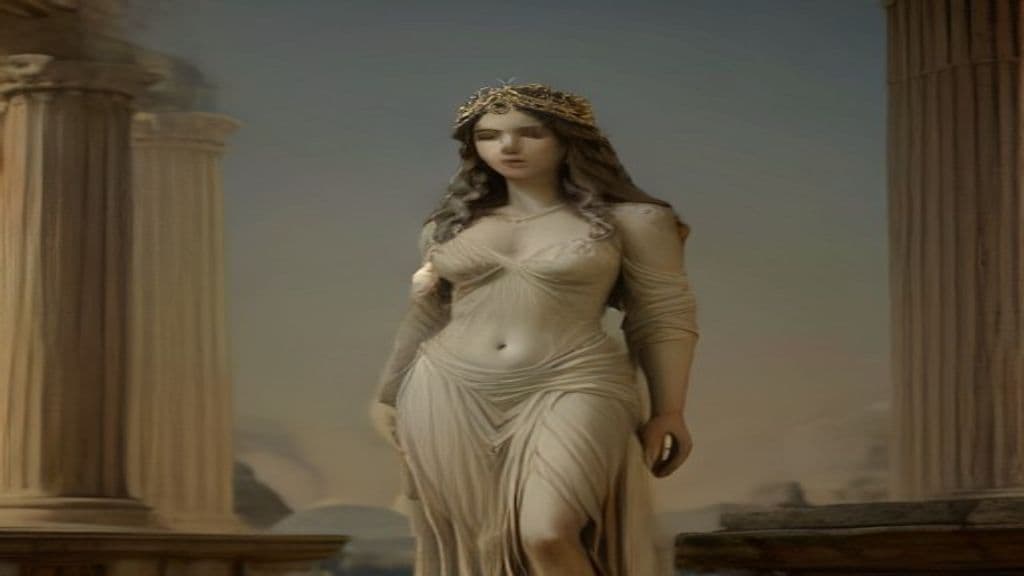
Classical accounts present Cassandra as a daughter of King Priam of Troy and a priestess associated with Apollo. Variants explain her prophetic gift and its contrary effect variously: a widespread motif describes Apollo granting her the power of prophecy in exchange for sexual favours and then cursing her when she refused; Hyginus relates Cassandra falling asleep in Apollo's temple exhausted from practicing and denying Apollo sexual access, after which her true prophecies would not be believed; a later commentator (Tzetzes) gives a variant in which Cassandra and her brother Helenus are left overnight in Apollo's temple and wake with serpents licking their ears; other dramatic treatments (e.g., Euripides, Aeschylus, Seneca as reported in the surveyed sources) present related but differing emphases on Apollo's role and on Cassandra's enforced virginity. The supplied sources report these variants rather than a single definitive origin narrative.
Descriptions vary by author. Homeric epithet and passages call her the fairest or 'comeliest daughter' of Priam and compare her beauty to that of Aphrodite; Euripides depicts her as wearing a laurel crown when prophesying and describes light (xanthous) hair; Malalas offers a detailed physical portrait (shortish, round-faced, white, blondish, curly, with a priestly bearing) that emphasizes priestly dignity and youth; Dares the Phrygian gives a more modest 'moderate stature' and auburn hair with flashing eyes. Classical portrayals therefore emphasize youth, striking eyes (epithet glaukopida appears in the tradition), variable hair color across authors, and mantic accoutrement such as a laurel crown.
Cassandra's core faculty is accurate foresight: she utters true prophecies about forthcoming events (for example, forewarnings concerning Hector's death and the fall of Troy and, in later tradition, aspects of Aeneas' wanderings). The defining affliction is that, by divine dispensation in the tradition, her true predictions are never believed by others. This condition is presented as a curse originating in her relationship with Apollo in several variants and produces persistent social consequences: disbelief, confinement by her father, imprisonment or scorn by the populace, and frustration at foreseeing but being unable to avert disasters. In dramatic treatments she continues to speak publicly and to narrate events (e.g., in plays treating Agamemnon's murder), even while powerless to compel credence.
Carystus
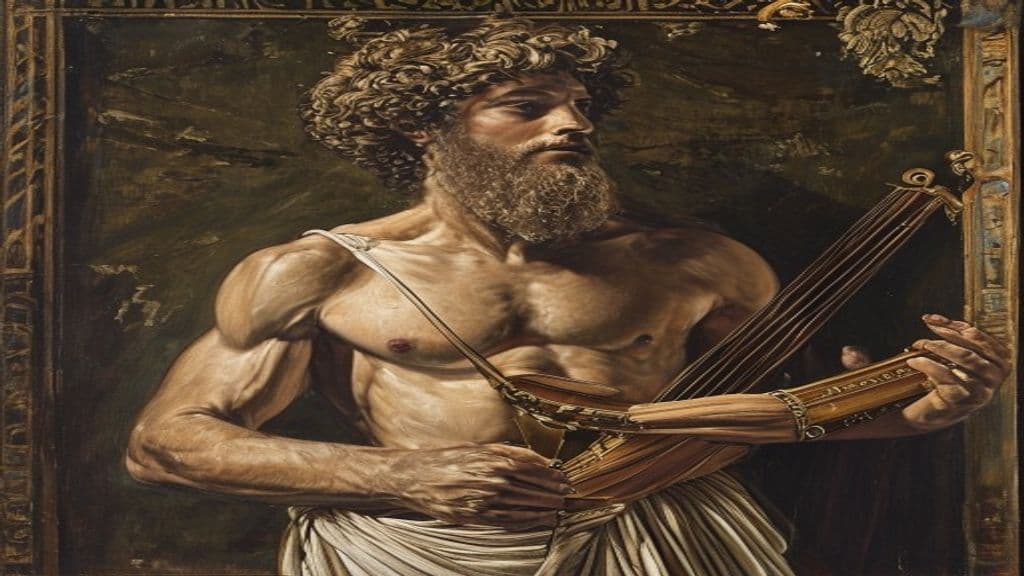
Carystus is an eponymous mythic ancestor and local heroic figure associated with the town of Carystus (modern Karystos) on Euboea. In the surviving modern summaries of classical material he is presented as a son of the centaur Chiron and the nymph Chariclo and as a genealogical/name-giving figure rather than as a narratively active deity.
Casa Romuli
Historical archaeological site associated with the legendary founder and first king of Rome, Romulus. Significant cultural and historical impact. (Note: 1. Power tier: Change to "Greater" since it's associated with a historical archaeological site and not a cosmic or deity-level entity. 2. Add sensory cues, weaknesses, and wards based on source materi)
Casamiquelia
Casamiquelia is not attested as a folklore or supernatural entity in the supplied sources. The available materials are paleontological and taxonomic references; they do not describe Casamiquelia as a spirit, deity, monster, or ritual actor.
Casella (Divine Comedy)
Casella is a historical musician and the friend of Dante who appears as a soul in the early cantos of Purgatorio in Dante Alighieri's Divine Comedy. In the poem he is encountered on the Mount of Purgatory and noted chiefly for singing, which underscores themes of friendship and the moral/aesthetic role of music in the afterlife.
Caspar (Magus)
Caspar is the traditional Western Christian personal name assigned to one of the Magi (the 'wise men' or 'Three Kings') who visit the infant Jesus in the Nativity/Epiphany narrative. The canonical Gospel (Matthew 2:1–9) does not name the visitors; the identification of one as 'Caspar' (with many orthographic variants) is a product of post-biblical Western tradition attested from the early medieval period onward.
Caspian IX
Caspian IX is a fictional mortal king in C. S. Lewis's Chronicles of Narnia cycle, cited in secondary sources as the murdered father of Prince Caspian whose death enabled his brother Miraz to usurp the throne. He functions as a dynastic predecessor in Narnian narrative history rather than a supernatural figure.
Cassandra Cain
Cassandra Cain is a fictional superheroine appearing in DC Comics, introduced in Batman #567 (1999). A human vigilante within the Batman Family, she has held the mantles Batgirl, Black Bat and Orphan and is portrayed across continuities as an exceptional, non-superpowered martial artist whose childhood conditioning shaped her identity and behavior.
Cassandra Metaphor
A person whose valid warnings or concerns are disbelieved by others, representing a prophetic figure with ignored predictions and warnings. (Note: * The power_tier is not supported by the source material, which only discusses Cassandra as a metaphor, not a Primordial entity with cosmic powers. * There is no information in the sources about appea)
Cassandra Nova
Cassandra Nova is a Marvel Comics antagonist identified as a mummudrai: a bodiless, parasitic astral life-form that manifested in utero alongside Charles Xavier, copied his DNA to create a body, and wields vast psionic powers. She is portrayed as Xavier's ideological/psychic dark twin who has committed mass violence (notably the Genosha massacre) and been opposed by powerful telepaths and containment measures.
Cassie Cage
Cassie Cage is a fictional human character in the Mortal Kombat video‑game franchise, introduced as the daughter of Johnny Cage and Sonya Blade. She debuts as a principal protagonist and next‑generation leader in Mortal Kombat X (2015) and returns with updated designs and moves in Mortal Kombat 11.
Cassiel
Cassiel is a high angelic figure attested across extracanonical Jewish, Christian, and Islamic mystical and magical texts, most commonly associated with the planet Saturn. Sources portray Cassiel as a guardian of heavenly palaces, an aide to higher angels (notably Gabriel), a named planetary intelligence in ritual magic, and in some attestations an angel connected with aspects of death.
Cassiopeia (mother of Andromeda)
Cassiopeia is a named mortal figure from Greek myth presented in the sources as the queen of Aethiopia and mother of Andromeda; her name is also applied to a northern constellation that represents that mythic queen. The provided materials also record other mythic women bearing the same name in varied genealogies and many modern cultural and scientific reuses of the name.
Community Record
- [1]Cassandra (Wikipedia). Wikipedia article 'Cassandra' summarizing classical sources and variantswiki
- [2]Wikidata: Cassandra. Wikidata entry for Cassandraother
- [3]Project Gutenberg: The Giant Sorcerer / The extraordinary adventures of Raphael and Cassandra. Textual edition (modern work included in source list) referenced in source compilationother