
Created for DC Comics and debuting in Batman #567 (July 1999), Cassandra Cain is presented in-source as the child of an arranged/engineered conception involving David Cain and Sandra Wu‑San (later known as Lady Shiva). David Cain raised and trained her from infancy to be an assassin, deliberately depriving her of normal speech and socialization so that she learned to read body language as her primary means of comprehension. That upbringing produced a near-preternatural facility at predicting and countering opponents' movements; later narratives show her running afoul of criminal work at a young age, being taken under Batman and Barbara Gordon's tutelage, assuming the Batgirl identity in an eponymous ongoing series (beginning 2000), and later adopting the codenames Black Bat and Orphan in different storylines and continuities. Over time DC editorial changes and retcons have depicted Cassandra in varying roles (hero, antagonist, leader of the League of Assassins in some arcs), with rehabilitation and mentorship by Batman and Barbara Gordon forming a recurrent corrective arc.
Sources document Cassandra primarily as a costumed superheroine whose visual identity changes with mantle: as Batgirl she appears in Batgirl costume on numerous covers; in later incarnations she has worn outfits associated with the Black Bat and Orphan identities. Published imagery and coverage emphasize full-face cowl/mask and masked, combat-ready costumes tied to the Bat-family iconography and darker, tactical aesthetics. Specific consolidated biometric details (height, hair color) are not presented in the provided materials; visual descriptions focus on costumed presentation and the symbolic use of Batgirl/Black Bat/Orphan garments across publications.
Cassandra Cain is portrayed as an expert, non-supernatural combatant — described as one of the world's most capable martial artists and a peak-human, highly trained operative. Her unique formative deprivation of language and social contact produced an exceptional aptitude for reading and interpreting body language, enabling her to predict opponents' movements and react with extreme efficiency. She operates as a vigilante ally within the Batman Family, has served on teams such as Outsiders and Birds of Prey, and in various continuities has alternated between heroic and adversarial roles (including temporary leadership of the League of Assassins and narrative arcs in which she acted under others' direction). Her storylines emphasize conditioning, rehabilitation, mentorship, and the transfer of symbolic mantles rather than supernatural powers.
Weaknesses
- conditionpsychosocial dependency on mentorship
- conditioncontinuity-dependent moral ambiguity (vulnerable to manipulation or orders in some storylines)
Wards
None recorded.
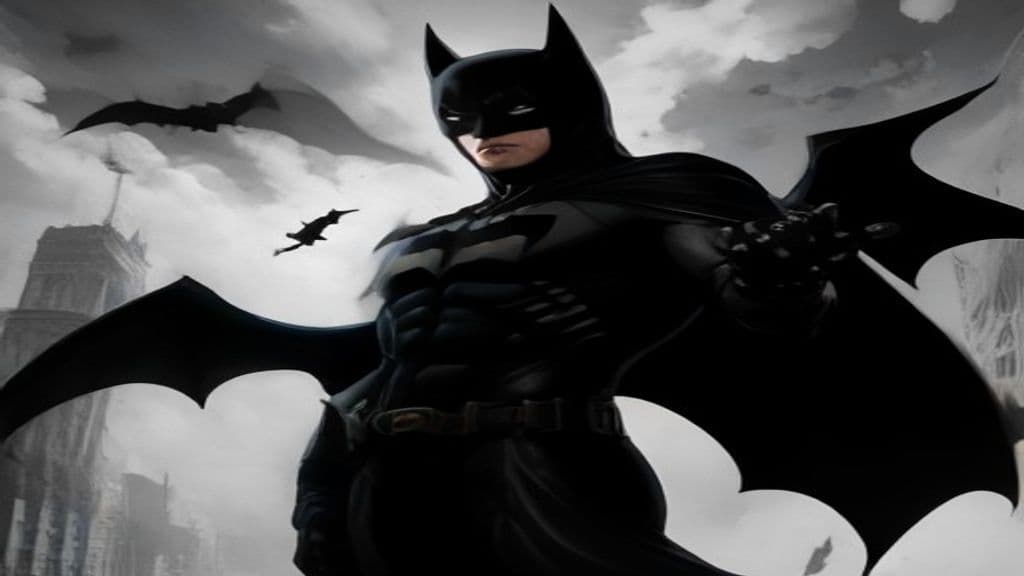
Batman
Batman is a fictional, human costumed persona created for American comic books, adopted by Bruce Wayne to combat crime in the fictional Gotham City. Presented in mainstream continuity as a non‑superpowered figure, he relies on intellect, physical training, gadgets, and wealth and functions as an iconic cultural symbol across comics, film, television, and games.

Barbara Gordon
Barbara Joan Gordon is a recurring fictional character in DC Comics' Batman mythos, introduced as the costumed vigilante Batgirl and later reimagined as Oracle, a paraplegic information broker and technical advisor to other heroes. She functions as a human, non-supernatural operative whose roles alternate between field crime-fighter and behind-the-scenes intelligence specialist across publication eras and media adaptations.
Absorbing Man
A fictional Marvel Comics character (Carl "Crusher" Creel) whose body acquires the physical properties of materials or energies he touches. Debuting in Journey into Mystery #114 (March 1965), created by Stan Lee and Jack Kirby, he is presented as a mortal supervillain/occasional antihero who challenges heroes such as Thor, Hulk, Spider-Man, and the Avengers.
Ace the Bat-Hound
Ace the Bat-Hound is a fictional canine companion and crime‑fighting ally in American superhero comic books published by DC Comics. Primarily a trained, loyal dog partnered with Batman and allied animal heroes, Ace appears in multiple continuities with varying breeds and occasional fantastical variants.
Agents of Atlas
Agents of Atlas is a fictional superhero team published by Marvel Comics, retroactively presented as a 1950s era group of operatives and reconstituted in modern storylines; the roster mixes human, nonhuman, mythic and technological characters and has served as an operative body connected to the Atlas Foundation.
Air Wave
Air Wave is a fictional costumed superhero identity from DC Comics, a human mantle borne by several members of the Jordan family (Lawrence 'Larry' Jordan, Helen Jordan, Harold Jordan) and later a separate individual listed as Harold Levey. The persona centers on radio- and signal-themed equipment and, in later incarnations, metahuman energy-transmutation powers used in genre superhero narratives from the Golden Age onward.
Alberto Falcone
Alberto Falcone is a fictional human antagonist from DC Comics, a member of Gotham's Falcone crime family who, in the comics, is revealed as the Holiday Killer. He operates as a mobster whose actions, psychological profile, and familial ambitions drive major plotlines in Batman stories such as The Long Halloween and Dark Victory.
Amadeus Cho
A fictional Korean American human superhero from Marvel Comics characterized foremost as a super-genius ('hero of the mind') who later assumes a Hulk-like superhuman identity (the Totally Awesome Hulk) and subsequently the mantle Brawn. He operates in modern Marvel continuity, interacting with gods, heroes, and mythic locations.
America Chavez
A fictional superhero published by Marvel Comics, America Chavez is a Latina, lesbian character whose signature ability is creating star-shaped portals that allow travel across space and time. Introduced in 2011, she has been depicted as originating from the extra-temporal "Utopian Parallel" in early stories and later retconned as the product of human experimentation; she has headlined solo series and appeared in team books and the MCU film Doctor Strange in the Multiverse of Madness (2022).
Animal Man
A fictional comic-book character (Bernard "Buddy" Baker) who gains the ability to temporarily borrow the abilities of animals. Originating in 1965 as a costumed superhero, later reinterpretations (notably in the Vertigo imprint) recast him as an animal-linked avatar or elemental tied to an animal life force called the "Red."
Aquagirl
Aquagirl is a codename used by several fictional superhero characters published by DC Comics, depicted as female counterparts and allies to Aquaman and members of the wider 'Aquaman Family'. Notable bearers include Tula (an Atlantean princess/ally), Lorena Marquez (a human metahuman from San Diego), and earlier one-off figures (Lisa Morel, Selena); the name functions as a recurring title across multiple continuities and reboots.
Arrowette
Arrowette is a legacy heroic persona from American comic-book continuity (DC Comics), adopted by two related women across generations: Bonnie King (the original 'Miss Arrowette') and her daughter Suzanne 'Cissie' King-Jones. Within the fictional world she is a human, costume‑wearing archer whose identity functions as a public role, team membership, and a locus for interpersonal and moral drama rather than a supernatural being.
Ashley Kafka
Ashley Kafka is a Marvel Comics character originally introduced as a human psychiatrist who founded and directed the Ravencroft Institute for the Criminally Insane and served as an occasional ally to Spider-Man. After being killed and later reanimated via cloning technology she is transformed into the supervillain Queen Goblin following infusion with Norman Osborn's extracted 'sins', gaining enhanced physical attributes and Goblin-themed powers.
Atomic Skull
The Atomic Skull is a fictional supervillain identity from American comic books published by DC Comics, most commonly opposing Superman. The name has been used by at least two distinct human characters whose bodies and minds were altered by radiation or genetic/alien events and who adopt a skull-themed, radiation-powered persona.
Community Record
- [1]Cassandra Cain - Wikipedia. Wikipedia entry 'Cassandra Cain' (accessed sources provided in research notes)wiki
- [2]Batman #567 (July 1999) — character first appearance (as documented in secondary sources). Publication history and first appearance cited in compiled notes and Wikipedialiterary
- [3]Gotham Calling — '12 Cool Covers Featuring Cassandra Cain'. Retrospective coverage and image documentation of Cassandra Cain's appearances on Batgirl coversother
- [4]DC Special Podcast: The Encyclopedia Diaries, Volume XIV (Archive.org). Podcast episode indexing Black Bat (Cassandra Cain) and discussing character usageother
- [5]Fanlore — Cassandra Cain. Fandom documentation of character reception and fanworksother
- [6]Scans Daily retrospective posts. Retrospective commentary and scans documenting aspects of Cassandra Cain's publication historyother