
Colonial-era Spanish observers (notably Bishop Bartolomé de las Casas as summarized in later accounts) record Chin among a group of named male divine persons whose sexual intercourse with other male deities and humans was said to establish or justify particular social practices. One quoted colonial summary states: "From that time on some fathers gave their sons a little boy to be used as a woman; and if someone else took the boy, they demanded pay as is done when someone violates another's wife," attributing the precedent for regulated same-sex relationships to the actions of Chin and other named figures. The supplied materials do not include an indigenous-language origin myth text or a direct indigenous account of Chin; the narrative is mediated through Spanish ethnographic reports.
No primary description or iconographic identification of Chin is provided in the supplied sources. The extracts explicitly note a lack of physical description for Chin. Archaeological imagery from the Classic Period—such as a Naj Tunich cave scene showing a naked, sexually excited male embracing a nude Maya nobleman—is thematically related to same-sex erotic representation in ritual contexts, but the sources do not identify that or other images as depictions of Chin.
The available sources attribute only one specific behavior to Chin: he is reported to have engaged in sexual intercourse with other male deities and humans. This action is presented etiologically—used by colonial observers to explain institutionalized same-sex practices among certain Maya groups. The extracts do not ascribe other powers, functions (e.g., fertility, weather, warfare), or explicit magical capacities to Chin, nor do they describe him as a possessing or harmful spirit in the provided materials.
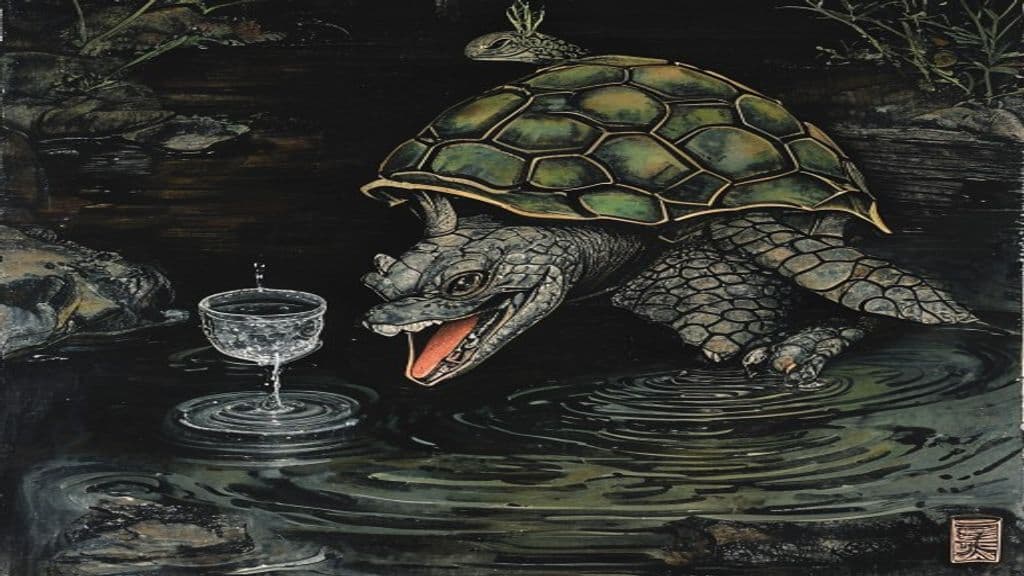
Kappa
A water-dwelling imp of Japanese folklore with a bowl of water on its head. Mischievous but bound by strict codes of politeness; dangerous near rivers.
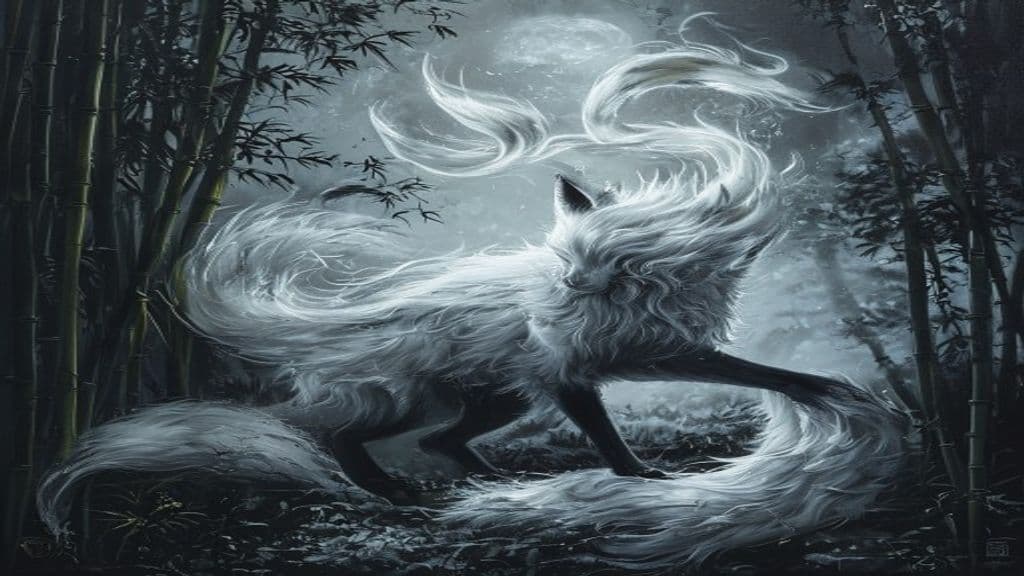
Kitsune
Fox spirits of Japanese mythology — intelligent, long-lived beings who gain additional tails (up to nine) as they age and grow in power. They serve as messengers of the god Inari and as powerful tricksters.
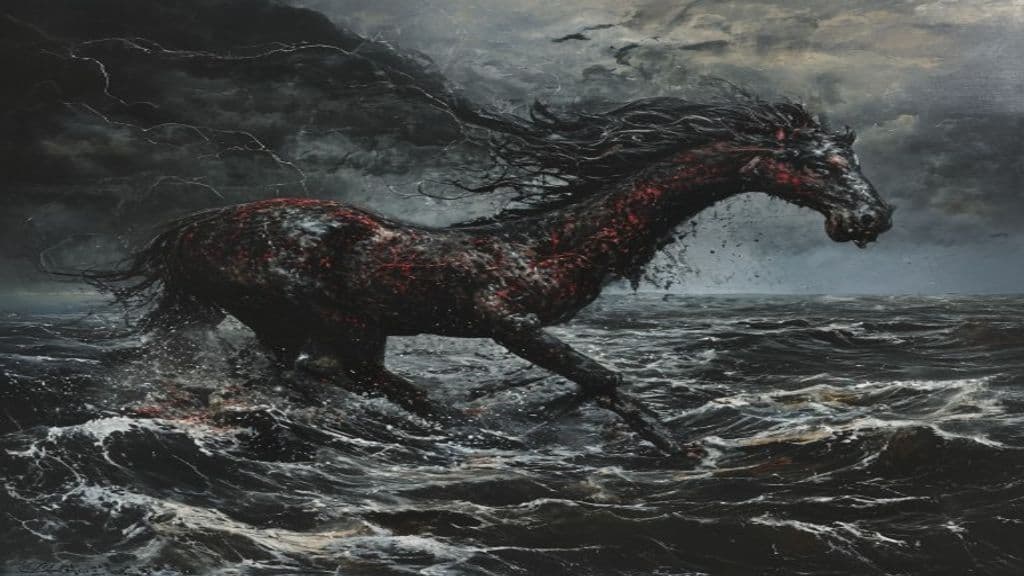
Nuckelavee
The most terrifying creature of Orcadian folklore — a skinless, horse-headed demon of the sea whose breath spreads plague and whose presence causes crops to wither. It cannot cross fresh water.
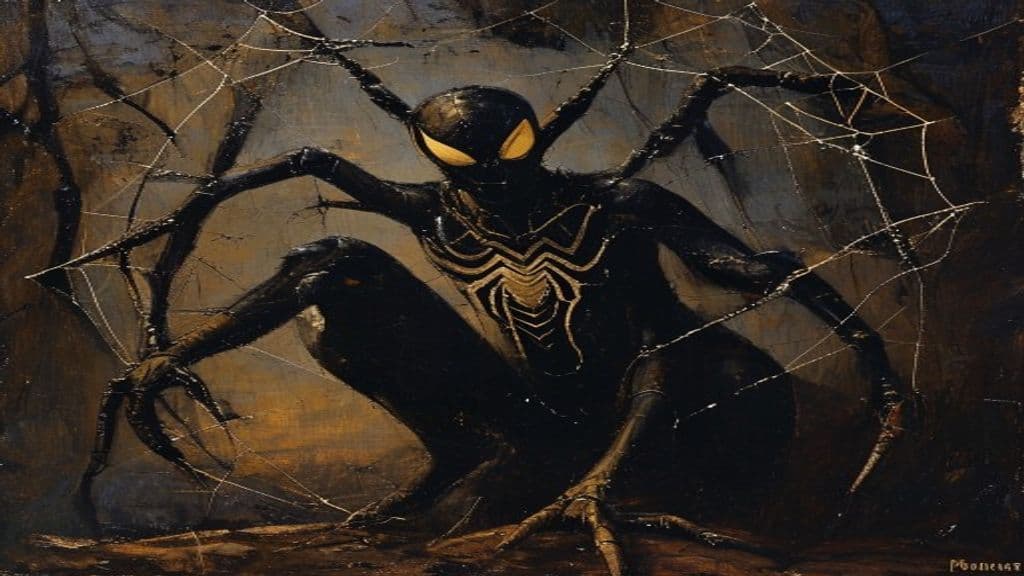
Anansi
The spider trickster god of Akan folklore — cunning, mischievous, and wise. Keeper of stories and teacher of human beings, brought through the slave trade into Caribbean and African-American tradition.
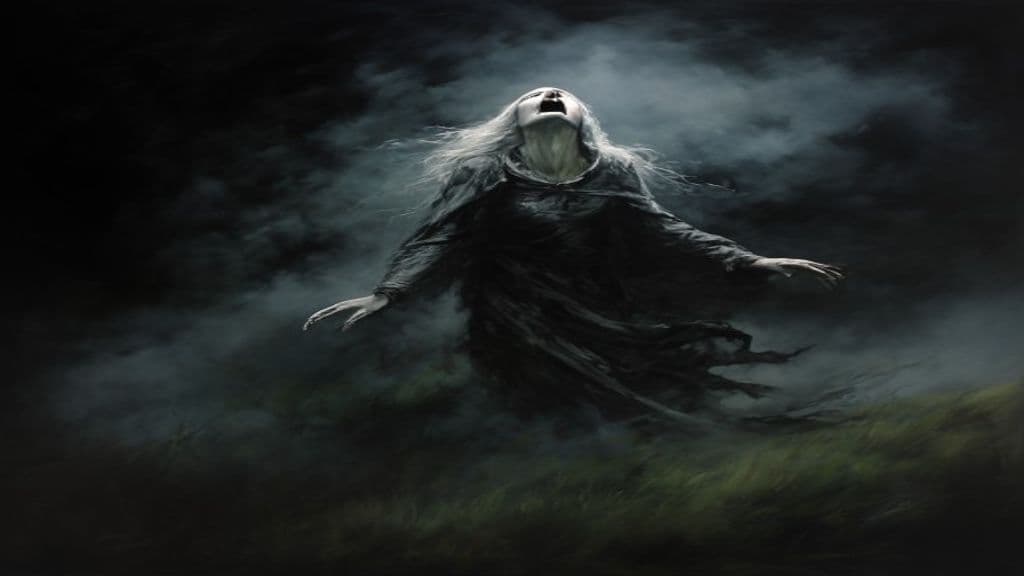
Banshee
A female spirit of Irish and Scottish folklore whose wail heralds an impending death in a family of Gaelic descent. Not a cause of death — a witness to it.
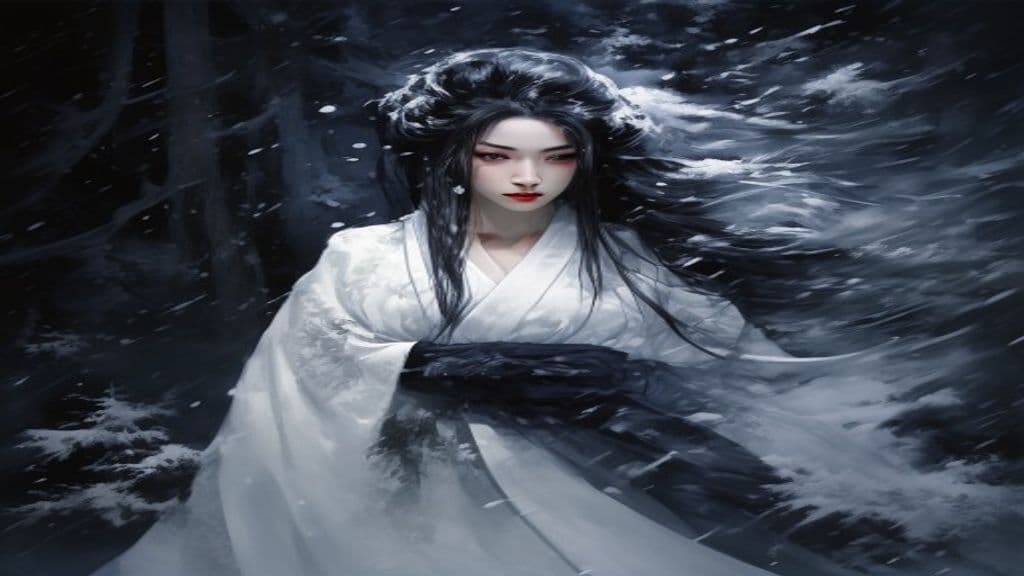
Yuki-onna
The Snow Woman of Japanese folklore — a spirit born of blizzards who appears to travelers lost in snowstorms. Beautiful and lethal, she can show mercy or bring death depending on her mood.

Rakshasa (Himalayan variants)
A Himalayan reception of the pan-Indian rakshasa motif: hostile or disruptive non‑human beings known from Sanskrit epic and Puranic literature, here noted where Himalayan sources and discussions intersect with the broader epic tradition. The supplied sources do not document distinct, well‑attested Himalayan folklore variants; the entry therefore presents primarily the epic/legendary profile as transmitted into Himalayan contexts in general references.
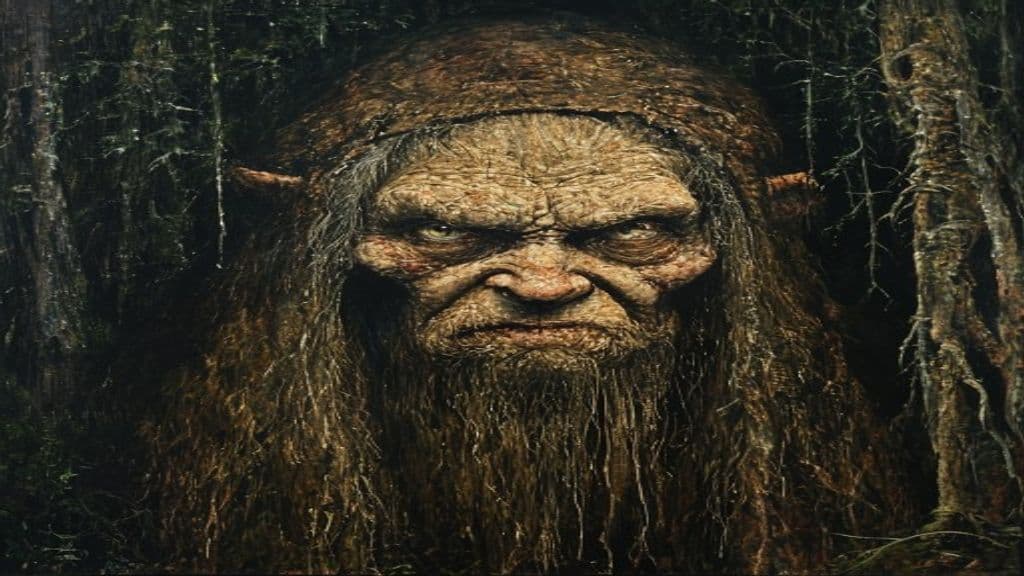
Baba Yaga
Baba Yaga is an ambivalent female figure of East Slavic folktale tradition, depicted variously as a fearsome, child-eating crone or as a helpful, maternal donor. She is associated with the deep forest, a hut described as standing on chicken legs, and the motific accoutrements of a mortar and pestle.
Children of Heracles
A group of mortal descendants of the hero Heracles (Hērakleidai) represented in Euripides' tragedy Children of Heracles (performed 430 BCE). In the play they appear as suppliants persecuted by Eurystheus whose fate raises civic, religious, and moral questions rather than as a class of supernatural beings.
Children of Ilúvatar
In J. R. R. Tolkien’s legendarium, the Children of Ilúvatar are the two principal kinds of sentient, created beings—Elves and Men—brought into being by the supreme creator Ilúvatar (Eru) and occupying a central place within Tolkien’s cosmology.
Chimera
The Chimera (Ancient Greek Χίμαιρα) is a monstrous hybrid from Greek myth—traditionally a fire‑breathing composite described with a lion forepart, a goat in the middle, and a serpent hind—portrayed as a destructive beast from Lycia that ravaged cattle and countryside and was slain by the hero Bellerophon. In later tradition its image also appears in visionary or allegorical contexts as an omen.
Chimimōryō
A traditional East Asian class of nature‑bound spirits and monsters associated with mountains, rivers, forests, swamps, trees, and rocks. Originating in ancient Chinese chronicles, the compound term unites two paired spirit-types (chimei and wangliang/mōryō) and was later adopted into Japanese reference works as a catch‑all category for various yōkai, oni‑like beings, and nature deities.
Chiminigagua
Chiminigagua is the supreme creative principle in Muisca (Chibcha) cosmology of the Colombian Altiplano; described in sources as the primordial source of light who brought the visible world into being and from whom the Sun, Moon and other lesser deities derive. The deity is presented more as a transcendent, often bodiless origin than as a regularly culted, anthropomorphic patron; veneration in practice was channeled through solar, lunar and fertility cults and major sanctuaries.
Chimú (Chimor)
The Chimú (also terms as Chimor when referring to their polity) were a pre-Columbian coastal civilization of northwestern Peru that arose ca. 900 CE, produced distinctive material culture (ceramics, metalwork, textiles), controlled up to ~1,000 km of Pacific coastline, and persisted until conquest by the Inca under Topa Inca Yupanqui around 1470 CE. Archaeological evidence from Chimú-associated sites indicates ritual activity including human sacrifice, but the provided sources treat Chimú as a historical culture/polity rather than a supernatural being.
Chindi (Navajo)
In Navajo tradition, a chindi is the negative energy or miasma left behind after a person dies. (Note: 1. Power tier should be revised as Primordial, since it's described as "everything that was negative about the person's life" and its effects are not limited to a specific region. 2. Sensory cues shou)
Chinese dragon (long / loong)
A central legendary zoomorphic being in Chinese myth and culture (Chinese: long / loong), the dragon embodies auspicious cosmic and ancestral power, especially mastery over water and weather, and functions as an imperial and communal emblem across material culture, ritual performance, and state iconography.
Chinese ghosts
Spirits of deceased persons in Chinese folk belief, integrated with ancestor-worship and syncretic Buddhist ideas; often conceived as potentially malevolent if neglected or provoked, while some deceased become honored ancestral spirits through proper ritual care.
Chinese gods and immortals (shenxian)
A heterogeneous corpus of deities (shen) and immortals (xian) in Chinese religious and mythic thought, understood as manifestations or localizations of the cosmic principle (Tian/Tao/qì). They include celestial gods, local tutelaries, deified culture-heroes, and Taoist immortals formed and sustained by temples, ancestral ritual, and popular cult.
Chinese guardian lions (shī, 石獅)
Stone or metal sculptural guardian lions (Chinese: shī, often 石獅 shíshī "stone lion") placed in male–female pairs at thresholds to protect buildings and occupants. Originating in Chinese Buddhist and imperial symbolism, they function as apotropaic architectural emblems believed to ward off harmful spiritual influences and hostile humans when correctly placed.
Chinjugami
Chinjugami (鎮守神) are tutelary kami enshrined to protect a specific building, estate, or region. Traditionally installed at chinjusha (guardian shrines) or within temples, they function within syncretic Japanese popular religion to secure human projects and negotiate authority with older local spirits.
Community Record
- [1]Chin (deity) — Wikipedia. Wikipedia entry for Chin (deity), summary of colonial references to Chin and related deities; cites Bartolomé de las Casas and later Spanish reports as sources for the claim that Chin "demonstrated sexual intercourse with other male deities and humans."wiki
- [2]Chin (Wikidata Q5099469). Wikidata item for Chin (deity), brief descriptor aligning with Wikipedia summary.wiki
- [3]Chin (Mayan god) — BoyWiki. BoyWiki entry summarizing Chin as a named male deity associated with same-sex intercourse and cited among other named divine persons.other
- [4]Naj Tunich cave imagery (as cited in secondary summaries). Secondary summary referencing Classic Period Naj Tunich cave scene depicting a naked, sexually excited male embracing a nude Maya nobleman; used in supplied materials as archaeological parallel to same-sex erotic imagery but not identified there as Chin.other