
The name Κλυτίος (Clytius) is an ordinary Greek personal name meaning "famous/renowned" and is applied independently to many individuals in the mythic corpus. One attestation places a figure named Clytius among the Giants born of Gaia (Earth) and the defeated forces in the Gigantomachy; in that context he is one of the earth-born opponents of the Olympian order. Other attestations apply the same name to a variety of mortals (Argonauts or related crew, Trojan princes and elders, warriors in various campaigns, attendants and ancestral figures). The name's recurrence reflects naming practices rather than a single continuous identity.
When represented as one of the Giants, Clytius shares the collective Giant iconography: enormous bulk and invincible might, "long locks drooping from their head and chin" and dragon-like scales on their feet, often shown in combat with gods (vase-paintings depict Hecate battling a giant labeled Clytius). Mortal bearers of the name lack a consistent physical description in the sources and appear in lists, genealogies, and narrative roles typical of heroes and attendants.
As a Giant, Clytius participates in the Gigantomachy: Giants hurl rocks and burning oaks at the sky and engage the Olympian gods in massive combat; the tradition portrays Giants as supernaturally strong, martial, and difficult for gods alone to slay (an oracle required mortal aid). Mortal Clytiuses perform ordinary epic functions — fighting in wars, serving as attendants, founding lineages or acting as eponymous ancestors — without unique supernatural powers attested in the cited materials. The modern taxonomic uses of the name denote species of insects and butterflies and are non-mythic.
Weaknesses
- otherrequires mortal aid to be slain (oracle limitation on Giants)
Wards
None recorded.
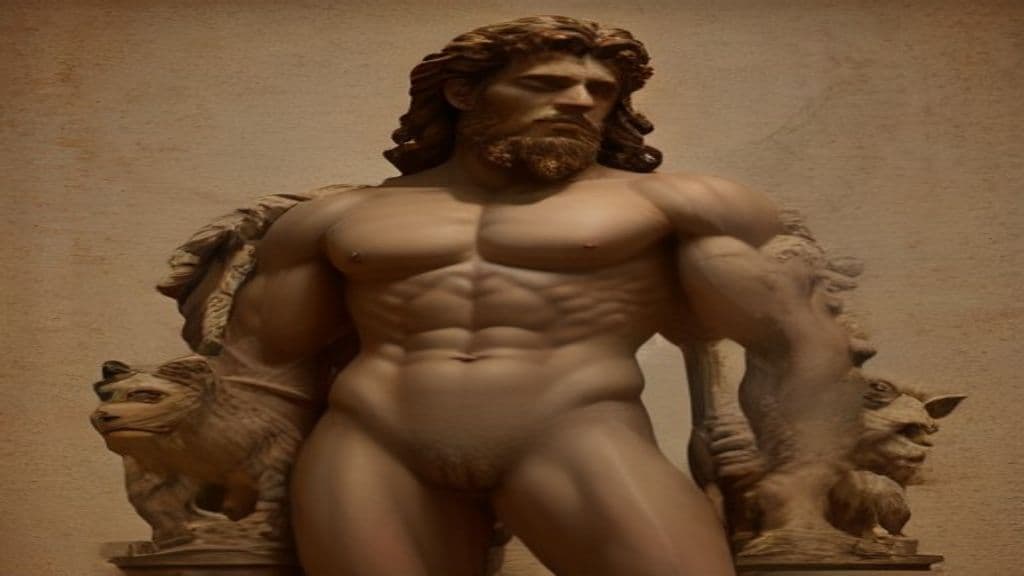
Hercules
Hercules (Latin: Hercules) is the Roman reception of the Greek divine hero Heracles: a semi-divine, divinized heroic figure son of Jupiter and the mortal Alcmena who was widely venerated across Italy. Represented in cult, votive art, and literature, he functions as a protector and martial champion whose identity was adapted through Etruscan and local Italic contexts.
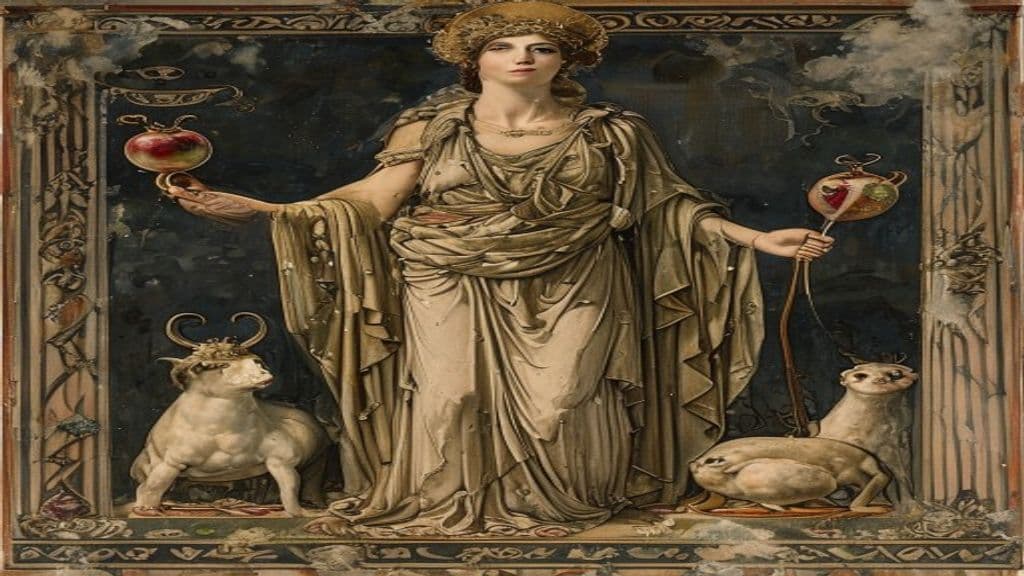
Hera
Hera is an ancient Greek goddess, queen of the Olympian gods, and a principal tutelary deity of marriage, women, and family. She functions in myth and cult as protector of lawful marriage and women in childbirth, a civic tutelary figure (notably of Argos), and a sometimes-jealous consort of Zeus with archaic fertility associations in certain local rites.

Athena
Athena is a major ancient Greek goddess associated with wisdom, handicraft (notably weaving), and warfare; she serves as a tutelary protector of cities—most prominently Athens—and is central to myth, cult, and civic identity in the Greek world.
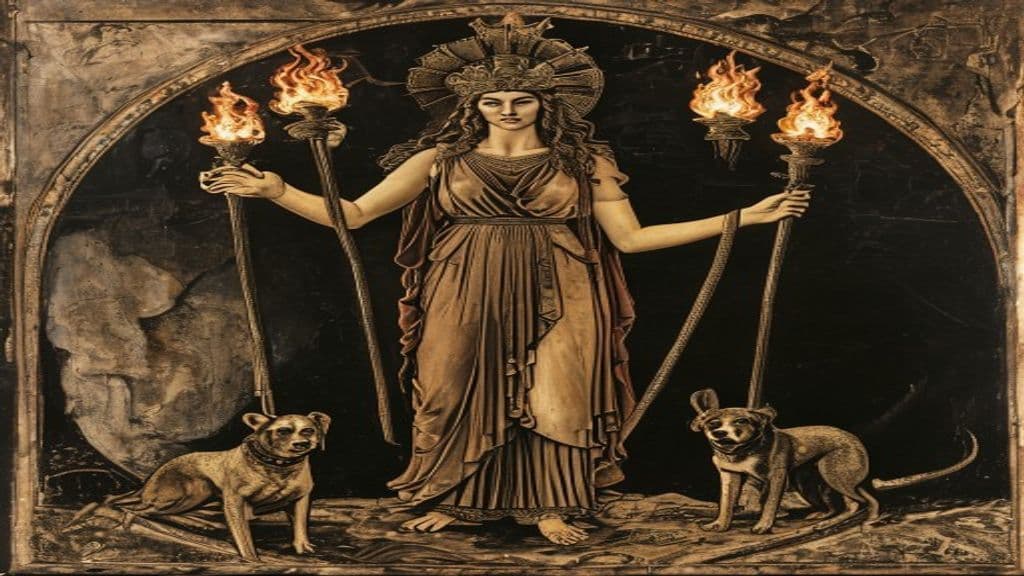
Hecate
Hecate (Ancient Greek: Ἑκάτη) is a liminal goddess in ancient Greek religion associated with crossroads, night, light, magic/witchcraft, the Moon, and household protection. She appears in early Greek poetry (Hesiod) with broad domains and in later traditions (notably the Chaldean Oracles) with expanded cosmological roles; she retained important regional cults, especially in Anatolia (Lagina) and had popular associations with witches in Thessaly.
Abderus
Abderus (Ancient Greek: Ἄβδηρος, romanized Ábdēros) is a mortal heroic figure in Greek myth closely associated with Heracles, remembered as the youth left in charge of the Mares of Diomedes who was killed by them. He functions as an eponymous local/divine-hero ancestor for the city of Abdera and received funerary commemoration and athletic agones at his tomb.
Acamas
Acamas (Ancient Greek: Ἀκάμας) is a personal name recurrent in ancient Greek narrative traditions applied to multiple human characters (warriors, princes, suitors), once to a Cyclops, and once as a hound's name. Rather than a single supernatural entity, bearers of the name appear episodically across the Trojan War, Theseid, and Theban cycles as mortal actors whose deeds intersect with gods and fate.
Acarnan
Acarnan (Ancient Greek: Ἀκαρνάν) is an anthroponym attested in Greek mythic and epic tradition as the name of at least two distinct mortal figures: a son of Alcmaeon and Callirrhoe, and a human suitor of Penelope from Dulichium. The lexical form also appears adjectivally/ethnically (Acarnanian), linking the word to the region Acarnania; etymologically the name is reported as derived from a Greek fish-name (akarnan).
Acastus
Acastus is a mortal heroic figure of ancient Greek tradition: son of Pelias who became king of Iolcus, an Argonaut who sailed with Jason, and an actor in the post-Argonautic cycle involving Medea, Peleus, and the aftermath of Pelias’s death. He is attested as performing civic and ritual actions (burying Pelias, instituting funeral games, purifying Peleus) and as a participant in vendetta episodes that end in violent reprisals.
Acmon
Acmon (Ancient Greek: Ἄκμων, 'anvil') is a polyvalent personal name in Greek myth borne by several distinct minor figures — a Dactyl (artisan), a Phrygian eponymous king, a mischievous woodland creature, companions in epic cycles (one companion of Diomedes transformed into a bird; an Aenead), and in some brief traditions an alleged father of Uranus. The name therefore functions across artisanal, topographical, trickster, and metamorphosis motifs rather than denoting a single unified supernatural species.
Acrisius
Acrisius (Ancient Greek: Ἀκρίσιος, Akrisios) is a mythic-historical king of Argos in Greek tradition whose narrative is defined by an oracular prophecy foretelling his death by his daughter's son. He is portrayed as a mortal ruler entangled with dynastic rivalry, oracular authority, and the eventual accidental fulfillment of fate.
Aeacidae
The Aeacidae are a dynastic lineage in Greek myth and historiography descended from the hero Aeacus, son of Zeus and the nymph Aegina. The name functions as a patronymic designation for those 'of Aeacus' and is used to claim genealogical legitimacy and political prestige in regions such as Aegina and Molossian Epirus.
Aegipan
Aegipan (Αἰγίπαν / Αἰγίπανος) is an ancient Greek mythological figure associated with goat attributes and with the sea‑goat imagery of the constellation Capricornus. He appears in classical myth as a semi‑divine helper (notably in the Typhon episode) and, in later natural‑history and medieval bestiary reception, the name is applied to satyr‑like or ape‑like wild men in distant lands.
Aegisthus
Aegisthus (Greek Αἴγισθος, Aigisthos) is a mortal member of the House of Atreus in Greek myth who, born of incestuous circumstances and raised by shepherds and a goat, participates in dynastic murder and usurpation — notably the slaying of Atreus in some accounts and the conspiracy (with Clytemnestra) that results in Agamemnon's death — and is later killed by Orestes, an episode that figures in narratives about inherited guilt, vengeance, and the transition from private retribution to public justice.
Aepytus
Aepytus (Ancient Greek: Αἴπυτος, Aíputos/Aípytos, lit. 'steep, high, lofty') is a personal name in Greek myth borne by several legendary kings tied to Arcadian and Heraclid genealogies. The figures named Aepytus function as ancestral/dynastic nodes in literary genealogies and later literary receptions rather than as supernatural beings.
Aeson
Aeson (Ancient Greek: Αἴσων) is a legendary mortal king of Iolcus in Thessaly in Greek myth, best known as the father of the hero Jason. His fate—imprisonment by his half-brother Pelias and either suicide or a miraculous restoration performed by Medea—provides the dynastic and moral background for the Argonautic cycle.
Aethalides
Aethalides is a personal name borne by two distinct figures in ancient Greek myth: one listed among the Argonauts as a son of Hermes and Eupolemeia, and another named among the Tyrrhenian sailors who attempted to deceive Dionysus and was transformed into a dolphin. The sources treat Aethalides as named human mythic personages appearing in separate narrative contexts rather than as a class of supernatural being.
Community Record
- [1]Clytius (Wikipedia). Wikipedia entry 'Clytius' (summary of classical attestations and name meaning).wiki
- [2]The Gigantomachy (Apollodorus summary/archive recording). Archive recording summarizing Apollodorus' account of the Giants: description of Giants' bulk, appearance, and behavior in the Gigantomachy.literary
- [3]Hecate & Giant Clytius - Ancient Greek Vase Painting (Theoi Gallery). Iconographic evidence depicting Hecate battling a giant labeled Clytius in Gigantomachy vase-painting.other
- [4]Wikidata: Clytius (taxonomic/name reuse). Wikidata entry noting modern taxonomic usages of the name 'Clytius'.other
- [5]New Taxa Of Butterflies Supported By Genomics (T REPORT 12(3)). Modern entomological publication noting new butterfly taxa using the name 'Clytius' (e.g., Clytius mattus) and the continued reuse of classical names in taxonomy.other
- [6]Bolla clytius — Mottled Bolla (regional butterfly guides). Field guide entry for the butterfly species Bolla clytius (common name Mottled Bolla), demonstrating modern biological reuse of the name.other