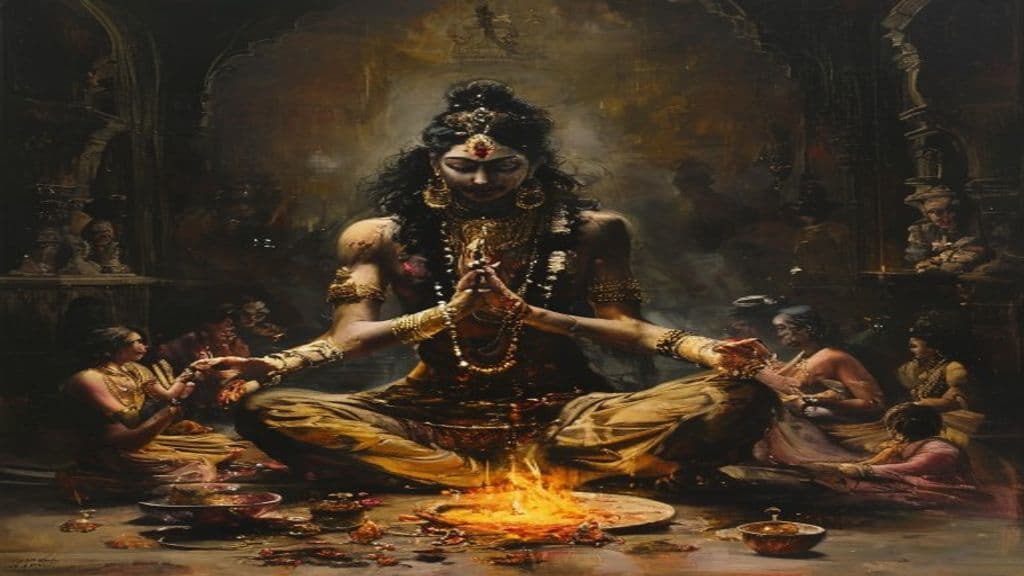
No specific physical description is provided for the Daksha yajna in the source material. It is described as a ritual event rather than a supernatural entity with a physical appearance.
The destruction of the sacrificial ceremony due to the wrath of Shiva, the immolation of Sati, and the transformation of the event into a liturgical basis for the establishment of Shakta pithas are effects of the Daksha yajna. These events do not describe inherent powers or abilities but rather significant consequences.
Asuras
In Vedic mythology, the Asuras are a group of beings described as the 'enemies' or 'opponents' of the Devas (gods), often associated with chaos and disorder. (Note: 1. Power tier should be Ancient (or Deity-level), as they are described as eternal enemies of the gods. 2. Sensory cues and wards/weaknesses sections should be filled in, as there's no information to )
Brahmahatya (Hindu tradition)
A grave sin and entity in Hindu tradition, representing the act of killing a Brahmin. (Note: 1. Power tier should be Primordial (cosmic) instead of Ancient (deity-level), as Brahmahatya represents a grave sin and not a deity. 2. The article lacks an appearance description, which needs to be a)
Epic-Puranic Royal Genealogies (Hindu tradition)
Historical accounts of ancient Indian dynasties as recorded in the Epic-Puranic narratives. (Note: - Power tier: Should be Primordial=cosmic (given the historical and genealogical significance), not Minor Spirit. - Summary: Should mention that these are considered historical events by Indian tradit)
Ghoshayatra Parva
Episode from the Hindu epic Mahabharata where Kauravas are captured by gandharvas and released by the Pandavas. (Note: - Power tier: Ancient (deity-level abilities would fit better with the described events in the source material) - Appearance: Should be added as per source material does not describe but one can infer)
Harana (Elopement)
In Hindu tradition, a 'Harana' is an act of elopement or abduction, often against the will of the person being taken. (Note: - Power tier: Primordial (this seems too high given the description; consider Lesser or Minor Spirit) - Abilities: Consider adding that Harana's "powers" are more related to social and cultural influe)
Iravati
Hindu goddess associated with the sacred river Ravi, connected to cosmological narratives. (Note: 1. Power tier should be Primordial (agreed) but the draft article does not provide a compelling argument to justify it; provide source material supporting Iravati's cosmic-level abilities. 2. The desc)
Karkadann
A mythical creature with the body of a deer and a beautiful voice, said to inhabit the grassy plains of India and Iran. (Note: * Power tier: Primordial (no indication of its power level in relation to other regional or local entities) * Abilities: Add that it's able to heal and cure all wounds, but lack any mention of how it )
Nimi (King)
In Hindu mythology, Nimi is a king and ancestor of the Janaka lineage of Mithila. He serves as an early ruler of the Videha kingdom and is connected to the Suryavamsha dynasty. (Note: - Power tier should be Primordial (cosmic) given that he's considered an ancestor of the Suryavamsha dynasty and connected to Manu (a primeval deity in Hindu mythology). - Summary needs minor adjustme)
Parijaat Tree, Kintoor
A revered and sacred baobab tree in Hindu tradition, specifically located in Uttar Pradesh, India. Its significance is unclear due to the lack of explicit details about its abilities or behaviors. (Note: 1. Power tier: Based on the lack of explicit details about its abilities or behaviors, a Primordial power tier seems excessive. A Lower power tier (e.g., Lesser) would be more appropriate. 2. Summary:)
Suparṇākhyāna (Hindu tradition)
The Suparṇākhyāna is an ancient Hindu epic poem that tells the story of Garuda, a divine bird. (Note: 1. Power tier should be Primordial (as it's an ancient Hindu epic poem, but it describes a divine bird, which is more akin to a cosmic being) 2. No appearance description provided in the source excerp)
Tree of Jiva and Atman
Metaphysical concept representing the interconnectedness between individual souls (Jiva) and the universal Self (Atman) (Note: 1. Origin story not provided, must be added. 2. Power tier: Primordial is plausible but unclear based on given abilities; should specify or clarify why it's considered a primordial entity with its des)
Daksha
Daksha (Sanskrit: दक्ष) is a mythic Prajapati and creator-agent in Hindu textual tradition, remembered as a progenitor who presides over yajna and begets lineages. He appears in Vedic, Itihasa, and Puranic sources as a ritual expert and patriarch whose actions in the Daksha yajna narrative produce major mythic consequences (Sati's self-immolation, Shiva's wrath, origin of Shakti Peethas).
Community Record
- [1]