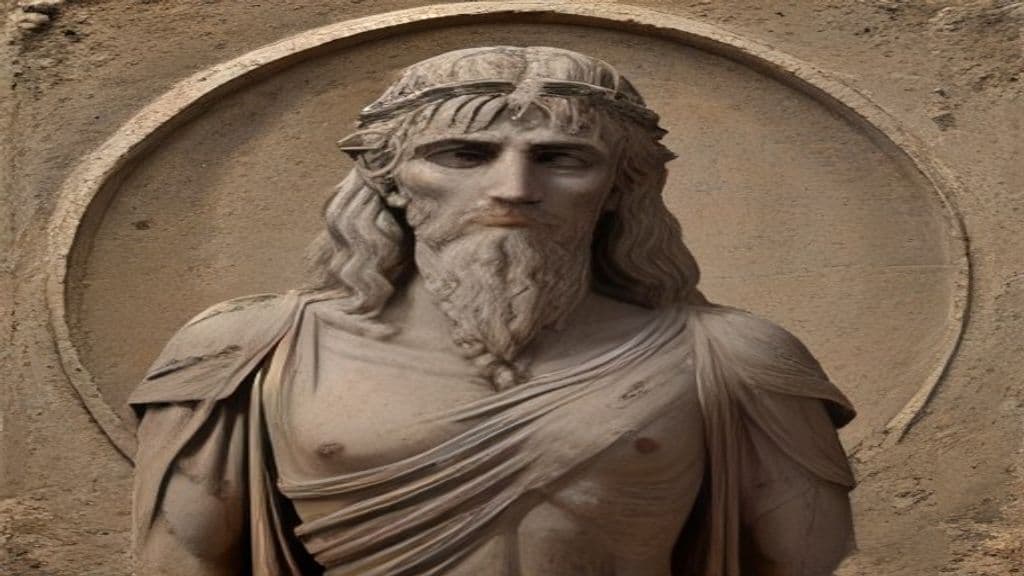
Two distinct origin strands are attested in the provided materials. In classical/onomastic usage, Danuvius functions as the Latin form of the Danube and is listed as an ancient Roman river-god/personification (a conventional practice in Roman nomenclature of treating rivers as divine). The source material offers only this identificatory fact and provides no mythic narrative, cosmogony, or cult foundation. Separately, modern scientific practice reused the Latin/place-rooted name as a genus label for a fossil ape: Danuvius guggenmosi is the binomial applied to fossils announced in 2019 from a clay pit in southern Germany and described in popular summaries as an ~11.6-million-year-old ape of potential relevance to debates about human origins. The supplied sources do not state the precise reasoning the taxonomists used for choosing the genus name beyond the apparent toponymic link to the Danube region.
As a Roman river-personification, no iconography, physical description, or attributes for a deity named Danuvius are provided in the cited materials. As a fossil taxon, Danuvius guggenmosi is described in the popular-science summary as an "ancient ape" and an important fossil; the supplied excerpts do not include anatomical reconstructions, measurements, or detailed morphological descriptions, so no further appearance details are available from these sources.
The sources do not record any supernatural powers, cult functions, or ritual roles for a deity Danuvius beyond the label 'ancient Roman river god.' For the fossil taxon, the only behavioral/functional claim in the provided material is an interpretive/paleobiological statement in a popular summary that Danuvius guggenmosi may be relevant to understanding the human–chimpanzee divergence (characterized in that source as a possible 'common ancestor' or 'missing link'); this is a scientific-interpretive claim rather than a description of abilities and is reported only in the popular summary excerpt.
Weaknesses
- otherNo information in sources
Wards
- otherNo information in sources
Dando's Dogs
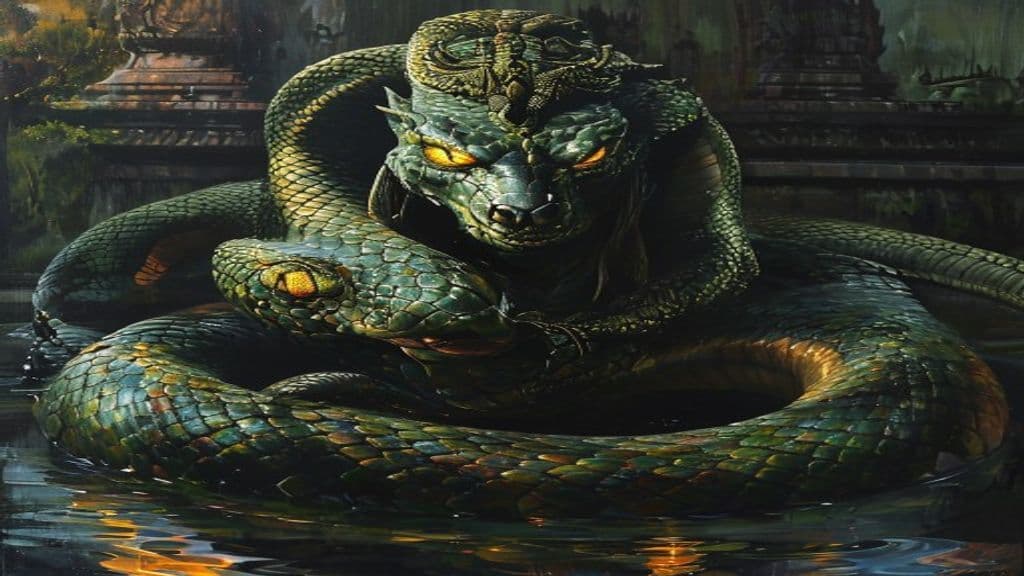
Dando's Dogs are an English folkloric pack of spectral hounds tied to the tale of a sinful huntsman named Dando. They are classed among English 'black dog' apparitions and described as taking part in the Wild Hunt; tradition reports their sounds on early Sunday mornings as they pursue game or search for their master after his abduction.
Daniel (angel)
Daniel is an angelic figure attested in two distinct textual contexts: as the seventh of the 20 Watcher leaders among the 200 angels in the Book of Enoch tradition who taught the 'signs of the sun' to humans, and as a named entry among the 72 holy angels of the Shemhamphorae in Francis Barrett's The Magus.
Dantalion
Dantalion is a named spirit appearing in grimoire-derived occult tradition (the Ars Goetia corpus), described in modern occult encyclopedias as a high-ranking Duke who commands legions and is reputed to teach arts and sciences and to know and influence human thoughts.
Dante (Devil May Cry)
Dante is the fictional protagonist of Capcom's Devil May Cry video game franchise and related media. Portrayed as a stylish demon-hunting action hero, he appears across multiple game installments (including a prequel depicting a younger Dante) and in animated/adapted works.
Dante's Satan
In Dante Alighieri's Inferno (Canto XXXIV) Satan is the immobilized, diminished former angel who occupies the lowest point of Hell (the Ninth Circle, Judecca). He is the poetic embodiment of pride and the ultimate traitor, frozen in the central ice while eternally chewing the three chief traitors.
Danu
Danu is a reconstructed Irish mother goddess name associated with the Tuatha Dé Danann — the name Tuatha Dé Danann is glossed as 'the peoples of the goddess Danu'. The name is also linked in comparative material to a pan‑Indo‑European river/goddess motif and to cognate deities in other traditions, though primary medieval Irish texts do not preserve a detailed mythology or iconography for her.
Danzaburou-danuki
Danzaburou-danuki is a localized Sado Island manifestation of the bake-danuki: a shapeshifting tanuki spirit famed in Aikawa and surrounding locales for illusions, trickery, occasional benefaction, and a folkloric status as leader of the island's tanuki who was said to have been deified locally as Futatsuiwa Daimyoujin.
Daode Tianzun
Daode Tianzun (道德天尊, 'Heavenly Venerable of the Way and its Virtue') is one of the highest deities in Taoist cosmology, a member of the Three Pure Ones and the transcendent personification of the Dao (Way) and De (virtue). Closely identified with Laozi and commonly titled Taishang Laojun, he functions as a supreme heavenly teacher, object of worship, and ruler of the Taiqing (Great Pure Heaven).
Daolghas
Member of the Fianna, a band of warriors in Irish mythology, with supernatural abilities. (Note: * Power tier: Inconsistent with abilities described; should be Primordial or Ancient due to its cosmic/deity-level powers. * Abilities: Not entirely accurate; it's specifically stated that Daolghas ca)
Daoud
Daoud is attested in the provided sources as a male personal name (given name and surname) used across Middle Eastern, North African, and South Asian contexts. The supplied material contains no evidence treating Daoud as a supernatural being within folklore or the Greyhawk setting; all mentions are biographical or documentary.
Daphne
Daphne (Ancient Greek Δάφνη) is a mythic woman or nymph in Greek tradition who, pursued by Apollo, is transformed by a deity into the laurel tree (Laurus nobilis). The story explains the sacred status of the laurel and its ritual use as Apollo's emblem and as the victor's wreath at the Pythian Games.
Daphnis
Daphnis is a legendary pastoral youth in Greek literary tradition, presented as a Sicilian cowherd and an etiological figure for pastoral song. Various ancient authors portray him as beloved or taught by gods and nymphs; his love-affairs, suffering (blinding, petrifaction, or death), and posthumous cultic commemoration at a spring make him a liminal bridge between humans, nature-spirits, and the divine.
Community Record
- [1]Danuvius — Wikipedia (disambiguation). Wikipedia contributors, 'Danuvius,' Wikipedia, https://en.wikipedia.org/wiki/Danuvius (accessed in provided notes).wiki
- [2]Danuvius — Wikidata entry Q73803082. Wikidata entry Q73803082 for genus Danuvius (as provided in notes).wiki
- [3]Una nueva versión de la evolución humana (Archive copy of popular summary). Archive.org, 'Una nueva versión de la evolución humana' (Spanish-language popular summary referencing the 2019 announcement of Danuvius guggenmosi and its age/location as ~11.6 million years, southern Germany).other
- [4]Thingiverse / Alpha_Keychain (archive listing referenced in notes). Archive.org item referenced in the provided notes (thingiverse-2623436).other