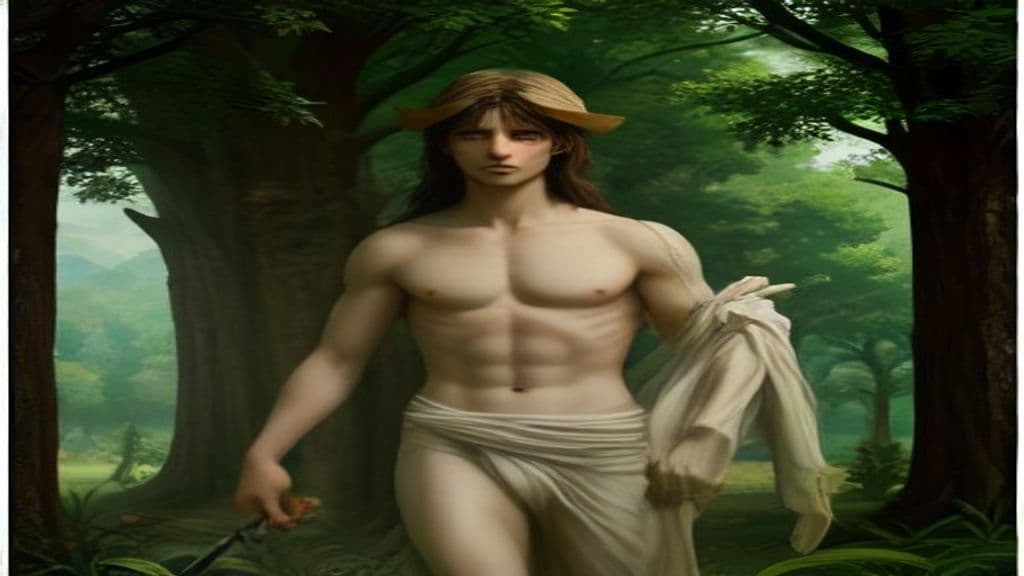
Ancient sources present multiple, related origin-variants. In the primary Sicilian tradition he is a legendary cowherd said to have been born in the Heraean Mountains of central Sicily and named Daphnis (from δάφνη, 'laurel') for the laurel under which he was found. Some accounts place him in the tutelage or affection of gods—Pan as teacher of pastoral music; Hermes variously as patron, beloved, or attendant figure—and associate his biography with nymphs (a naiad beloved of him). Later literary treatments (Theocritus, Virgil) develop his biography into episodes of erotic entanglement, contest in song, and a tragic early fate that explains local cult (sacrifices at a spring) or poetic commemoration.
Literary portrayals emphasize Daphnis as a beautiful youth and a cowherd/shepherd. Sources consistently describe him as an attractive pastoral youth whose occupation among herds and skill with pastoral song mark him as an archetypal shepherd-poet. No precise physical measurements or standardized costume details are provided in the surviving summaries; his age (youth) and attractiveness are the primary physical descriptors.
Traditional attributions present Daphnis as the inventor or exemplar of pastoral song: he is credited in antiquity with composing and performing pastoral poetry and with playing shepherd instruments (panpipes) in some variants taught by Pan. He functions socially as a herdsman, a competitor in pastoral song-contests (e.g., Theocritus’ poetic contests), and as an erotic attractor and object of desire for nymphs and mortals alike. Mythic variants portray him vulnerable to nymphic or divine vengeance—prophecy that he would be blinded if he loved another woman is attested; retaliations include blinding, petrifaction, or an early death. In some literary renderings (Virgil) he is later lamented and poetically accepted to heaven, a form of apotheosis invoked in elegiac tradition rather than a unanimous mythic fact.
Weaknesses
- conditionvulnerability to nymphic or divine vengeance (blinding, petrifaction, premature death)
Wards
- othernone attested (no traditional protective wards against Daphnis recorded in supplied sources)
Danuvius
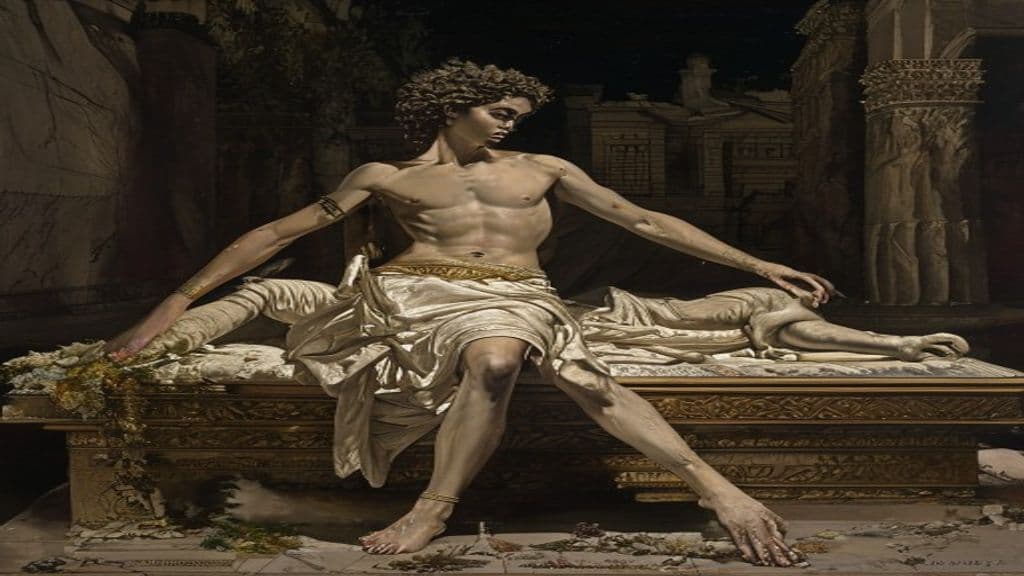
Danuvius is a Latin toponym that appears in two distinct referents in the supplied sources: (1) a Latin name for the Danube and an ancient Roman river-deitypersonification; and (2) a modern paleontological genus name, Danuvius guggenmosi, applied to an ~11.6-million-year-old fossil ape discovered in southern Germany. The sources treat these as separate uses of the same Latin/place-rooted name rather than a single folkloric being.
Danzaburou-danuki
Danzaburou-danuki is a localized Sado Island manifestation of the bake-danuki: a shapeshifting tanuki spirit famed in Aikawa and surrounding locales for illusions, trickery, occasional benefaction, and a folkloric status as leader of the island's tanuki who was said to have been deified locally as Futatsuiwa Daimyoujin.
Daode Tianzun
Daode Tianzun (道德天尊, 'Heavenly Venerable of the Way and its Virtue') is one of the highest deities in Taoist cosmology, a member of the Three Pure Ones and the transcendent personification of the Dao (Way) and De (virtue). Closely identified with Laozi and commonly titled Taishang Laojun, he functions as a supreme heavenly teacher, object of worship, and ruler of the Taiqing (Great Pure Heaven).
Daolghas
Member of the Fianna, a band of warriors in Irish mythology, with supernatural abilities. (Note: * Power tier: Inconsistent with abilities described; should be Primordial or Ancient due to its cosmic/deity-level powers. * Abilities: Not entirely accurate; it's specifically stated that Daolghas ca)
Daoud
Daoud is attested in the provided sources as a male personal name (given name and surname) used across Middle Eastern, North African, and South Asian contexts. The supplied material contains no evidence treating Daoud as a supernatural being within folklore or the Greyhawk setting; all mentions are biographical or documentary.
Daphne
Daphne (Ancient Greek Δάφνη) is a mythic woman or nymph in Greek tradition who, pursued by Apollo, is transformed by a deity into the laurel tree (Laurus nobilis). The story explains the sacred status of the laurel and its ritual use as Apollo's emblem and as the victor's wreath at the Pythian Games.
Dara II
Dara II (also Darab II) is a mytho-historical king in Iran's national tradition, presented as the last monarch of the Kayanian dynasty and generally identified with the historical Darius III. He functions in literary and political traditions as a terminal dynastic figure whose person is used to legitimate later houses and to explain foundation traditions for cities such as Dara and Darabgerd.
Darab-nama (Persian tradition)
Historical romance novel from 12th-century Persia, with possible references to supernatural entities in Persian folklore. (Note: - Power tier: Primordial (due to its historical significance and cultural impact) - Summary: Needs more specific information on supernatural entity references - Appearance: No information provided in )
Daragang Magayon
Daragang Magayon is the heroine of a Bicol legend in the Philippines whose tragic life and death are the etiological explanation for the naming and formation of Mt. Mayon. Presented as a mortal maiden of extraordinary beauty, her story functions as a foundational regional myth and a cultural archetype of idealized beauty and tragic love.
Darak
No attested supernatural being named 'Darak' appears in the provided sources. The term 'Darak' is documented as a toponym (places in Cameroon and Iran), as the Tagalog common name for rice bran used in traditional Philippine medicine, and as a personal or fictional proper name in varied modern sources. There is no corroborated ethnographic or mythological description of Darak as a spirit, deity, or monster in the consulted materials.
Darakh
Darakh is not documented in the supplied sources as a supernatural being; the string 'Darakh' appears in the materials as a place-name in Nepal, a modern surname, a lexical item in a constructed language, and as a name used in fictional/fantasy settings. No folkloric cosmology, powers, appearance, or rituals for a spirit called Darakh are attested in the provided corpus.
Daramulum
Daramulum is a southeastern Australian Aboriginal sky-hero and ancestral figure associated with the major creator Baiame and with an emu-wife. He is embedded in rock‑art, sky knowledge (constellation identification), and initiation ritual practice, notably as a presence voiced through the bullroarer.
Community Record
- [1]Daphnis - Wikipedia. Wikipedia, 'Daphnis' entry (summary of ancient traditions and variants).wiki
- [2]Daphnis (Wikidata Q135361) — taxonomic reuse. Wikidata entry indicating modern genus-name reuse.other
- [3]Theocritus, Idylls (literary tradition). Theocritus, pastoral Idylls — source tradition describing pastoral contests and nymphic love.literary
- [4]Virgil, Eclogues (Eclogue V and VIII referenced). Virgil, Eclogues — poetic lament and apotheosis in Roman adaptation of the Daphnis motif.literary
- [5]Longus, Daphnis and Chloe (novel tradition). Longus, Daphnis and Chloe — the later pastoral prose novel featuring a named Daphnis as protagonist.literary
- [6]Pausanias (reference to a nymph Daphnís at Parnassos). Pausanias 10.5.5 as cited in summaries — mentions a nymph Daphnís appointed by Gaea at Delphi (name-sharing tradition).literary
- [7]Ravel — programme notes & recordings (cultural reception). Programme note linking the pastoral literary tradition of Daphnis to later musical receptions (Ravel's Daphnis et Chloé).other