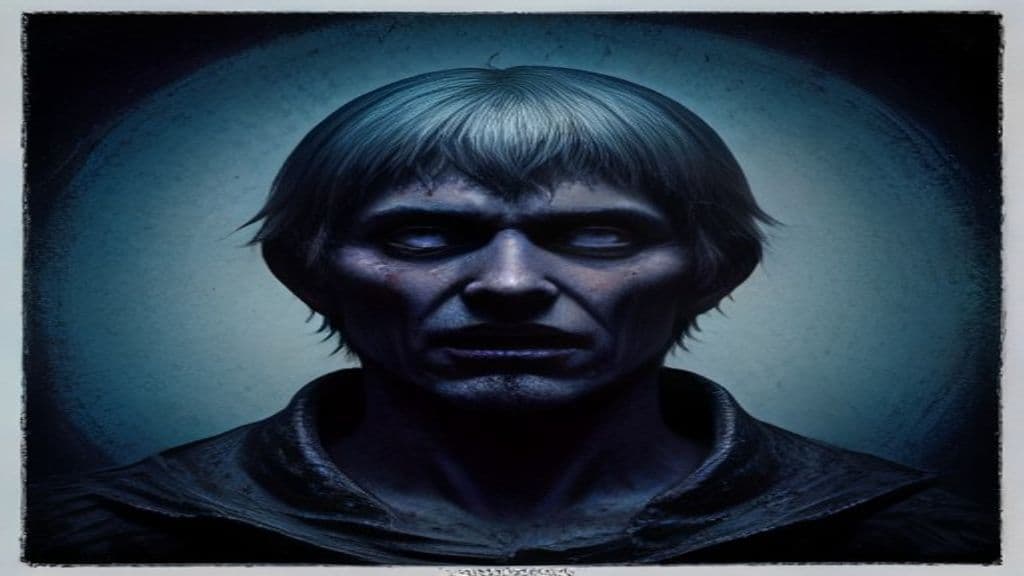
Within Dante's poetic cosmology (reported in accounts of Inferno, Canto XXXIV), this being is a once-splendid angel whose pride and rebellion against the Divine resulted in a fall. Dante narrates that the impact of that fall excavated the underworld pit that becomes Hell and displaced earth to form Mount Purgatory on the opposite side of the globe; this is presented as Dante's cosmological account within the poem rather than as extrapoetic history.
Dante's depiction presents a grotesque giant frozen in the ice at the center of Hell (variously described as frozen up to the waist). He has three faces/mouths; each mouth holds and chews one of the chief traitors—Judas Iscariot in the central mouth and Brutus and Cassius in the other two. Each of his three chins bears a pair of bat-like wings beneath it. He weeps with six eyes, and his tears fall over the three chins mingling with bloody foam. The figure is bloated and degraded, slobbering and largely wordless compared to his former angelic perfection.
Dante attributes the perpetually freezing winds of the Ninth Circle to the beating of his bat-like wings: as Satan flaps them he generates a cold wind that keeps the surrounding ice frozen and thus sustains the immobility of the worst sinners. He physically chews and holds the three named traitors in his mouths as an eternal torment and symbolic statement of betrayal. Aside from producing the cold winds and this symbolic consumption, Dante's portrait emphasizes loss of personality and voice—the being is diminished and immobilized rather than an active ruler.
Weaknesses
- conditionprivation of power/personality (contrapasso)
Wards
- conditionhumility and avoidance of pride/betrayal
- otherguided avoidance and silence (as illustrated by Dante and Virgil)
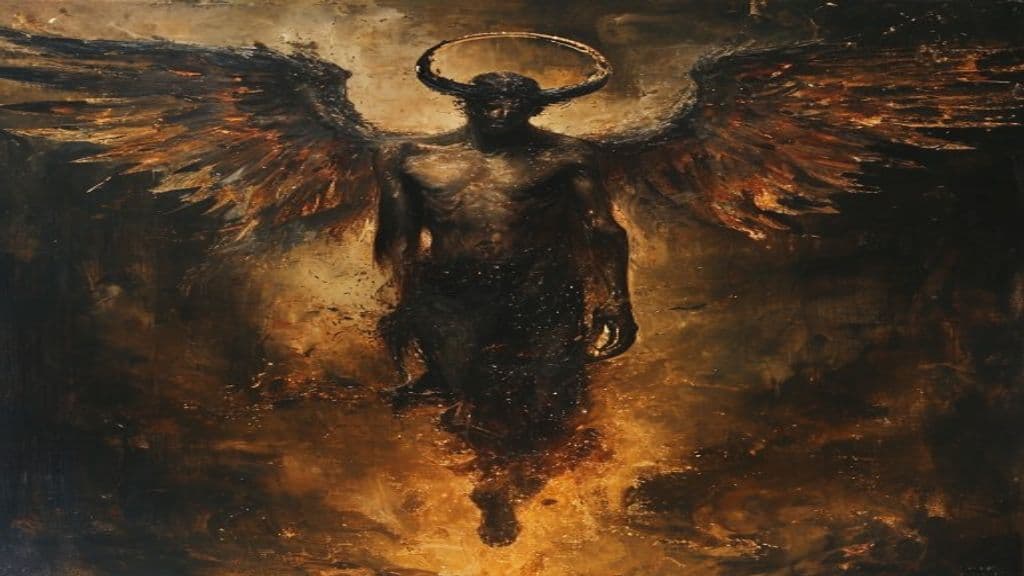
Iblis
The primordial deceiver in Islamic theology; a jinn who refused God's command to bow before Adam and was expelled from heaven. The source of all temptation and whispered suggestion.
Iblis
The primordial deceiver in Islamic theology; a jinn who refused God's command to bow before Adam and was expelled from heaven. The source of all temptation and whispered suggestion.
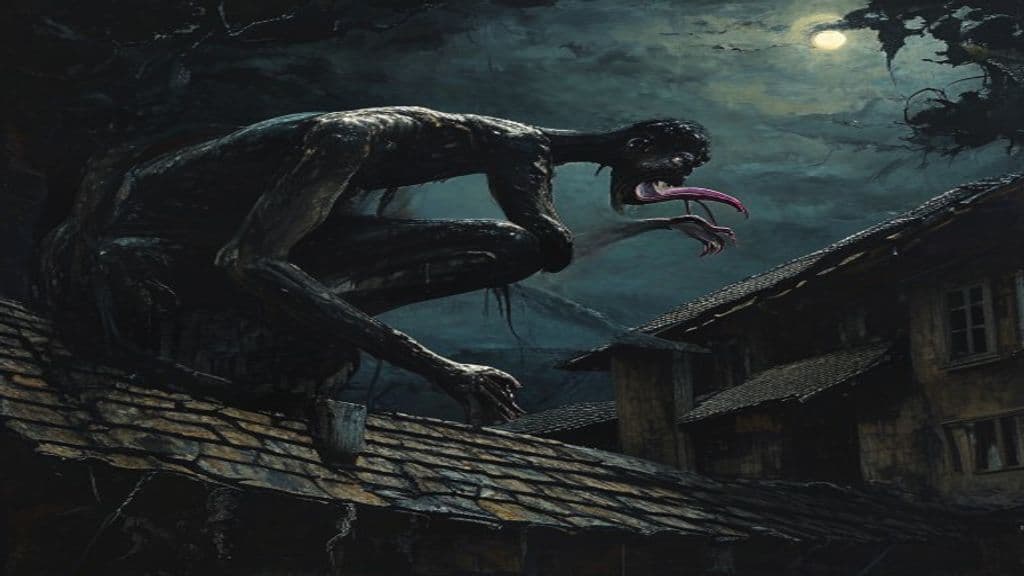
Aswang
The most feared supernatural being in Philippine folklore — a shape-shifting monster that appears human by day but transforms at night to prey on pregnant women and children.
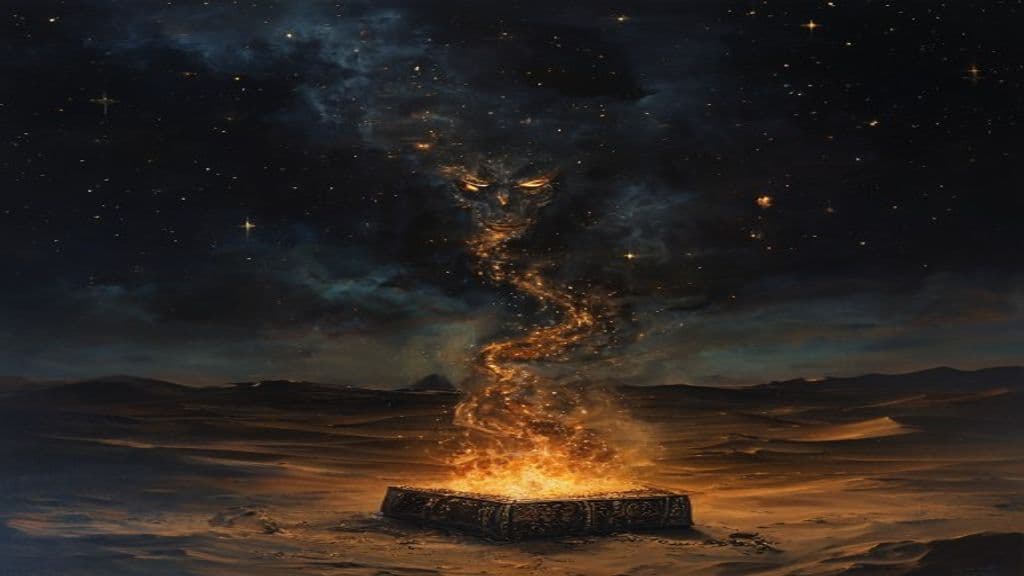
Djinn
The class of supernatural beings created from smokeless fire in Islamic cosmology — a parallel civilization to humanity, capable of belief or unbelief, with their own prophets, society, and judgment before God.
Beatrice Portinari
Beatrice (Bice) di Folco Portinari appears in Dante Alighieri's works as the personified embodiment of beatific love, divine grace, and theological vision who intercedes for and ultimately guides the pilgrim from human reason into Paradise. Historically she may be a Florentine woman documented in late 13th-century records, but the literary Beatrice is primarily a theological and allegorical figure within Dante's poetic cosmology.
Ciampolo
Ciampolo is a damned human soul appearing in Dante Alighieri's Inferno (Canto XXII), placed among the grafters in the fifth ditch of the eighth circle (Malebolge). He is depicted as hauled from boiling pitch by the Malebranche devils, speaks to Dante and Virgil identifying fellow sinners, and ultimately deceives the devils to return to the pitch.
Dandan (dendan)
A monstrous, enormous sea-fish from the One Thousand and One Nights tale "Abdullah the Fisherman and Abdullah the Merman," presented as the largest and most fell of sea creatures; its liver-fat is said to serve as an ointment enabling humans to survive underwater, while paradoxically the creature is described as vulnerable to certain human-related conditions.
Dando's Dogs
Dando's Dogs are an English folkloric pack of spectral hounds tied to the tale of a sinful huntsman named Dando. They are classed among English 'black dog' apparitions and described as taking part in the Wild Hunt; tradition reports their sounds on early Sunday mornings as they pursue game or search for their master after his abduction.
Daniel (angel)
Daniel is an angelic figure attested in two distinct textual contexts: as the seventh of the 20 Watcher leaders among the 200 angels in the Book of Enoch tradition who taught the 'signs of the sun' to humans, and as a named entry among the 72 holy angels of the Shemhamphorae in Francis Barrett's The Magus.
Dantalion
Dantalion is a named spirit appearing in grimoire-derived occult tradition (the Ars Goetia corpus), described in modern occult encyclopedias as a high-ranking Duke who commands legions and is reputed to teach arts and sciences and to know and influence human thoughts.
Dante (Devil May Cry)
Dante is the fictional protagonist of Capcom's Devil May Cry video game franchise and related media. Portrayed as a stylish demon-hunting action hero, he appears across multiple game installments (including a prequel depicting a younger Dante) and in animated/adapted works.
Danu
Danu is a reconstructed Irish mother goddess name associated with the Tuatha Dé Danann — the name Tuatha Dé Danann is glossed as 'the peoples of the goddess Danu'. The name is also linked in comparative material to a pan‑Indo‑European river/goddess motif and to cognate deities in other traditions, though primary medieval Irish texts do not preserve a detailed mythology or iconography for her.
Danuvius
Danuvius is a Latin toponym that appears in two distinct referents in the supplied sources: (1) a Latin name for the Danube and an ancient Roman river-deitypersonification; and (2) a modern paleontological genus name, Danuvius guggenmosi, applied to an ~11.6-million-year-old fossil ape discovered in southern Germany. The sources treat these as separate uses of the same Latin/place-rooted name rather than a single folkloric being.
Danzaburou-danuki
Danzaburou-danuki is a localized Sado Island manifestation of the bake-danuki: a shapeshifting tanuki spirit famed in Aikawa and surrounding locales for illusions, trickery, occasional benefaction, and a folkloric status as leader of the island's tanuki who was said to have been deified locally as Futatsuiwa Daimyoujin.
Daode Tianzun
Daode Tianzun (道德天尊, 'Heavenly Venerable of the Way and its Virtue') is one of the highest deities in Taoist cosmology, a member of the Three Pure Ones and the transcendent personification of the Dao (Way) and De (virtue). Closely identified with Laozi and commonly titled Taishang Laojun, he functions as a supreme heavenly teacher, object of worship, and ruler of the Taiqing (Great Pure Heaven).
Daolghas
Member of the Fianna, a band of warriors in Irish mythology, with supernatural abilities. (Note: * Power tier: Inconsistent with abilities described; should be Primordial or Ancient due to its cosmic/deity-level powers. * Abilities: Not entirely accurate; it's specifically stated that Daolghas ca)
Community Record
- [1]Dante's Satan (Wikipedia). Wikipedia, article 'Dante's Satan'.wiki
- [2]Dante's Satan (Wikidata entry Q5221138). Wikidata entry for Dante's Satan (Q5221138).wiki
- [3]The lighter side of darkness (archive). Archive.org summary work discussing literary portrayals of Satan, referencing Dante.other
- [4]The genius of Christianity; or, The spirit and beauty of the Christian religion (archive). Archive.org edition discussing Christian literary images including Dante's depiction.other
- [5]Dante's Inferno: Canto XXXIV (referenced). Inferno, Canto XXXIV (Dante's depiction of the lowest circle and Satan summarized in source materials).literary
- [6]Comparative notes on Iblis and frozen hell imagery (Wikipedia summary of scholarship). Wikipedia reporting that scholars note resemblances between Dante's Satan and Islamic portrayals (Iblis, Zamhareer imagery).wiki