
Darna was created for Filipino comic books by Mars Ravelo (writer) and Nestor Redondo (artist) first appearing in 1950. The character was conceived in the wake of World War II as a Filipino superheroine intended to inspire hope. In the Golden Age origin, Darna is presented as an extraterrestrial warrior from the planet "Marte"; later adaptations revise her framing (for example, casting her as a "Warrior of Light" or emphasizing the mortal-to-hero amulet motif). The civilian girl Narda becomes Darna by swallowing a white magic stone inscribed with the name "Darna" and shouting that name; she reverts to Narda by shouting "Narda." The name "Darna" is an anagram of "Narda," and the transformation-by-amulet concept intentionally draws on Philippine folklore about mortals made worthy of magic amulets.
Across comics, film, and television, Darna is typically depicted in a red two-piece costume (often described as a red bikini or shorts) with a gold star on each breast cap, a red helmet adorned with a gold winged medallion, gold bracelets, a gold-rimmed red boots, and a golden medallion belt with a central loincloth. Costume details and visual design have varied between film and television adaptations; the helmet's winged medallion motif has been cited as inspired by Philippine airforce emblem imagery in popular accounts of the iconography.
Darna's core mechanic is transformation: Narda swallows a magic stone (the amulet) bearing the word "Darna" and calls that name to transform into the heroine; in many versions the stone exits Narda's mouth when she reverts and must be swallowed again to transform anew. The character is described as possessing exceptional strength and heroic attributes (early origin texts attribute qualities likened to classical figures), and functions as a protector/avenger who battles common criminals and a gallery of supernatural antagonists drawn from Philippine monster motifs. Behaviorally, Darna is framed as strong but compassionate; her civilian identity is a young girl often accompanied by her brother Ding and grandmother Lola Asay, who know of and assist with the secret in early accounts.
Weaknesses
- conditionTransformation requires possession and ingestion of the stone inscribed "Darna" and the spoken name; in many adaptations the stone leaves Narda's mouth on reversion and must be swallowed again to transform.
Wards
None recorded.
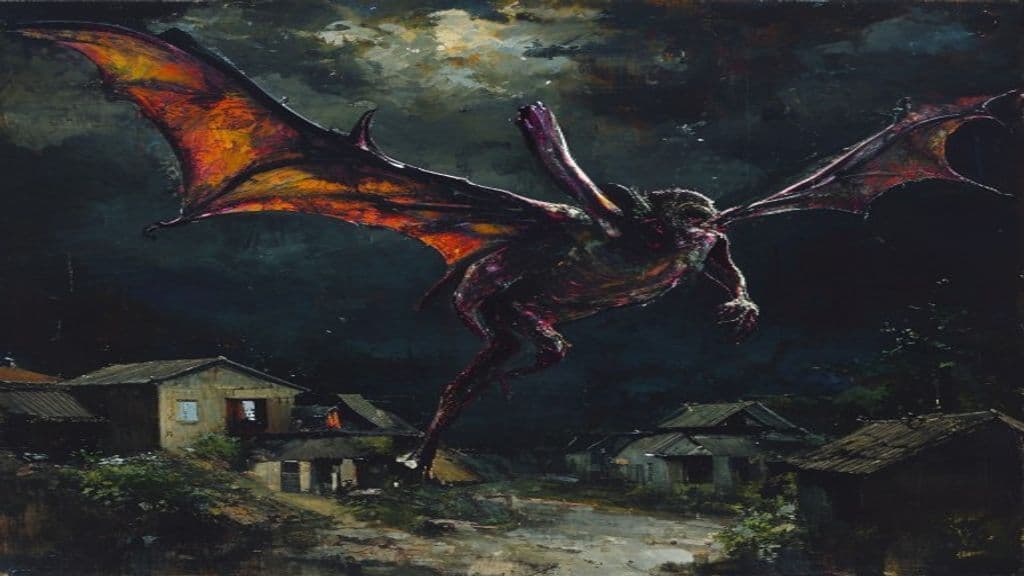
Manananggal
A terrifying Philippine vampire who severs its own upper body from its lower half at night, sprouting bat wings to fly out and feast on sleeping pregnant women's fetuses.
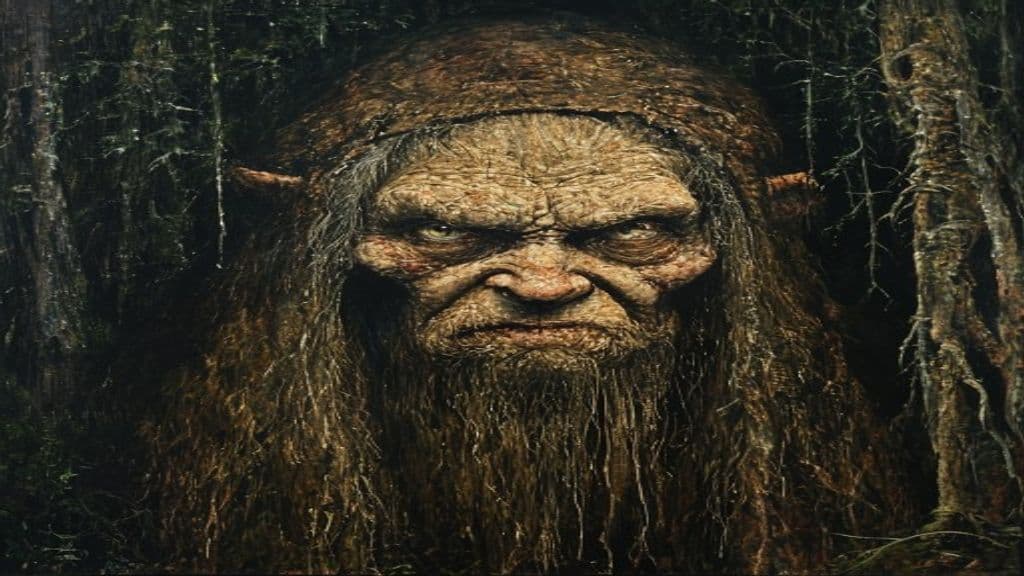
Baba Yaga
Baba Yaga is an ambivalent female figure of East Slavic folktale tradition, depicted variously as a fearsome, child-eating crone or as a helpful, maternal donor. She is associated with the deep forest, a hut described as standing on chicken legs, and the motific accoutrements of a mortar and pestle.
Dark Lord
A literary and media archetype representing the supreme antagonist: a centralized embodiment of evil, darkness, or death who commands lesser agents and opposes heroic protagonists. Treated in sources as a narrative trope rather than a discrete folkloric being.
Dark Urge
A player-selectable Origin character concept in the 2023 video game Baldur’s Gate 3: an amnesiac mortal identified as a Bhaalspawn whose narrative revolves around compulsions toward violence and the player's choices to resist or embrace that influence.
Darkhawk
Darkhawk is an alien-manufactured android battle-suit stored in a dimension called Null Space whose operation is enabled when a human wearer activates a mysterious amulet and swaps places with the android; the human mind then controls the android body. The construct functions as a technologically explained, extra-dimensional combat shell within Marvel Comics continuity, most famously occupied by Christopher "Chris" Powell.
Darkseid
Darkseid (born Uxas) is a fictional cosmic tyrant in DC Comics’ Fourth World mythos: ruler of Apokolips who seeks the Anti-Life Equation to compel the thoughts and emotions of sentient beings. He commands Apokoliptian forces and works through intermediaries; heroes and allied cosmic forces repeatedly oppose and sometimes defeat his schemes.
Darkspawn
A fictional collective of monstrous, corrupted humanoid creatures from the Dragon Age setting (Thedas). They act as a spreading, subterranean threat tied to periodic calamities called Blights and propagate a supernatural disease called the Taint that can transform other beings.
Darkstars
The Darkstars are a fictional intergalactic policing corps created in DC Comics, founded by the Controllers (an offshoot of the Guardians of the Universe) via the Network for the Establishment and Maintenance of Order (NEMO). They operate as a technologically outfitted enforcement arm that uses powered exo-mantles to establish order across the cosmos and figure in storylines about institutional authority and decline.
Daruka
Supernatural charioteer in the Hindu tradition, associated with Arjuna in the Mahabharat. (Note: * Summary: Replace "Supernatural charioteer" with "Charioteer" since there's no evidence of supernatural abilities. * Power tier: Lower to Greater, as Daruka's abilities are not on the same level as d)
Daseatas
Daseatas is a mythic Arcadian prince attested in ancient genealogical lists as one of the many sons of King Lycaon and is reputed as the eponymous founder of the Arcadian city called Dasea. He is known only from brief classical attestations summarized in modern reference works (notably Pausanias and Dionysius of Halicarnassus as cited in modern summaries).
Dasharatha
Dasharatha is the king of Kosala and ruler of Ayodhya in the Ramayana tradition, father of Rama, Bharata, Lakshmana, and Shatrughna. His life in the epic ties royal duty, Vedic ritual (notably the Puthrakamesti yagnam), oath-keeping, and karmic consequence together, culminating in Rama's exile and Dasharatha's death from grief.
Dashavatara
Dashavatara (Sanskrit: daśāvatāra) names a canonical set of ten principal incarnations of the Hindu god Vishnu, each a full descent (avatara) taken to restore cosmic order (dharma) at moments of great disorder. The list and order of the ten vary by Purānic and sectarian traditions; the concept functions across mythology, temple cult, and devotional practice.
Datsue-ba
A supernatural old-woman ogress figure in Japanese Buddhist underworld imagery who sits by the Sanzu River and strips the deceased of their garments (or, in some accounts, their skin) as part of post-mortem judgement. She functions as a liminal, procedural agent within Ten Kings / Six Realms iconography rather than as a creator or cosmic force.
Dattatreya
Dattatreya is a Hindu divine figure venerated as a paradigmatic sannyasi (renunciant), a lord of yoga, and a composite incarnation of the Trimurti (Brahma, Vishnu, Shiva). He functions both as an object of devotion and as an archetypal guru whose life and attributed texts inform monastic and yogic lineages, especially in regional traditions across the Deccan and the Himalaya.
Community Record
- [1]Darna (Wikipedia). Wikipedia, Darnawiki
- [2]Darna — internationalhero.co.uk. International Hero — Darna (character account and gallery of enemies)other
- [3]Darna, the Film (1951) – Multo (Ghost). Multo (blog) — discussion of the 1951 film adaptation and early mechanicsother
- [4]Darna: ‘The Filipino Wonder Woman’ | The Hooded Utilitarian. The Hooded Utilitarian — essay on Darna's cultural significanceother