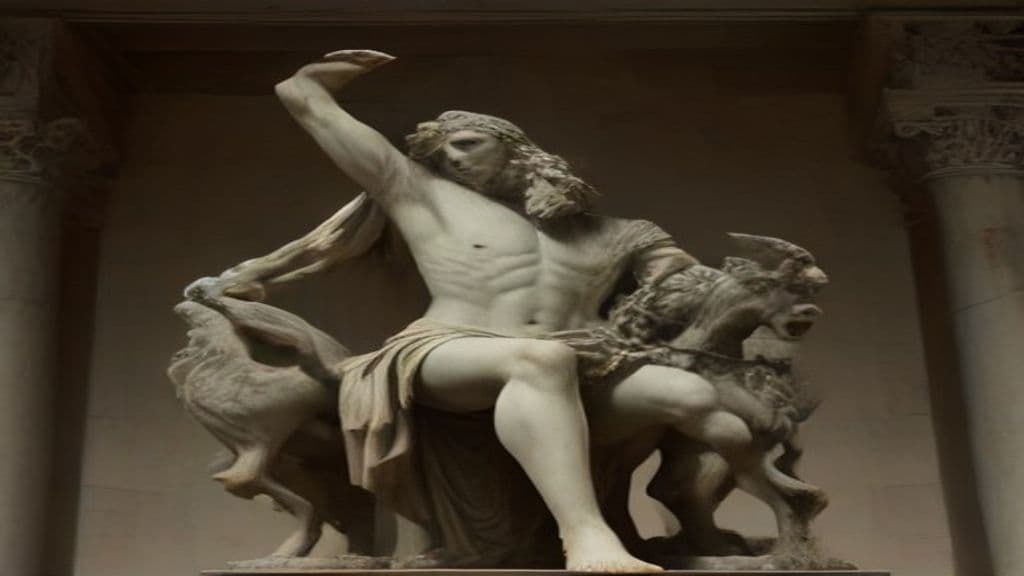
Deiphobos is attested in the epic cycle and later literature as one of the sons of King Priam and Queen Hecuba of Troy. Classical summaries identify him among Priam's children and rank him as 'the greatest of Priam's sons after Hector,' placing him within the royal household and the social-political order of Troy during the mythic Trojan War.
Classical and later summary sources provided do not offer a detailed physical description of Deiphobos. He is portrayed narratively as a princely warrior and member of Priam's household in the scenes and set pieces of the Trojan War and the sack of the city, but extant supplied materials do not record specific bodily, facial, or costume attributes.
In the literary tradition summarized by the sources, Deiphobos functions as an active warrior in the Trojan War. Secondary summaries state he 'killed four men of fame' in the conflict; specific traditions (citing Apollodorus in summary) report that Deiphobos threw a spear that killed Ascalaphus. He appears in combat episodes, seeks support from fellow Trojan leaders (one scholarly commentary notes a moment where his reaction is to seek Aeneas' support), and is associated with narrative actions around his household during the fall of Troy.
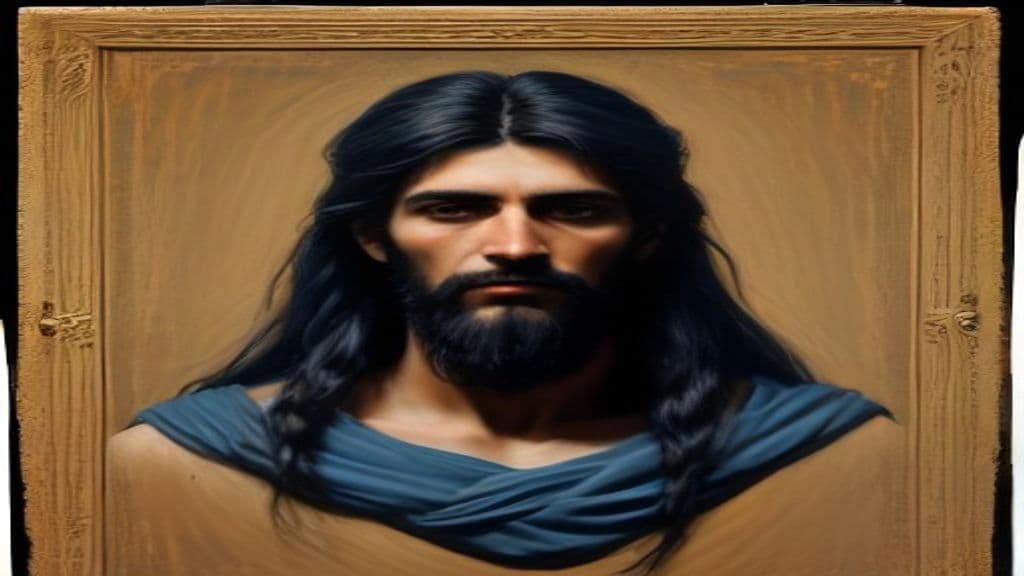
Achilles
A legendary Greek heroic figure of epic poetry, son of the sea‑nymph Thetis and the mortal Peleus, celebrated as the greatest of the Greek warriors at Troy whose anger and fate shape events in the Trojan War cycle.
Aeneas, Anchises, and Ascanius
Aeneas is a legendary Trojan nobleman, son of the goddess Aphrodite (Venus) and the mortal Anchises; he is portrayed in Greek epic and Roman literary tradition as a divinely favored warrior and a founder-ancestor whose destiny links Troy to the eventual Roman line represented by Romulus and Remus. Anchises is Aeneas' mortal father and a Trojan prince; Ascanius (also called Iulus in Roman tradition) is his son and the next link in the genealogical chain. Together they function in the sources as a familial triad that embodies divine intervention, pietas, and sacred genealogy.
Agenor of Troy
Agenor (Ancient Greek: Ἀγήνώρ) is a mortal Trojan heroic figure in the Greek epic tradition notable for confronting Achilles during a rout in Iliad Book 21; Apollo carries Agenor away in a veil of mist and then impersonates him to distract Achilles, allowing the Trojans to reach safety. Later authors vary about his battlefield kills and his eventual death.
Anticlus
Anticlus (Ancient Greek: Ἄντικλος) is a named mortal Greek warrior of the epic Trojan cycle who hid inside the wooden horse at Troy. He is chiefly remembered for nearly revealing the concealed Greeks when Helen imitated the voice of his wife, and for being physically restrained by Odysseus to prevent detection.
Areilycus (Archilycus)
Areilycus (Ancient Greek Ἀρηίλυκος; also attested Archilycus/Areilykos) is a personal name in Greek epic and later mythography. It appears in two distinct Homeric-era attestations: as a genealogical father of Boeotian leaders (Arcesilaus/Archesilaus and Prothoenor) and as a mortal warrior, son of Menoetius, wounded in the thigh by Patroclus in Iliad Book XVI.
Arizelus
Arizelus (also attested Arizelos, Latinized Arizela) is attested in Greek literary and onomastic sources as a personal name borne by mortal figures. In epic genealogy he is known only as the father (patronym) of the warrior Harpalion; in later literature the name appears as the father of an orator Timarchus. No supernatural attributes are recorded.
Balius and Xanthos
Balius and Xanthos are two named immortal horses in Greek epic associated with Achilles and his charioteer Automedon. Treated as semi-divine companions, they display autonomous behavior in battle and, in one Homeric reference, Xanthus is said to be granted the power of utterance to prophesy Achilles' death.
Briseus
Briseus (Ancient Greek: Βρισεύς or Βρίσης) is a mortal figure in the Trojan War tradition, known primarily as the father of Briseis, a woman taken captive by the Greeks. He appears in Homeric tradition and later commentators, who variably place him in Pedasus or identify him as a priest of Lyrnessus; a later pseudo-historical source (Dictys Cretensis) reports that he hanged himself after losing his daughter.
Clytemnestra
Clytemnestra is a mortal queen of Mycenae in Greek epic and tragic drama, best known for her role in the murder of her husband Agamemnon and for precipitating the cycle of familial vengeance that follows. She appears across Homer and the tragedians (Aeschylus, Sophocles, Euripides) as a politically capable, scheming royal whose actions raise questions of justice, revenge, and social order.
Cydon
Cydon (Greek Κύδων) is a personal name used for multiple mortal figures in ancient Greek myth and epic: an eponymous founder associated with Cydonia in Crete, several warriors appearing in war-cycles (including the Seven against Thebes and the Lemnian massacre), an ally in Virgil's Aeneid, and even the name of a horse in epic catalogue. The name functions onomastically rather than designating a single supernatural being or class.
Deiphobus
Deiphobus (Ancient Greek Δηΐφοβος) is a Trojan prince, son of King Priam and Hecuba, attested across Homeric epic and later Greek and Roman narratives as a warrior of the Trojan War. He appears in the Iliad among Trojan leaders, is given expanded roles in post‑Homeric sources (notably Euripides, Dares, Dictys, Malalas) and in Vergil’s Aeneid is depicted posthumously as a horribly mutilated corpse who recounts his death.
Eusorus
Eusorus (Ancient Greek Εύσωρος, Eusōros/Eusorus) is an otherwise-unknown named ancestor attested in Greek epic and mythographic genealogies. He functions as a paternal or grandpaternal figure used to anchor the origins of better-known figures such as Aenete, Cyzicus, and Acamas; no myths, deeds, cult, or physical descriptions are recorded for him in the cited sources.
Community Record
- [1]Deiphobus (Wikipedia). "In Greek mythology, Deiphobos was a son of Priam and Hecuba. He was a prince of Troy, and the greatest of Priam's sons after Hector." and "Deiphobos killed four men of fame in the Trojan War."wiki
- [2]Virgil / Chaucer backstory (faculty.goucher.edu). "Those readers would have known, as Chaucer did, that we know what happens at Deiphobos house the night Troy fell, and what happened to Deiphobos, Helen, Hector, and Troilus."literary
- [3]Virgil commentary (faculty.goucher.edu). "Why is Deiphobos house the first to be consumed in flames." (discussion of Deiphobos' house in accounts of Troy's fall)literary
- [4]A Pragmatic and Sociolinguistic Account of δαιµόνιε in Early Greek Epic — H. Paul Brown. "Deiphobos reaction, 13.458459, is to seek support from Aeneas." (scholarly article commenting on epic lines and reactions)academic
- [5]Ascalaphus (son of Ares) (Wikipedia). Cites Apollodorus: 'Deiphobos threw a spear and killed him.' (summary referencing the killing of Ascalaphus by Deiphobos)wiki
- [6]Deiphobos — Meaning (babynamespedia). "Deiphobos language of origin is Old Greek. The name is of the meaning 'fear'." (name-meaning source)other